
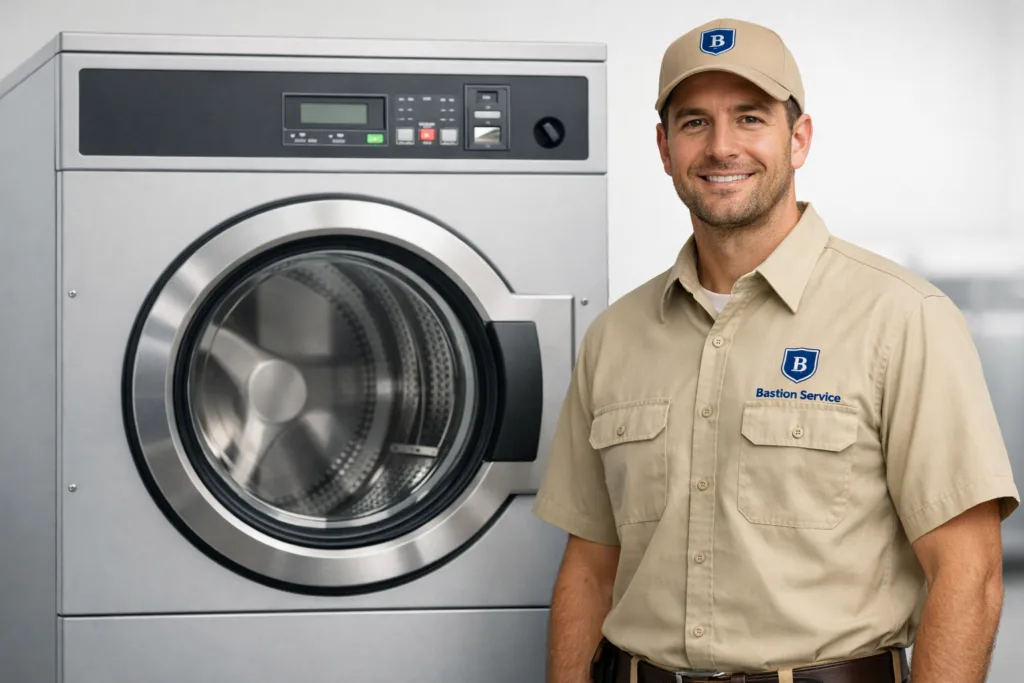




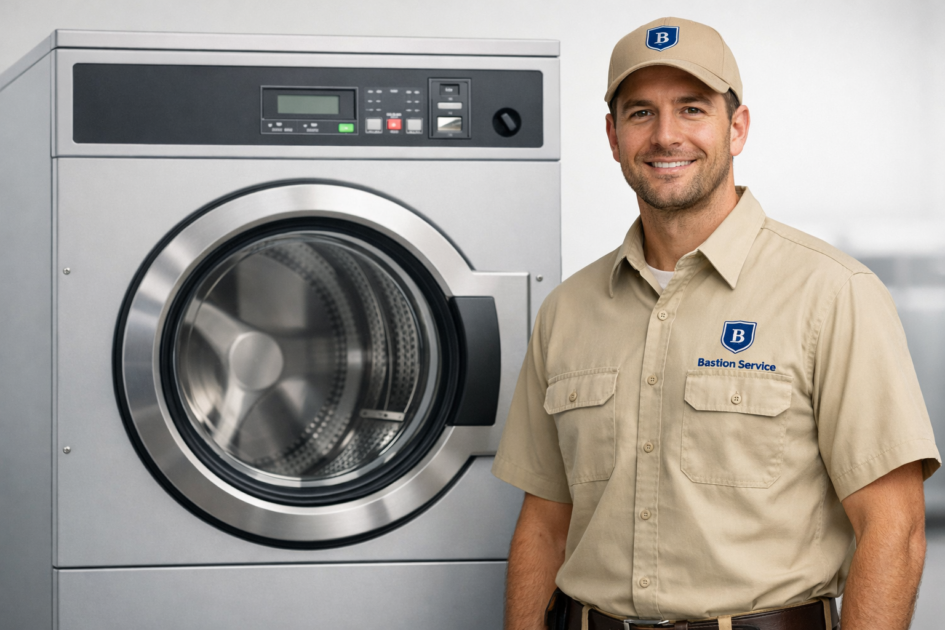
Dryer downtime can disrupt turnover, staffing, and daily workflow quickly, especially when loads begin stacking up and finish times become unreliable. For Wascomat units, the best repair decision usually starts with the symptom pattern itself: whether the machine is heating, how long cycles are taking, whether the drum is turning normally, and whether the problem appears every load or only under certain conditions. Bastion Service helps businesses in Santa Monica identify the fault, determine whether the dryer should stay out of operation, and schedule repair based on the issue that is actually causing lost performance.
Related commercial service paths in Santa Monica include Wascomat Commercial Repair in Santa Monica, Commercial Dryer Repair in Santa Monica, and Wascomat Washer Repair in Santa Monica.
What different Wascomat dryer symptoms usually point to
A Wascomat dryer can fail in several ways while still appearing to run. One machine may tumble with little heat, another may heat but never move enough air to dry efficiently, and another may stop before the cycle finishes. Because the same complaint can have more than one cause, symptom-based diagnosis is important before parts are approved or the machine is returned to regular use.
Dryer runs but does not heat properly
If the dryer powers on and the drum turns but loads stay damp, the issue may involve the heating system, temperature regulation, safety cutoffs, airflow restriction, or sensor-related problems. In a busy laundry setting, this often shows up first as repeat cycles, uneven dry results, or customers and staff noticing that one machine consistently lags behind the rest.
Weak or inconsistent heat can also cause operators to overload cycles or run items longer than normal, which increases utility use and adds strain to the machine. When that pattern continues, it is usually time to have the unit evaluated rather than trying to work around it.
Long dry times and poor airflow
Long cycles are not always caused by a failed heat source. Reduced airflow can keep moisture from leaving the drum efficiently, even when the dryer is generating heat. A Wascomat dryer with poor airflow may leave fabrics warm but still damp, may seem to perform differently depending on load size, or may overheat certain areas while still failing to finish the load on time.
Airflow issues can affect temperature balance, drying consistency, and safety. For businesses in Santa Monica, that usually translates into reduced throughput and avoidable delays across the laundry process.
No start or shutdown during the cycle
When a dryer will not start at all, or starts and then stops before completion, possible causes include door-switch faults, control issues, motor-related failures, thermal protection trips, belt problems, or power-supply concerns. If the machine restarts after cooling down or behaves differently at different times of day, that pattern can help narrow the diagnosis.
An intermittent shutdown should not be treated as a minor glitch. A dryer that drops out under load may be warning of a component failing during operation, and repeated attempts to run it can increase wear or create additional failures.
Noise, vibration, and scraping
Unusual dryer noise is often one of the earliest warnings of mechanical wear. Squealing, thumping, scraping, rattling, or vibration may involve drum support components, blower problems, drive parts, alignment issues, or loose internal hardware. Even when the dryer is still heating and finishing cycles, the noise itself is a sign that the machine should be inspected before the damage spreads.
If the sound becomes louder with each load or changes as the drum speeds up, that usually suggests a wear condition that is progressing rather than a one-time disturbance.
Overheating, scorching, or burning odors
Excessive heat should be taken seriously. A Wascomat dryer that feels unusually hot on the cabinet, produces a burning smell, scorches fabrics, or shuts down after heating up may be dealing with restricted airflow, failing temperature controls, lint accumulation in critical areas, or another unsafe operating condition. In that situation, keeping the machine in rotation is rarely the best choice.
Error codes and control problems
When controls do not respond properly, cycles fail to advance, settings are ignored, or the display shows recurring faults, the problem may be tied to sensors, wiring, interface components, or the control system itself. These issues can be difficult to identify by appearance alone because a dryer may still power on while the underlying control fault prevents normal cycle operation.
Why accurate diagnosis matters before repair approval
Dryer repairs are easiest to manage when the actual failure is separated from the visible symptom. For example, “not drying” can involve heat failure, airflow restriction, sensing problems, overloaded operation, or a combination of those issues. “Not starting” can mean a simple interlock problem or a deeper motor or control fault. Approving parts based only on the complaint can extend downtime instead of shortening it.
A focused inspection helps answer the questions that matter operationally: what failed, whether related components should be checked at the same time, whether the dryer can be used safely before repair, and whether the expected repair scope fits the condition of the machine. That information is especially important when the unit supports daily volume and cannot stay down for long.
Signs the dryer should be taken out of normal use
Some dryer problems should be addressed before the machine runs another full schedule. It is usually smart to pause regular use if you notice any of the following:
- Burning smells, scorching, or excessive cabinet heat
- Repeated shutdowns during the cycle
- The drum is not turning correctly or is dragging
- Scraping, grinding, or rapidly worsening noise
- Dry times that have increased sharply
- Recurring fault codes or unresponsive controls
- Performance that changes significantly from one load to the next
These conditions often mean more than temporary inconvenience. They can affect safety, increase energy use, and turn a manageable repair into a larger mechanical or electrical issue if the dryer continues running.
How symptom details help speed up service
Before scheduling repair, it helps to note how the problem appears in actual operation. Useful details include whether the dryer heats at all, whether it stops at a specific point in the cycle, whether the issue happens on every load, what kind of noise is present, and whether there are visible fault messages. It is also helpful to note if dry times gradually worsened over time or changed suddenly.
That kind of information can make the visit more efficient because it points the inspection toward the most likely failure path rather than treating every complaint as the same type of dryer problem.
Repair or replacement: how businesses usually decide
A down dryer does not automatically need to be replaced. Many Wascomat dryer problems are repairable when the machine is otherwise in solid condition and the issue is limited to serviceable heating, airflow, drive, control, or safety components. Repair is often the better choice when the fault is isolated and the expected result is a stable return to operation.
Replacement becomes a stronger consideration when failures are frequent, several major systems are involved at once, or the overall condition of the dryer suggests continued downtime even after the current issue is addressed. The better decision usually comes from comparing repair scope, expected reliability, and the cost of continued disruption to laundry output.
Service planning for Wascomat dryer repair in Santa Monica
For businesses in Santa Monica, dryer service should support quick decisions, safe operation, and a realistic path back to full capacity. Whether the issue is no heat, long dry times, a shutdown, control trouble, or mechanical noise, the next step is to evaluate the machine based on how it is failing in daily use and schedule repair accordingly. If a Wascomat dryer is affecting workflow, delaying turnaround, or showing signs that continued use may cause more damage, prompt service is usually the best way to reduce downtime and restore predictable performance.


