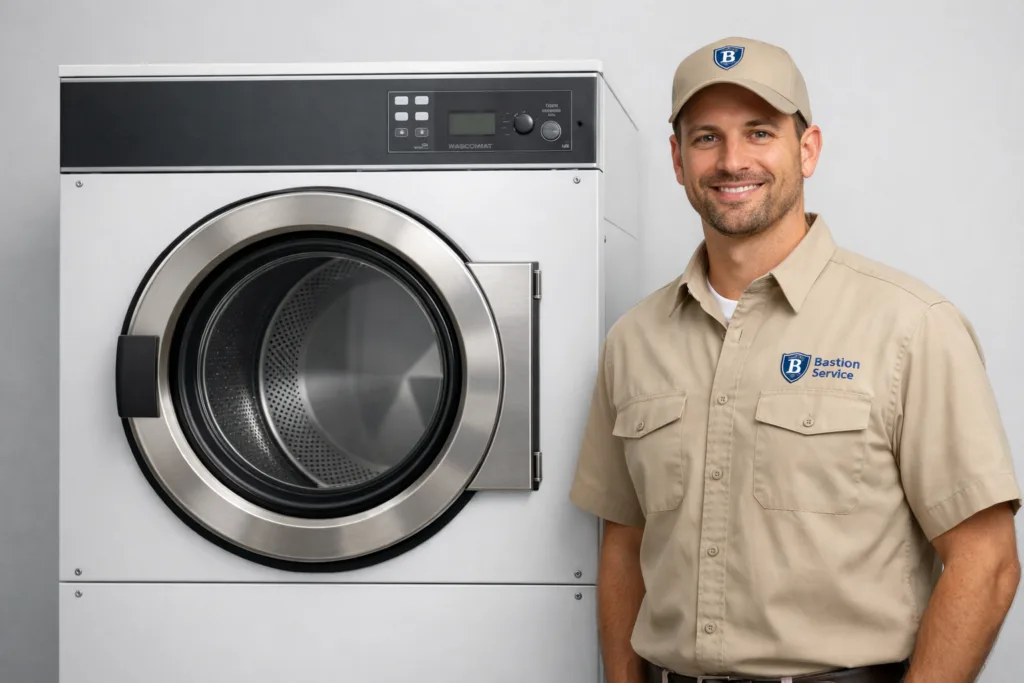




Dryer trouble can quickly disrupt workflow when loads stop finishing on time, staff start rerunning cycles, or a unit drops out of service during active hours. For businesses in Marina del Rey, the best next step is service that focuses on the exact symptom pattern, operating conditions, and likely failure path before repair work begins. Bastion Service provides Wascomat dryer repair with attention to heat performance, airflow, controls, drum movement, and shutdown issues so the repair decision is based on how the machine is actually failing.
Related commercial service paths in Marina del Rey include Wascomat Commercial Repair in Marina del Rey, Commercial Dryer Repair in Marina del Rey, and Wascomat Washer Repair in Marina del Rey.
What service should focus on first
A Wascomat dryer may show one obvious problem while the real cause sits elsewhere in the system. A no-heat complaint can come from failed heating components, but it can also be tied to airflow restriction, tripped safety limits, control faults, or power problems. Long dry times may point to weak heat, moisture-sensing issues, or exhaust problems rather than a simple parts failure. That is why the most effective repair process starts with how the unit behaves through the cycle, whether symptoms are constant or intermittent, and whether performance changes under heavier use.
Common Wascomat dryer problems and what they often indicate
Dryer runs but there is little or no heat
If the drum turns normally but the load stays damp, the issue may involve the heating circuit, temperature limits, wiring faults, controls, or incoming power. In some cases, the dryer is protecting itself from overheating caused by poor airflow, which can make the symptom look like a heater failure even when the root problem is elsewhere. This is one of the main reasons no-heat complaints should be tested rather than guessed at.
Loads take too long to dry
Long cycle times usually mean the dryer is still working, just not efficiently. Common causes include restricted exhaust, reduced heat output, sensor problems, blower issues, or conditions that prevent moisture from leaving the drum properly. Businesses in Marina del Rey often notice this symptom before a full breakdown, especially when staff need two cycles to finish what used to dry in one.
Dryer stops mid-cycle
Shutdowns during operation can be related to overheating, motor strain, door-switch faults, belt-related issues, failing controls, or unstable electrical performance. If the machine restarts after cooling down and then stops again, that pattern often suggests a condition that is getting worse under normal operating temperature.
Dryer will not start
A no-start complaint can involve the door switch, start circuit, controls, power supply, safety devices, or failed internal components. When the display appears normal but the unit still will not run, that usually points to a problem in the start sequence rather than a simple user setting issue.
Noise, vibration, or scraping sounds
Unusual sound from a Wascomat dryer may come from worn drum supports, idler problems, blower issues, loose internal parts, or objects caught where they should not be. A squeal, thump, or scrape is important to address early because continued operation can turn a limited repair into broader internal damage.
Burning smell or excessive heat around the unit
A hot or burning odor should be taken seriously. It may indicate lint buildup in problem areas, airflow restriction, friction from failing moving parts, overheating components, or electrical stress. Even if the dryer still runs, this symptom should not be treated as normal wear.
Controls act unpredictably
When settings do not respond correctly, cycles do not complete as expected, or the machine behaves differently from one load to the next, the issue may involve the control board, relays, sensors, user interface, or heat-related connection problems. Intermittent control issues are especially important because they can be missed unless the full complaint pattern is reviewed.
Why symptom-based diagnosis matters
Two dryers can show the same outward problem for completely different reasons. One unit with damp loads may have a failed heating component, while another may have poor exhaust flow that is causing safety limits to interrupt normal operation. One dryer that stops mid-cycle may have a motor problem, while another has a control issue that appears only after the machine warms up. Repair decisions are stronger when they account for the full system instead of replacing parts based only on the most visible symptom.
Signs the problem is affecting more than one system
Some complaints suggest the dryer may have secondary issues in addition to the main failure. Watch for patterns such as:
- No heat combined with unusually hot cabinet surfaces
- Long dry times along with weak airflow
- Noise that gets worse as the drum reaches speed
- Shutdowns that happen only on longer cycles
- Intermittent controls along with temperature inconsistency
- Repeated resets needed to finish normal loads
These combinations often mean the machine should be evaluated as a whole rather than treated as a single-part repair.
When to stop using the dryer until it is checked
It is wise to pause operation if the dryer has a burning smell, harsh grinding or scraping noise, repeated overheating, visible airflow weakness, or frequent mid-cycle shutdowns. Continuing to run the unit under those conditions can increase wear, expand the repair scope, and create more downtime than addressing the issue promptly.
Repair versus replacement considerations
Many Wascomat dryer problems are repairable when the machine is otherwise in solid condition and the failure is limited to serviceable components. Replacement becomes a more serious consideration when the dryer has recurring major faults, widespread heat damage, multiple worn systems at the same time, or repair cost that does not match expected remaining life. The right decision usually depends on the condition of the heating system, airflow path, drum support components, drive system, and controls together rather than on one failed part alone.
How businesses can prepare for a service visit
Before scheduling repair, it helps to note what the dryer is doing and when the problem appears. Useful details include:
- Whether the unit heats at all or only sometimes
- Whether the drum turns normally
- If the dryer stops at a certain point in the cycle
- Any noises, smells, or vibration changes
- Whether the problem affects every load or only heavier ones
- If the issue appeared suddenly or worsened over time
These observations can help narrow the likely cause and support faster repair planning.
Wascomat dryer service for Marina del Rey operations
For businesses in Marina del Rey, dryer repair is ultimately about restoring predictable cycle completion, protecting throughput, and reducing repeat interruptions. When a Wascomat dryer starts showing heat, airflow, drum, or control problems, scheduling service early can prevent a partial performance issue from becoming a full outage. A focused diagnosis, a clear repair path, and timely scheduling are the most practical next steps when dryer reliability starts affecting daily operations.