
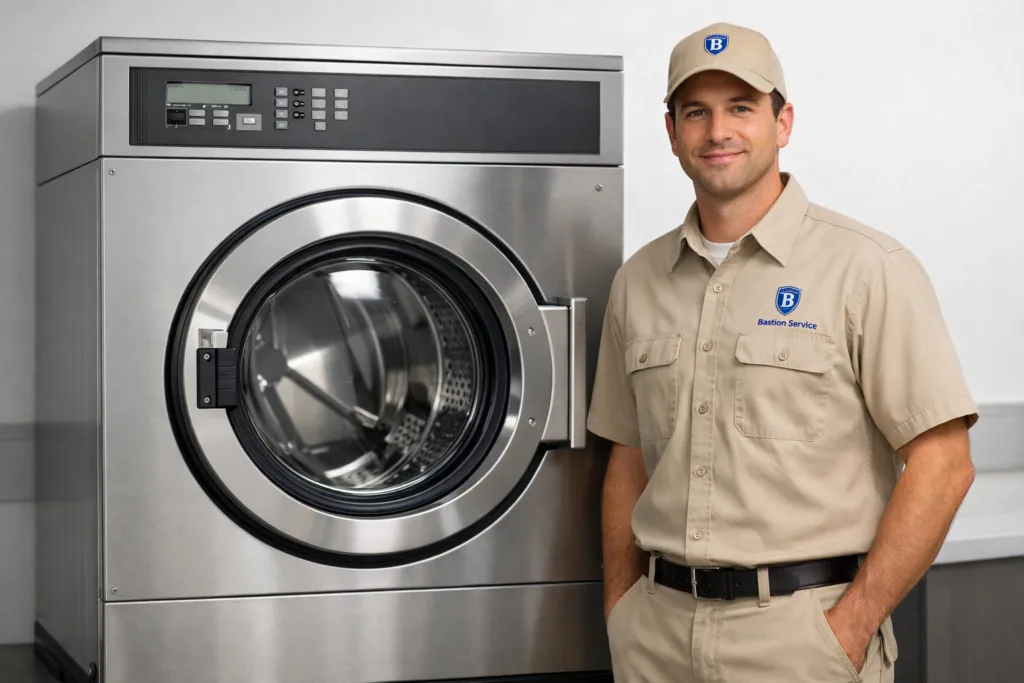




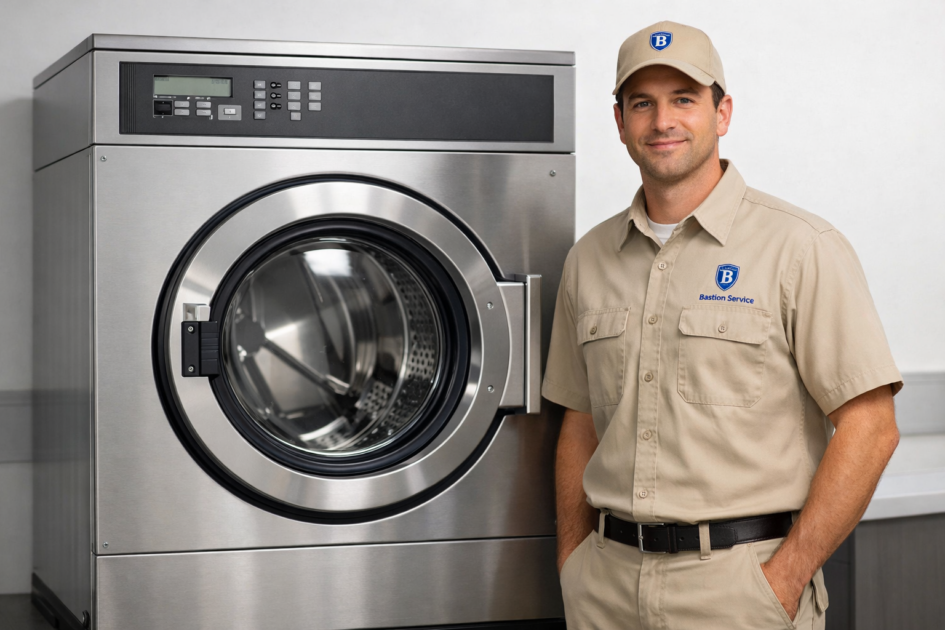
Wascomat washer and dryer problems can disrupt daily production fast, especially when one machine failure starts backing up loads across the rest of the room. For businesses in Marina del Rey, the best next step is usually to schedule service as soon as symptoms become consistent rather than waiting for a complete shutdown. Early diagnosis helps identify whether the issue is isolated, whether related components are under strain, and whether the unit should stay in operation until repair is completed.
For specific equipment paths in Marina del Rey, review Wascomat Washer Repair in Marina del Rey, Wascomat Dryer Repair in Marina del Rey, and Commercial Appliance Repair in Marina del Rey.
Bastion Service works with Wascomat laundry equipment used in laundromats, shared laundry rooms, hotels, and other business settings where uptime matters. A service call is most useful when it answers practical questions: what is failing, how urgent the issue is, whether continued use risks larger damage, and what repair scheduling makes the most sense for the workload on site.
Washer symptoms that usually need prompt repair
Wascomat washers often show problems through cycle interruptions, draining issues, poor spin performance, leaks, or abnormal noise. While some symptoms seem minor at first, they often affect the next stage of the laundry process by increasing dry times, causing load delays, or forcing nearby machines to absorb extra volume.
Washer not draining or leaving loads too wet
If water remains in the drum at the end of the cycle or linens come out excessively wet, the problem may involve the drain pump, drain path, control response, extraction performance, or a condition that prevents proper spin speed. This is more than a convenience issue. Poor water removal slows turnover and often creates a second bottleneck at the dryers.
- Standing water after the cycle ends
- Slow draining between wash steps
- Wet loads after spin
- Repeated off-balance interruptions
These symptoms are worth addressing quickly because continued operation can place added stress on the motor, drive system, and related components.
Washer will not start, fill, or finish the cycle
A Wascomat washer that will not begin a cycle, fills inconsistently, pauses unexpectedly, or stops before completion may have issues tied to the door-lock system, inlet valves, sensors, controls, or electrical faults. Similar symptoms can come from different causes, which is why repeated resets rarely solve the real problem for long.
When this happens in a business setting, the repair decision is not just about getting one machine running again. It is about preventing unpredictable downtime that disrupts attendants, room scheduling, and customer use.
Leaks, vibration, and unusual washer noise
Water around the machine, strong vibration during extraction, grinding noise, or hard banging during spin should not be treated as normal wear. These signs can point to mounting problems, internal wear, bearing issues, suspension-related faults, or other mechanical problems that become more expensive if the unit stays in heavy rotation.
If a washer is shaking enough to affect surrounding equipment or creating recurring water on the floor, it should be evaluated before normal use continues.
Dryer symptoms that affect turnover and machine reliability
Dryer complaints usually appear as no heat, weak heat, long dry times, repeated shutdowns, overheating, or noise. In a busy laundry environment, a single underperforming dryer can slow the entire process because loads remain in circulation longer and staff may need to rerun cycles just to reach acceptable results.
No heat, low heat, or long dry times
When Wascomat dryers are not drying efficiently, the cause may involve heating components, airflow restrictions, sensors, controls, or drive-related performance issues. Loads that consistently need extra time are a sign that the dryer is not operating at normal output, even if it still appears to run.
- Loads require multiple cycles
- Clothes or linens stay damp near the end of the run
- Heat seems weaker than usual
- Cycle times keep getting longer
Addressing these symptoms early can help reduce energy waste and avoid unnecessary strain on the machine.
Dryer will not start or shuts off during operation
If the dryer does not start at all or starts and stops unpredictably, the problem may involve the motor, door switch, thermal protection, controls, or incoming power. Because shutdown complaints can overlap across several systems, diagnosis is important before parts are ordered or the machine is put back into regular use.
Repeated stopping during a cycle is especially disruptive in business-use laundry rooms because it creates uncertainty about whether a load can be completed on time.
Overheating, burning smell, or loud dryer noise
These symptoms should be treated as high priority. Overheating panels, a burning odor, scraping sounds, thumping, or harsh mechanical noise may indicate worn supports, motor strain, belt problems, lint-related airflow issues, or heat-management faults. If these signs are present, the dryer should not be treated as safely available just because the drum still turns.
What Wascomat laundry equipment problems do you troubleshoot?
Service typically begins with the symptom the operator can actually observe. For Wascomat laundry equipment, that often includes:
- Washer leaks
- Drain failures and slow draining
- Spin problems and wet loads
- Fill problems and cycle interruptions
- Dryers with no heat or poor heat
- Long dry times
- Units that will not start
- Machines that stop mid-cycle
- Unusual vibration, banging, grinding, or squealing
- Overheating and burning smells
The goal is to connect the symptom pattern to the actual failed system, then determine whether the machine should stay online, come out of service, or be scheduled for repair at the earliest workable opening.
When continued use can make the problem worse
Some laundry equipment issues allow limited short-term operation, but others can cause additional damage if the machine keeps running. A leaking washer, a unit that slams during spin, or a dryer that overheats should usually be treated differently from a minor performance complaint. The main question is whether continued use increases the chance of a wider breakdown, added parts failure, or unsafe operation.
For businesses in Marina del Rey, that decision often depends on current load demand, available backup equipment, and how severe the symptom has become. A repair visit helps determine whether the machine can finish out a short schedule, whether it should be taken offline immediately, and how urgent the repair timeline should be.
Repair planning for washer and dryer downtime
Good repair planning does more than confirm that a problem exists. It helps management understand what system is failing, whether related wear is present, and what path is most likely to restore stable operation without repeated interruptions. This is especially important when the affected machine has been compensating for heavy use, delayed maintenance, or neighboring unit failures.
For laundry rooms that depend on steady turnover, the most useful repair plan usually addresses:
- Whether the machine can remain in service temporarily
- How the current fault affects surrounding equipment flow
- Whether additional part failure is likely if use continues
- What scheduling window creates the least disruption
That approach gives operators a clearer basis for deciding between immediate repair, scheduled repair, or taking a machine out of rotation until parts and labor are ready.
When repair versus replacement becomes a real discussion
Many Wascomat washer and dryer issues are repairable, especially when the problem is identified before it spreads into multiple systems. Replacement usually becomes more relevant when the equipment has repeated major failures, extensive wear, structural deterioration, or a repair history that no longer supports reliable daily use.
In practice, the decision should be based on the current fault, overall machine condition, downtime impact, and whether restoring the unit supports ongoing operations in a sensible way. A proper assessment helps separate a repairable interruption from a larger equipment planning decision.
Scheduling service for Wascomat laundry equipment in Marina del Rey
When washer or dryer performance starts affecting output, cycle completion, or daily workflow, scheduling service early is usually the most cost-effective move. Symptom-based diagnosis helps determine what is causing the interruption, whether the equipment should remain in use, and how to plan repair timing around business demands. For Marina del Rey operators, timely service can limit downtime, reduce repeated cycle loss, and keep laundry equipment from slipping into a larger and more disruptive failure.


