
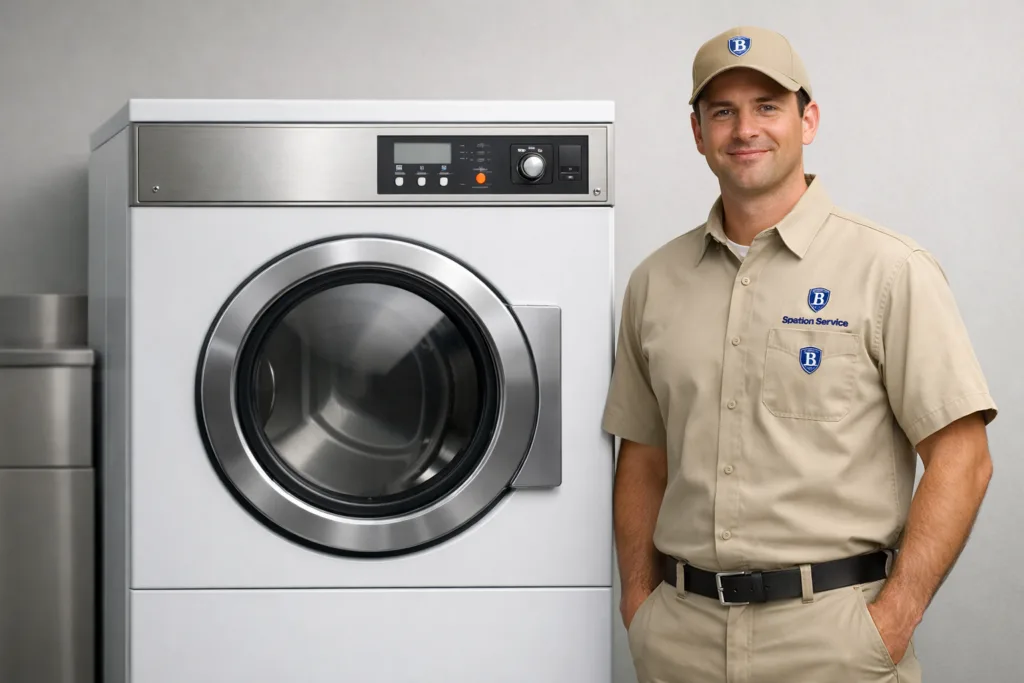




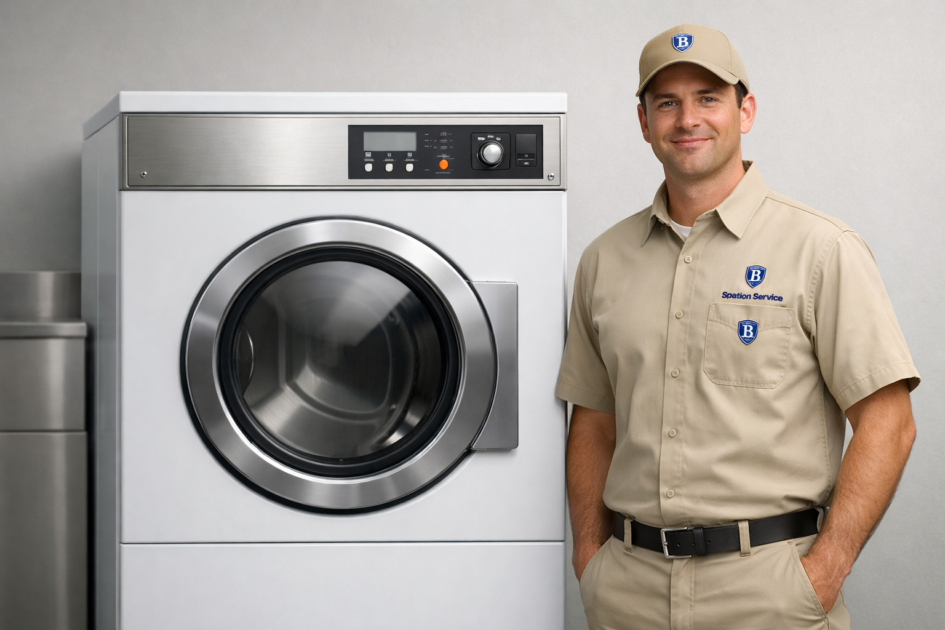
Dryer problems can interrupt laundry flow fast, especially when loads start backing up, staff begin re-running cycles, or a unit has to be taken out of rotation without warning. For businesses in Marina del Rey, service should focus on the exact symptom pattern, the likely cause, and how quickly the machine can be returned to stable operation. Bastion Service handles Speed Queen dryer issues with attention to heat performance, airflow, controls, drum movement, and the wear conditions that often lead to repeat shutdowns.
Related commercial service paths in Marina del Rey include Speed Queen Commercial Repair in Marina del Rey, Commercial Dryer Repair in Marina del Rey, and Speed Queen Washer Repair in Marina del Rey.
Common Speed Queen dryer symptoms and what they may mean
Runs but does not heat
If the drum turns but laundry stays damp, the failure may involve the heating element, igniter, gas valve components, thermal fuse, thermostat, wiring, or incoming power. On some units, an airflow restriction can also trigger overheating protection and create a no-heat complaint even though the original problem started in the exhaust path. This is why testing matters before parts are approved.
Long dry times or incomplete drying
When loads need extra cycles, the problem is often related to reduced airflow, partial vent blockage, weak heat output, sensor issues, or controls that are not advancing correctly. In a business setting, this symptom usually shows up before a full failure. A machine may still appear to work, but performance drops enough to affect throughput, staffing, and daily workflow.
Stops during the cycle
A dryer that shuts off mid-cycle may be overheating, losing power intermittently, tripping a safety device, or struggling with a motor or control fault. If it restarts after cooling down, that often points to heat buildup, restricted airflow, or a motor protection issue. Repeated shutdowns are a sign that continued operation can create more wear.
No start or unreliable starting
If the machine will not start at all, starts only sometimes, or requires repeated attempts, possible causes include door switch failure, timer or board problems, start circuit faults, loose wiring, or supply issues. On a busy site, intermittent starting is easy to overlook at first, but it often develops into a full no-start condition.
Noise, vibration, or burning smell
Squealing, scraping, rumbling, or thumping can indicate worn rollers, belt wear, idler pulley problems, drum support issues, or motor trouble. A burning odor may point to lint buildup, slipping components, overheating, or motor strain. These symptoms should be addressed quickly because they can move from nuisance to shutdown with little warning.
Controls or cycle settings behave unpredictably
When buttons fail to respond, settings do not hold, or the cycle ends too early or too late, the cause may involve the user interface, timer, board, moisture sensing, or a related safety circuit. What looks like a control failure is not always the board itself, which is why symptom-based testing helps avoid unnecessary parts replacement.
Why airflow and temperature issues deserve quick attention
Speed Queen dryers depend on proper heat production and steady air movement to dry efficiently and shut down safely. When airflow is reduced, the dryer may run hotter internally while performing worse at the drum. That can lead to long dry times, thermal cutoffs, repeated fuse failures, and inconsistent cycle completion.
For Marina del Rey businesses, airflow-related issues matter beyond convenience. Extra cycle time means less capacity, more labor spent checking loads, and greater strain on components that are already operating under heat. If a dryer is getting hot but not drying well, or if the cabinet seems unusually warm during operation, that is a strong reason to schedule service instead of continuing normal use.
How diagnosis helps prevent repeat breakdowns
Different failures can create nearly identical symptoms. A no-heat complaint might come from a failed heating part, but it could also trace back to restricted exhaust, a safety device opening under stress, or a power issue affecting part of the circuit. Long dry times may seem minor, yet the underlying problem could be vent restriction, sensor trouble, or declining heat output.
Good diagnosis separates the primary fault from secondary damage. It also helps identify whether the repair is isolated or whether the dryer is showing broader wear in the drive system, controls, or heat circuit. That is especially important when a business depends on multiple loads per day and cannot afford a short-term fix that leads to another service call soon after.
Signs it is time to schedule repair
Service should be scheduled promptly when a Speed Queen dryer shows any of these warning signs:
- No heat or weak heat
- Dry times that keep increasing
- Cycle shutdowns before loads are finished
- No-start conditions or intermittent starting
- Loud squealing, scraping, or heavy vibration
- Burning odor, overheating, or unusual cabinet heat
- Controls that fail to respond consistently
These symptoms usually worsen with continued use. A worn belt can become a no-drum condition, a struggling motor can overheat more often, and a partially blocked airflow path can lead to repeated safety trips or damage to heat-related components.
Repair versus replacement
Many Speed Queen dryers are worth repairing when the machine is structurally sound and the failure is limited to serviceable parts such as rollers, belts, heating components, switches, sensors, or controls. Repair is often the practical choice when the problem is well defined and the expected result fits the workload of the site.
Replacement becomes a stronger consideration when the unit has multiple failing systems, recurring downtime, major wear across heat and drive components, or a repair history that suggests the machine is near the end of reliable service life. The best decision usually comes from looking at the current fault together with the overall condition of the dryer, not from one symptom in isolation.
How to prepare for a service visit
Before scheduling, it helps to note exactly what the dryer is doing. Useful details include whether it heats at all, whether the drum turns, how long the cycle runs before stopping, whether the problem affects every load, and whether there are any noises or odors. If the issue happens only after the machine has been running for a while, that detail can be especially helpful.
Businesses in Marina del Rey can also save time by identifying whether the unit is gas or electric, whether the failure is constant or intermittent, and whether nearby dryers are performing normally. That information helps narrow down whether the problem is isolated to one machine or tied to a shared operating condition.
Service focused on uptime and safe operation
Speed Queen dryer repair is not just about replacing a failed part. It is about restoring steady drying performance, reducing avoidable downtime, and making sure the machine can return to daily use without unresolved heat, airflow, or drive issues. When a dryer starts missing heat, taking too long, shutting down, or making unusual noise, the most useful next step is to schedule service based on the actual symptom pattern so the repair plan matches the condition of the machine.


