
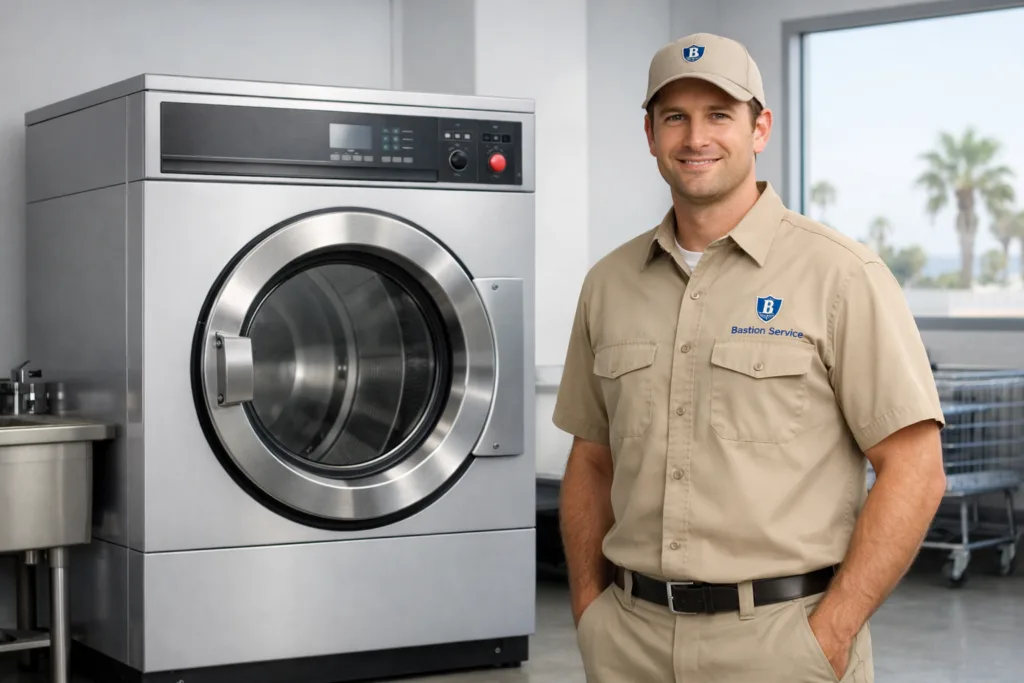




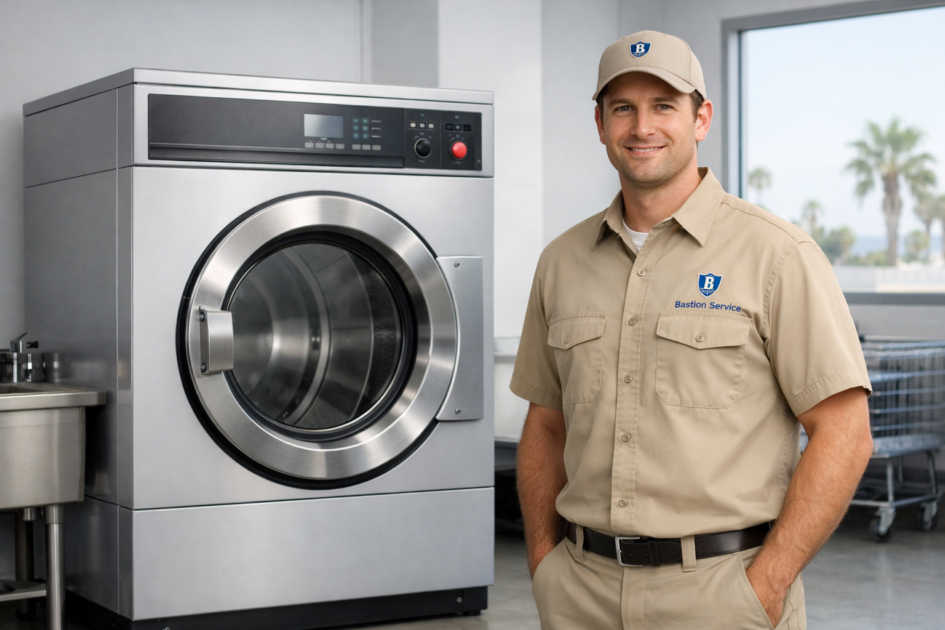
Dryer problems can disrupt more than laundry output. In a commercial setting, long cycles, inconsistent heat, shutdowns, and drum issues can delay room turns, stall linen processing, interrupt staff routines, and create uncertainty around daily capacity. The most useful next step is to match the symptom to the likely failure path instead of assuming every damp load means the same repair.
Related commercial equipment paths in Marina del Rey include Speed Queen Dryer Repair in Marina del Rey and Wascomat Dryer Repair in Marina del Rey.
Common commercial dryer problems
Most service calls start with one of a few patterns. No heat or weak heat may point to failed heating elements, gas ignition faults, thermostats, high-limit devices, control problems, or power supply issues. Long dry times often trace back to restricted airflow, lint buildup, weak blower performance, venting problems, or heating that is present but not strong enough to finish loads on schedule.
If the dryer starts but the drum does not turn, the issue may involve belts, rollers, idlers, motors, or door and safety switches. If the machine runs for a short time and then stops, the cause may be overheating, motor overload, intermittent electrical faults, or control failure. Squealing, scraping, thumping, or rattling usually suggests worn support parts, damaged drum components, loose hardware, or foreign objects inside the cabinet.
Why symptom-based diagnosis matters
A commercial dryer can show the same outward complaint for very different reasons. Damp loads, for example, may come from low heat, poor airflow, inaccurate moisture sensing, overloaded cycles, or a combination of smaller faults that reduce performance together. Treating only the most obvious symptom can leave the real cause in place and lead to repeat downtime.
Airflow is one of the most important examples. A dryer with restricted exhaust may still produce heat, but trapped hot air can push temperatures beyond normal operating range and place extra stress on heating components, thermostats, motors, controls, and safety cutoffs. What starts as a slow-drying complaint can eventually become a shutdown, a no-heat condition, or a machine that trips protective devices during use.
Noise also deserves attention early. A dryer that still completes cycles while squealing or grinding may seem usable, but worn rollers, glides, or support parts can accelerate wear on the drum and drive system. Addressing that condition before it worsens is often less disruptive than waiting for a full stop.
Signs the problem may be upstream in the laundry workflow
Not every drying complaint starts in the dryer itself. Loads that enter the dryer too wet because of poor washer extraction can make a healthy machine seem slow or ineffective, especially when staff are trying to keep turnaround times consistent. If the issue begins with incomplete drain, weak spin performance, or water remaining in textiles after the wash cycle, Commercial Washer Repair in Marina del Rey may be the better place to start.
When to schedule service
Service should be scheduled when cycles suddenly take longer than normal, loads come out damp despite repeated runs, the dryer overheats the laundry area, the drum hesitates or stops turning, breakers trip, or the machine shuts down before the cycle finishes. In a business environment, those are operating issues, not minor inconveniences.
It is also wise to stop using the unit and arrange service when there is a burning smell, repeated high-limit shutdown, metal-on-metal noise, strong vibration, or signs of scorched lint around the cabinet or vent area. Continued use in those conditions can increase repair scope and put surrounding workflow at risk.
Repair versus replacement considerations
Repair is often the practical choice when the fault is limited to serviceable heating, airflow, drive, or control components and the rest of the machine remains structurally sound. Replacement becomes a more serious consideration when there are multiple system failures, repeated breakdowns, advanced internal wear, or a pattern of unreliable performance that affects planning and labor every week.
The right decision depends on how heavily the dryer is used, how critical uptime is to operations, and whether restoring the current machine is likely to return it to stable, predictable service. A focused assessment can help separate a manageable parts failure from a broader end-of-life problem.
What a useful commercial service assessment should cover
A thorough dryer assessment should verify the complaint under real operating conditions and determine whether the fault is primarily related to heat production, airflow, drum movement, controls, safety devices, or incoming power. That process matters because the repair path for a dryer that tumbles without heat is very different from the path for a dryer that heats normally but cannot move air efficiently.
For businesses in Marina del Rey, that kind of evaluation helps reduce guesswork and supports better decisions about scheduling, equipment use, and next steps. The goal is not just to restart the machine, but to restore dependable performance without leaving hidden causes unresolved.


