
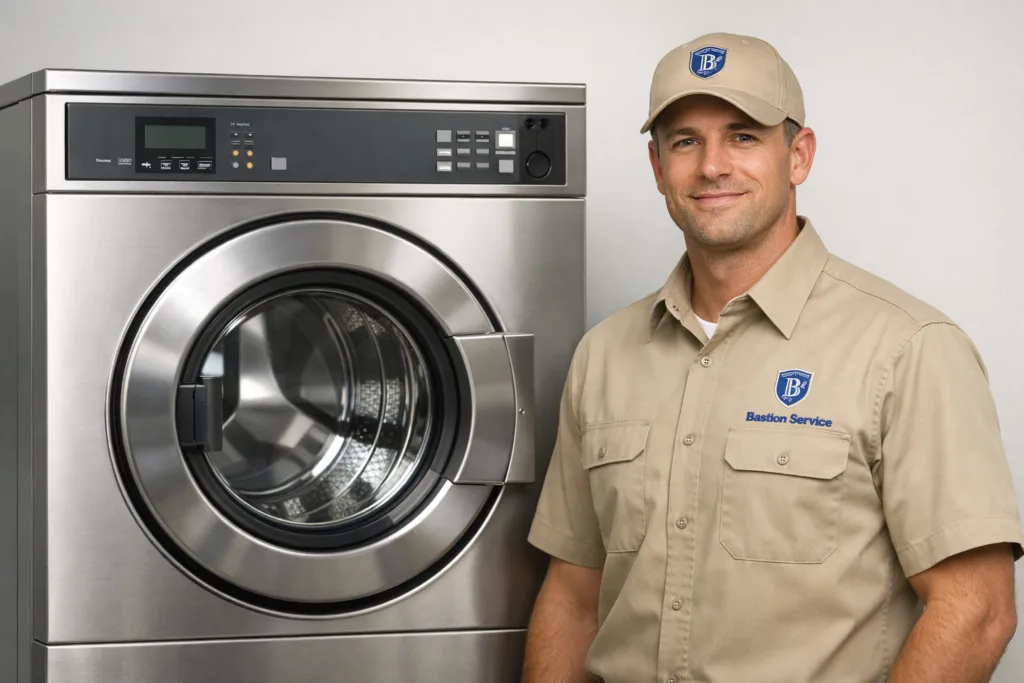




Wascomat washer problems tend to affect more than a single load. When a machine will not start, stalls mid-cycle, leaves water in the drum, or produces poor extraction, the result is usually slower turnaround, added labor, and pressure on the rest of the laundry workflow. For businesses in Marina del Rey, service is most effective when the symptom is tied to a repair decision quickly, before a partial failure becomes a full stoppage. Bastion Service works with business operators to identify the likely fault, confirm the cause on site, and schedule repair based on urgency, machine condition, and daily operating demands.
Related commercial service paths in Marina del Rey include Wascomat Commercial Repair in Marina del Rey, Commercial Washer Repair in Marina del Rey, and Wascomat Dryer Repair in Marina del Rey.
Many washer issues look simple at first but have multiple possible causes. A drain complaint may involve the pump, a restriction, a sensor reading, or a control response. A no-start condition may trace to the door lock, power path, interface, or internal fault protection. That is why symptom-based diagnosis matters: it helps avoid unnecessary part changes and gets the machine closer to reliable operation with fewer delays.
Common Wascomat washer symptoms and what they may indicate
Washer will not start or stops before the cycle finishes
If the machine powers on but will not begin, or if it starts and then shuts down before completion, common causes include door-lock faults, control board problems, input issues, safety-circuit interruptions, or communication errors between components. Intermittent stopping is especially important to address early because repeated resets can mask a worsening electrical or control problem.
Slow draining, standing water, or drain-related errors
Water left in the drum after the wash or rinse phase often points to a restricted drain path, pump failure, drain hose obstruction, sensor issue, or a control problem reacting to incomplete water removal. In daily operation, poor draining can delay the next load, interfere with extraction, and eventually trigger lockout conditions that take the machine out of service entirely.
Excessive vibration, banging, or walking during spin
Hard shaking during extraction may be related to balance detection, suspension wear, mounting issues, internal mechanical wear, or drum support problems. Even when the washer still completes cycles, strong vibration should not be ignored. Continued use can increase strain on nearby assemblies and may lead to more extensive repairs if the underlying cause is left unresolved.
Water not filling correctly
When fill times are slow, water levels are inconsistent, or the washer fails to take in enough water for proper washing, the problem may involve inlet valves, clogged screens, pressure sensing, supply flow, or control-related errors. This symptom often shows up as poor wash quality, longer cycles, or repeated attempts to restart a program.
Loads come out too wet after spin
If linens or garments finish the cycle holding too much moisture, likely causes include incomplete draining, reduced spin speed, imbalance handling, motor or drive issues, or controls limiting extraction because another fault is present. This problem increases dryer time, slows throughput, and often signals that the washer is no longer operating at full performance.
Leaks, drips, or water around the machine
Visible water around a Wascomat washer can come from hoses, seals, valves, drain components, overfill conditions, or internal connections that only leak under certain phases of the cycle. Leaks should be evaluated promptly because they can affect surrounding flooring, create safety concerns for staff, and point to wear that may spread to additional parts.
Unusual noise during wash or spin
Grinding, scraping, knocking, or high-pitched sounds are often signs of mechanical wear rather than a minor nuisance. Bearings, supports, drive-related parts, and other moving assemblies can all create noise patterns that change as the machine heats up or reaches higher speeds. A machine that becomes louder over time is usually giving advance warning that service should not be delayed.
Why a symptom-based diagnosis matters
Washer failures rarely follow a single pattern. The same visible complaint can come from very different sources, and replacing the wrong part can add cost without restoring dependable operation. In a busy laundry environment, the goal is not just to get the unit running again for one day. The goal is to identify what failed, what stress the failure may have created elsewhere, and whether the repair makes sense for the way the machine is actually used.
This approach is especially important for businesses in Marina del Rey managing scheduling, staffing, and customer-facing deadlines. A washer that runs inconsistently can be more disruptive than one that is fully down, because staff continue trying to work around it while output drops. Proper evaluation helps determine whether the fault is isolated, whether related wear should be handled during the same visit, and whether temporary operation should stop until the repair is completed.
When to schedule service instead of monitoring the problem
Service should be scheduled when symptoms repeat, worsen, or start affecting workflow. Typical signs include:
- Cycles that stop at the same point repeatedly
- Drain times that keep getting longer
- Frequent imbalance shutdowns
- Loads that require extra drying every day
- Leaking that returns after cleanup
- New noises during acceleration or spin
- Error codes that clear temporarily and then come back
It is also worth booking service when staff notice a performance change even if the machine is still usable. Longer cycle times, inconsistent fill, reduced extraction, or occasional restart requirements are often early indicators of a repair issue that is becoming more expensive over time.
Problems that should not be ignored
Some conditions can cause added damage if the washer stays in regular use. Severe vibration can affect supports and fasteners. Repeated draining failures can strain pumps and interrupt extraction. Leaks can lead to slip hazards and surrounding damage. Electrical shutdowns, door-lock issues, and overheating concerns can leave the machine unreliable at exactly the wrong point in the day.
If the washer is stopping production, damaging loads, leaking onto the floor, or operating with strong mechanical noise, it makes sense to pull the unit from normal use until it is evaluated. That step can prevent a contained repair from turning into a larger equipment interruption.
Repair or replacement: what usually drives the decision
The right next step depends on the age of the washer, recent service history, overall condition, and the importance of that unit in your daily workflow. If the fault is isolated and the rest of the machine remains sound, repair is often the most practical path. If multiple major systems are wearing out, downtime has become routine, and each repair only restores short-term operation, replacement planning may deserve serious consideration.
For many Marina del Rey businesses, the decision is less about one broken part and more about operational risk. A machine that supports peak-hour demand may justify prompt repair even when the parts cost is significant. A unit with recurring failures and weak backup capacity may call for a broader equipment plan. A good service assessment helps separate these situations instead of treating every washer issue the same way.
What to have ready before the service visit
Helpful details from staff can shorten troubleshooting time and improve repair planning. Before service, try to note:
- The exact symptom and when it occurs in the cycle
- Whether the problem happens every load or intermittently
- Any displayed error code or warning behavior
- Whether the issue started suddenly or developed gradually
- Any unusual sound, odor, leak pattern, or vibration change
- Whether the issue appears only with certain load sizes or materials
These observations help connect the complaint to the most likely systems involved and can reduce unnecessary delays once the machine is inspected.
Service-focused next steps for Marina del Rey businesses
When a Wascomat washer begins missing cycles, draining poorly, leaking, or failing to extract properly, the best next step is usually to schedule service before the problem spreads into lost productivity across the rest of the laundry room. Timely diagnosis helps determine whether the repair is straightforward, whether additional wear needs to be addressed during the same appointment, and whether continued use is worth the risk. For businesses in Marina del Rey, that kind of repair planning supports better uptime, more predictable scheduling, and faster return to normal operation.


