





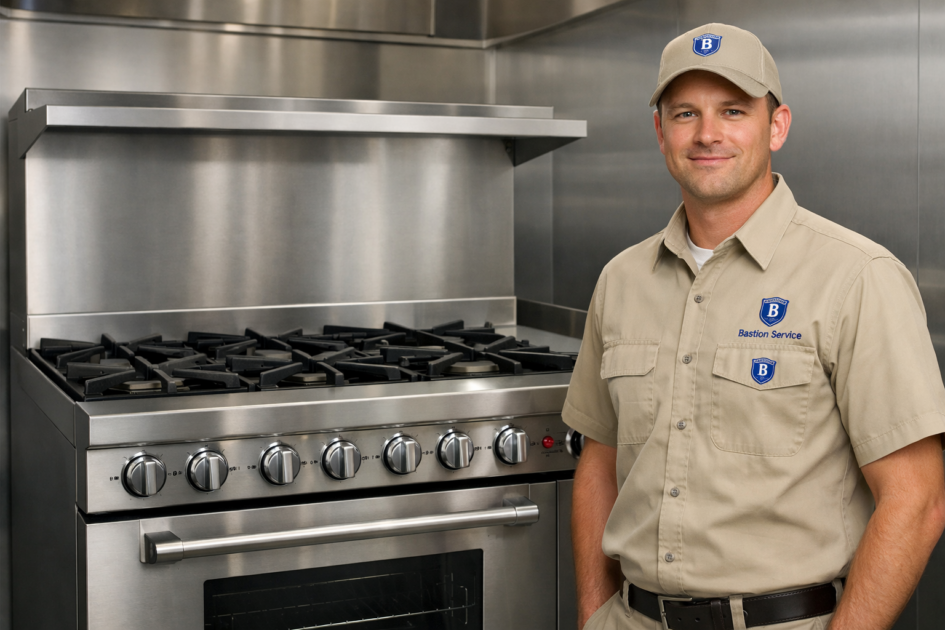
Range problems can disrupt an entire kitchen long before the unit stops completely. A burner that will not light on the first try, an oven section that runs hot or cool, or controls that respond inconsistently can slow service, affect food quality, and force staff into workarounds that put more strain on the equipment. For businesses in Mid-Wilshire, the most useful next step is service that identifies the actual fault, confirms what parts of the range are still operating properly, and helps schedule repair around production needs.
Related commercial service paths in Mid-Wilshire include Vulcan Commercial Repair in Mid-Wilshire, Vulcan Oven Repair in Mid-Wilshire, and Vulcan Fryer Repair in Mid-Wilshire.
What to check when a Vulcan range starts acting up
Not every range problem points to a single failed part. Similar symptoms can come from burner assembly buildup, ignition component wear, gas delivery problems, thermostat or sensor issues, valve trouble, or heavier overall wear from daily use. That is why symptom pattern matters. Whether the issue happens on one burner, across several burners, only in the oven section, or mainly during busy hours can help narrow down the source of the failure.
Bastion Service helps Mid-Wilshire businesses evaluate Vulcan range issues based on how the unit is actually performing in the kitchen, not just on the first symptom noticed by staff. That makes it easier to decide whether the problem is isolated, whether it is affecting safe operation, and whether repair is likely to restore stable output without unnecessary part replacement.
Common Vulcan range symptoms and what they often mean
Burners will not light or ignition is delayed
When a top burner does not ignite reliably, takes several tries, or lights with a delay, the cause may involve worn ignition parts, contamination near the burner, poor flame carryover, switch issues, or a gas-flow problem. If the issue affects more than one burner, the diagnosis may need to go beyond a single surface component. Intermittent ignition often gets worse during heavier kitchen use, when the range is expected to perform consistently without repeated retries.
Clicking, sparking, or inconsistent ignition behavior
Repeated clicking can point to ignition system trouble even when a burner eventually lights. If clicking continues after ignition, happens unpredictably, or appears alongside slow lighting, there may be a problem with the igniter, switch, alignment, or moisture and debris affecting the ignition path. Kitchens sometimes keep operating through this stage, but ongoing ignition irregularity can turn into a no-light condition at the worst possible time.
Weak flame or uneven burner output
A burner that looks smaller than normal, heats unevenly, or struggles to maintain steady flame may have clogged ports, valve-related issues, pressure problems, or wear within the burner system. In practical terms, weak output means slower pan recovery, uneven sautéing, and inconsistent line timing. If staff are moving pots to different burners to compensate, the problem is already affecting workflow.
Oven section not heating properly
On a Vulcan range with an oven base, heating complaints can show up as slow preheat, poor temperature recovery, undercooking, overheating, or uneven baking. These symptoms may involve igniter weakness, burner performance issues, thermostat problems, sensor faults, or heat loss around the door. Because several different failures can create the same complaint, temperature problems are best diagnosed through actual operating behavior rather than assumptions.
Temperature swings during service
If the oven section appears accurate at one point and then drifts during repeated use, that can signal a control issue, cycling problem, or burner performance fault that becomes more obvious under load. Temperature swings are especially disruptive in kitchens that depend on repeatable cooking times and consistent batch results. What seems like a minor calibration issue can actually be a larger heating-system problem.
Knobs, controls, or valves not responding normally
Loose control knobs, stiff valve movement, settings that no longer match the expected heat, or controls that feel unpredictable can indicate mechanical wear or control-side failure. These issues often lead staff to over-adjust the unit, repeatedly turn burners on and off, or run sections hotter than intended just to get through service. That can create additional wear and make the original problem harder to isolate.
Why symptom-based diagnosis matters
Range repairs are more effective when the diagnosis matches the exact operating complaint. A burner that seems dead may actually have an ignition-path problem. An oven that appears to need a thermostat may be suffering from weak burner performance. A control complaint may be tied to heat output rather than the control itself. Looking at the sequence of symptoms, when the problem appears, and whether it affects one section or several helps avoid misdiagnosis and repeat downtime.
For businesses in Mid-Wilshire, that matters not just for repair cost but for scheduling and kitchen planning. If the issue is contained to one burner or one oven function, operations may be able to adapt temporarily. If the problem involves gas flow, multiple burners, or unstable heating across the unit, waiting usually increases the risk of a broader interruption.
Signs the range should be serviced soon
Some problems are obvious, but many ranges continue operating in a reduced state long enough that staff get used to them. Service should be scheduled before those workarounds become normal. Common warning signs include:
- Burners that need repeated attempts to light
- Visible changes in flame strength or flame pattern
- Oven temperatures that no longer match the setting
- Slow recovery after loading pans or opening the oven door
- Intermittent clicking or sparking behavior
- Controls that feel loose, sticky, or inconsistent
- Uneven cooking results that are affecting output
- Staff avoiding certain burners because they are unreliable
These symptoms usually indicate a range that is still partly usable but no longer dependable. Addressing the problem earlier often prevents added stress on neighboring components and reduces the chance of a full outage during production hours.
When continued use can make the problem worse
A range that is not lighting correctly, cycling poorly, or holding unstable temperature should not be pushed through day after day without inspection. Continued operation under partial failure can accelerate wear on ignition parts, valves, controls, and burner components. It can also shift too much workload onto the sections of the unit that still seem normal, creating a second problem from overuse.
If there is a persistent gas odor, stop using the range and follow appropriate safety steps immediately before arranging appliance service. If there is no gas odor but ignition behavior is abnormal, the unit should still be checked before the issue develops into a larger operational interruption.
Repair or replace?
Many Vulcan range issues are repairable when the failure is limited to burners, ignition parts, controls, valves, or temperature-related components and the rest of the unit remains in solid working condition. Repair is usually the right choice when the fault is identifiable, the equipment still fits the kitchen’s needs, and restoring performance will return the range to reliable daily use.
Replacement becomes a more realistic discussion when there are repeated failures across several sections, ongoing temperature inconsistency despite prior service, major wear affecting overall function, or downtime costs that outweigh the value of another repair. For a business, the decision is not simply whether the range can run again, but whether it can return to stable production without becoming an ongoing source of disruption.
How to prepare for a service visit
Before scheduling repair, it helps to note exactly what the range is doing. Useful details include whether the problem affects surface burners, the oven section, or both; whether the issue is constant or intermittent; whether it appears during startup or after extended use; and whether staff have noticed changes in flame appearance, cook times, or control response. That information can shorten diagnosis time and help prioritize the repair.
It is also helpful to know whether the unit has already had recent ignition, burner, or temperature-related work, since repeat symptoms can point to a deeper underlying issue rather than a brand-new failure.
Service-focused next steps for Mid-Wilshire kitchens
When a Vulcan range starts missing ignition, losing heat consistency, or affecting line performance, the right move is to treat it as an equipment reliability issue instead of just a nuisance. For Mid-Wilshire businesses, that means arranging service based on the actual symptom pattern, confirming what can still be used safely, and moving quickly before a manageable repair turns into a longer interruption. A targeted diagnosis and well-timed repair appointment can help restore steadier cooking performance and reduce avoidable downtime.


