
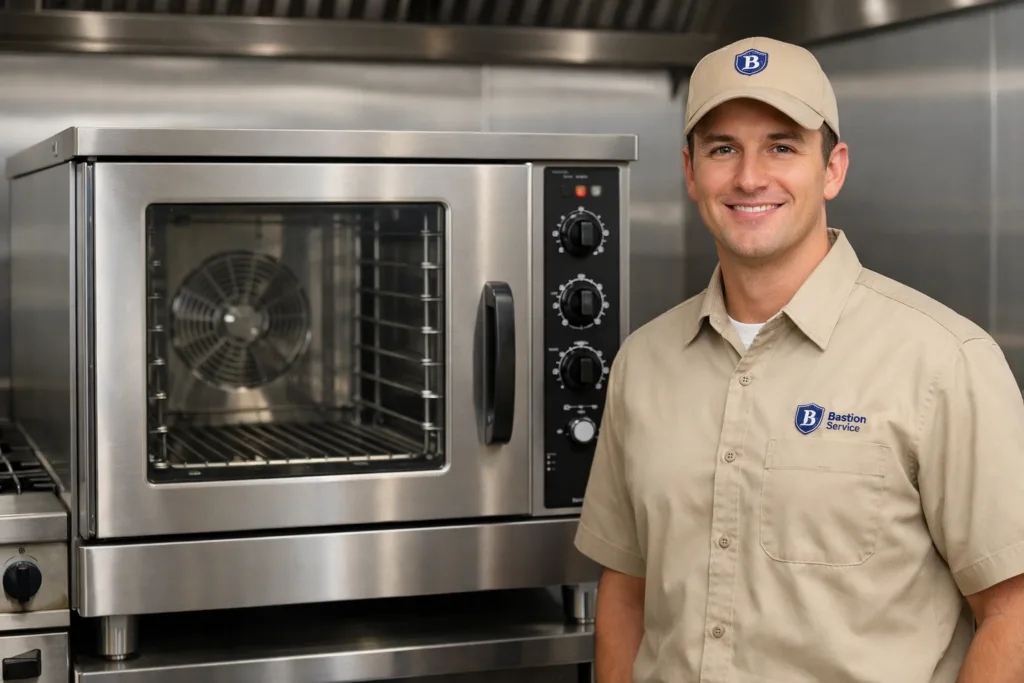




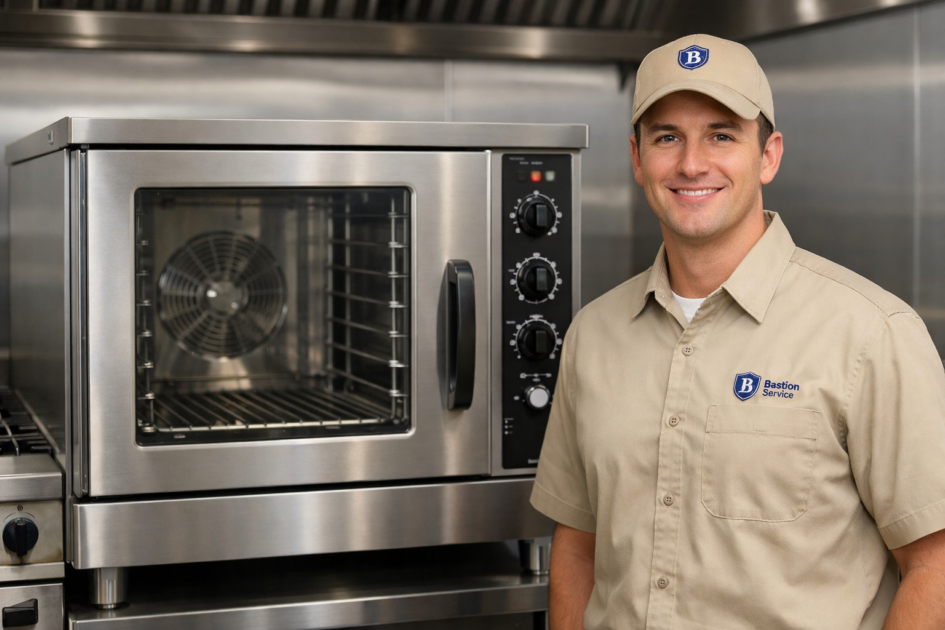
When a Blodgett oven starts missing temperature, baking unevenly, or dropping out during active production in West Los Angeles, service decisions need to happen quickly and with enough testing to avoid guesswork. What looks like a simple heating complaint can come from ignition, airflow, door sealing, sensors, controls, or supply-related issues. Bastion Service works with businesses in West Los Angeles to pinpoint the fault, define the repair scope, and help operators decide whether the oven can stay in limited use or should be taken offline until repairs are completed.
Related commercial service paths in West Los Angeles include Blodgett Commercial Repair in West Los Angeles, Commercial Oven Repair in West Los Angeles, and Southbend Oven Repair in West Los Angeles.
Common Blodgett oven symptoms and what they can indicate
Not heating or taking too long to preheat
If the oven will not heat, struggles to climb to set temperature, or preheats much slower than normal, possible causes include weak ignition, burner problems, sensor drift, thermostat or control failure, relay issues, or interrupted power or gas supply. In many kitchens, this first shows up as delayed opening prep, longer ticket times, or staff needing to start batches later than planned.
Uneven baking or inconsistent results from rack to rack
Hot spots, cold zones, uneven browning, and tray inconsistency often point to airflow issues, fan problems on convection units, failing heat components, damaged gaskets, or calibration errors. Operators may notice that product needs extra rotation, cook times are drifting, or one side of the cavity performs differently from the other. Left unresolved, this can create waste, remake costs, and quality complaints.
Temperature swings during operation
If the cavity overshoots, drops too far below setpoint, or recovers poorly after the door opens, the problem may involve sensing components, control response, burner cycling faults, or heat loss at the door. Temperature instability is especially disruptive when the oven is used for repeatable menu items or batch production where consistency matters as much as raw heat output.
Shutdowns in the middle of a cook cycle
An oven that shuts off unexpectedly, needs repeated resets, or fails partway through service may have a safety circuit issue, overheating condition, ignition fault, gas valve problem, electrical interruption, or control board failure. Mid-cycle shutdowns should be addressed early because they often move from intermittent to complete no-heat conditions without much warning.
Control problems, error displays, or unresponsive settings
When the display does not respond correctly, programs do not hold, or error codes appear, the fault can involve the keypad, board, wiring, moisture exposure, or unstable voltage. These issues may occur alongside heating complaints, which is why testing both the control side and the heat-producing side of the oven is important before ordering parts.
Heat leaking around the door
Door gasket wear, hinge damage, latch problems, and alignment issues can allow heat to escape even when the burners or elements are operating normally. The oven may still run, but longer cook times, poor recovery, and uneven cavity performance often follow. Door-related faults are easy to underestimate because the unit appears functional while efficiency and consistency keep slipping.
Why accurate testing matters before replacing parts
Blodgett oven problems often overlap. A unit that seems to have a bad sensor might actually be losing heat at the door. A weak igniter may resemble a gas delivery problem. A control complaint may turn out to be a response to unstable heating rather than the root cause. Replacing the first suspicious part without confirming the full operating condition can waste money and leave the main failure unresolved.
For businesses in West Los Angeles, that matters beyond repair cost. Unnecessary parts replacement extends downtime, complicates scheduling, and can leave staff working around an oven that still does not perform as expected. A proper service call should verify the complaint, observe operation, check key components, and match the repair plan to the actual symptom pattern.
When to schedule oven service
It is time to schedule service when the oven repeatedly shows slow preheat, uneven cooking, temperature drift, ignition delay, shutdowns, control errors, or noticeable heat loss at the door. Service is also worth scheduling when staff have started compensating for performance by raising temperatures, extending cook times, rotating pans more often, or avoiding certain rack positions.
These adjustments may keep production moving for a short time, but they usually signal a developing fault. Early repair can be far less disruptive than waiting for a no-heat call during a busy shift.
When continued use can make the problem worse
Repeatedly restarting the oven, forcing operation with unstable temperature control, ignoring delayed ignition, or running with damaged hinges and gaskets can increase wear on surrounding components. What begins as an intermittent issue can spread into broader control, heating, or safety-related failures if the unit stays in heavy rotation without inspection.
If the oven is shutting down often, overheating, or producing consistently unreliable results, it should be evaluated before normal use continues. If there is a strong or persistent gas odor, stop using the oven and address the immediate safety concern before arranging appliance repair.
Repair versus replacement considerations
An older Blodgett oven is not automatically a replacement candidate. Many units remain worth repairing when the problem is limited to ignition, controls, sensors, door components, or other serviceable systems and the overall cabinet and core structure remain in workable condition. Repair is often the better option when the oven still fits the kitchen’s workflow and the correction is likely to restore stable operation.
Replacement becomes more likely when failures are stacking up across several systems, repair costs are rising against overall condition, or reliability has fallen to the point that scheduling around the unit is no longer realistic. A condition-based diagnosis helps managers make that call with better information instead of reacting to a single bad shift.
What to note before the service visit
A few details can make troubleshooting faster. It helps to note whether the problem is constant or intermittent, whether it happens during preheat or only under load, any displayed error codes, unusual fan or ignition sounds, and whether the issue began after cleaning, a power event, or previous repair work. Staff observations about specific rack positions, delayed burner lighting, or failure at certain temperatures can also help narrow the cause.
- Whether the oven reaches set temperature at all
- How long preheat takes compared with normal operation
- Whether the issue affects every cycle or only some batches
- Any shutdowns, resets, or control display problems
- Signs of heat escaping around the door
For West Los Angeles businesses, the goal is not just getting the oven to turn back on for the day. The better outcome is a repair plan that restores consistent performance, supports scheduling, and reduces the risk of another interruption during production.


