
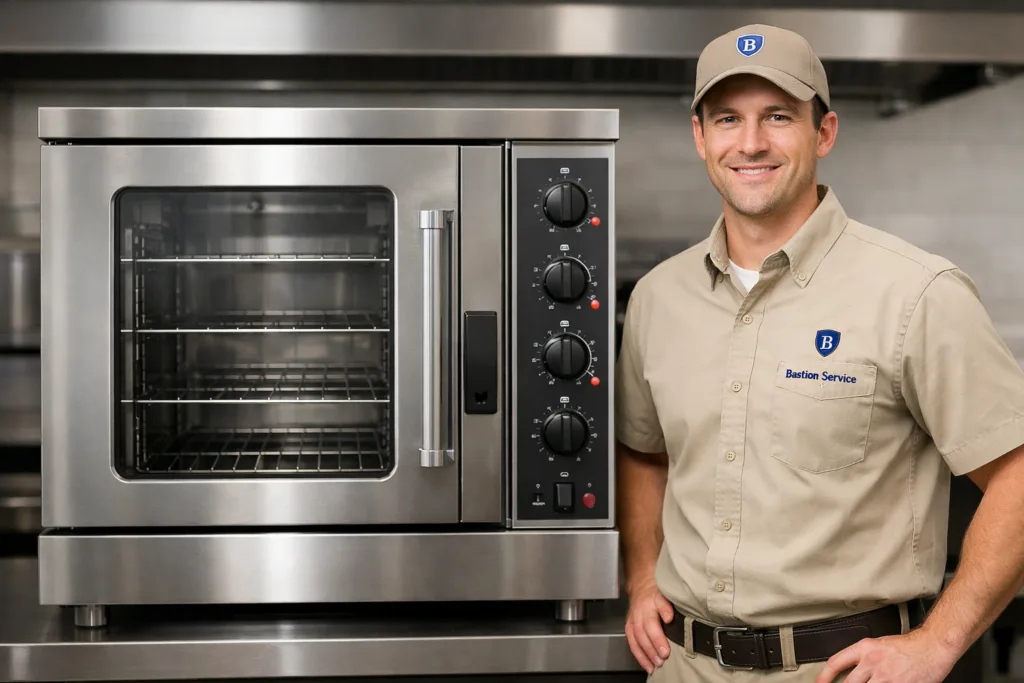




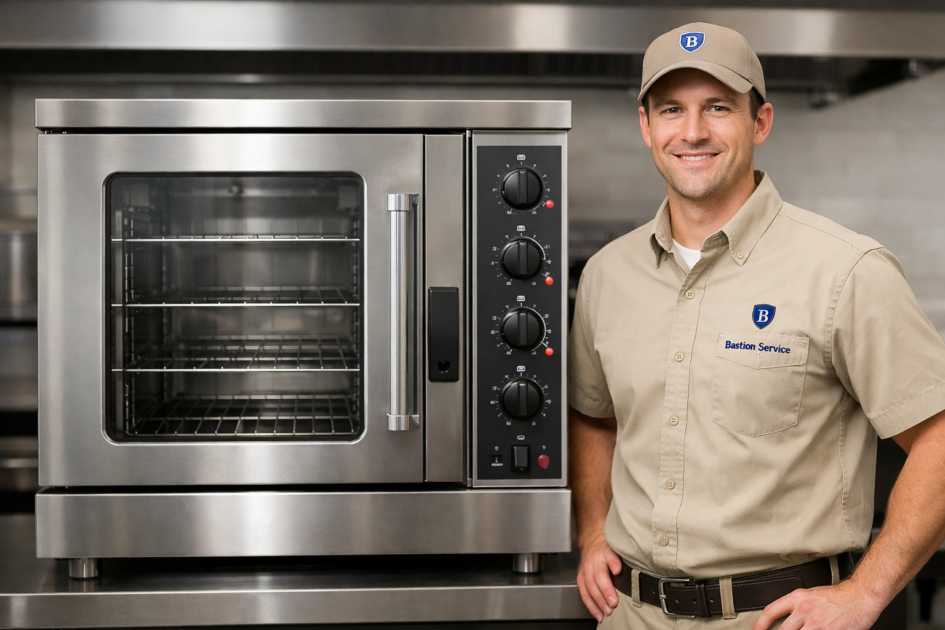
When a Vulcan oven starts missing temperature, baking unevenly, shutting down during a cook cycle, or taking too long to recover between loads, the problem usually needs more than a quick adjustment. For businesses in Venice, oven trouble can slow prep, disrupt timing across the line, and create waste from inconsistent results. Bastion Service handles Vulcan oven repair for kitchens that need the issue identified correctly, the likely repair explained clearly, and service scheduled before the disruption spreads further into daily operations.
Related commercial service paths in Venice include Vulcan Commercial Repair in Venice, Commercial Oven Repair in Venice, and Vulcan Range Repair in Venice.
What a proper oven diagnosis should confirm
Similar symptoms can come from very different failures. An oven that seems slow to preheat may have an ignition problem, weak heat output, a sensor issue, poor door sealing, or a control that is no longer reading temperature accurately. An oven that will not start at all may involve a switch, thermostat, safety circuit, wiring fault, control failure, or power supply issue. Without testing the unit under the actual complaint, it is easy to replace the wrong part and still have the same problem on the next shift.
A useful service visit should clarify what is causing the symptom, whether the oven can be used safely in the meantime, and whether the repair is likely to restore stable performance. That matters in Venice kitchens where one unreliable oven can affect production pace, holding times, and food consistency through the day.
Common Vulcan oven symptoms and what they often indicate
Not heating or struggling to reach set temperature
If the oven powers on but does not build heat correctly, likely causes include ignition component failure, heating element problems on electric configurations, sensor drift, thermostat issues, weak burner performance, or a control problem that is interrupting normal operation. In some cases, the oven does heat, but not strongly enough to recover after doors are opened or product is loaded.
This symptom often shows up as slow preheat, longer ticket times, or staff raising temperature settings to compensate. When operators have to keep adjusting for low heat, the unit is already affecting workflow and should be checked.
Uneven baking, hot spots, or inconsistent browning
Uneven results usually point to a heat distribution problem rather than a simple setting issue. Convection fan trouble, blocked airflow, burner irregularity, sensor inaccuracy, or heat loss around the door can all create side-to-side or rack-to-rack inconsistency. Staff may notice that trays need rotating more often, certain sections of the cavity run hotter, or familiar products stop finishing on their usual schedule.
These patterns are worth addressing early because they can continue for weeks before becoming a complete failure, all while product quality gradually slips.
Running too hot or overshooting the set point
Overheating can be just as disruptive as low heat. A Vulcan oven that runs above the selected temperature may scorch product, dry out batches, and create uneven output between cooks. Common causes include sensor faults, thermostat or control problems, relay issues, or calibration errors.
Continued use in this condition can also put extra stress on internal components. If the oven is consistently hotter than indicated, repair is usually more cost-effective than letting the problem damage additional parts.
Ignition delays, intermittent starts, or shutdowns during operation
If the oven lights late, starts only sometimes, or shuts down in the middle of use, the issue may involve the igniter, flame sensing, gas flow, wiring, controls, or a safety device that is cutting operation. Intermittent symptoms are especially important because they are difficult for staff to work around and tend to worsen during busy periods.
An oven that works normally in the morning and fails later in the day can point to heat-related component failure or an unstable control condition. That kind of pattern should be documented and checked before it turns into a hard shutdown.
Door seal, hinge, or closure problems
Not every oven issue starts with electronics or burner components. A worn gasket, sagging door, weak hinge, or poor latch alignment can let heat escape and force longer cook times. Over time, that extra strain can reduce temperature stability and make the oven feel underpowered even when the heat system is still functioning.
These problems may seem minor, but in a busy kitchen they can lead to lost efficiency and inconsistent batch performance.
Signs the oven is already affecting production
Many kitchens keep working around a marginal oven longer than they should. If staff are increasing temperatures beyond normal settings, extending cook times every shift, rotating pans to chase even color, or avoiding one cavity because it feels unreliable, the equipment is already costing time and consistency. Those workarounds may keep service moving for the moment, but they also hide a growing repair problem.
- Preheat takes noticeably longer than before
- Recovery between loads is slower during busy periods
- Products finish differently even with the same settings
- The oven occasionally resets, clicks repeatedly, or shuts off
- Operators no longer trust the displayed temperature
When those signs appear together, scheduling service is usually the better decision than continuing to adapt around the unit.
When continued use can make the repair worse
Some problems stay limited to one component, but others can spread. Repeated overheating may stress controls and sensors. Poor ignition can lead to more frequent shutdowns and heavier wear on starting components. Heat loss from a damaged door seal can increase cycling and reduce overall efficiency. A unit that is already struggling to maintain stable operation often becomes more expensive to repair if it is pushed through repeated service periods without inspection.
If the oven shows unusual ignition behavior, repeated safety shutdowns, or a persistent gas odor, staff should stop using it and follow site safety procedures before arranging service.
How businesses in Venice can prepare for a repair visit
A little preparation can make diagnosis faster and more accurate. It helps to note whether the problem happens during preheat, after the oven has been running for a while, only at certain temperature settings, or only under full load. Staff observations about delayed ignition, uneven browning, error displays, or shutdown timing are often useful in narrowing down the cause.
Before the technician arrives, try to have the following ready:
- Model and serial information if accessible
- A short description of the main symptom
- When the problem started and whether it is getting worse
- Any recent resets, part replacements, or power issues
- Whether the oven is fully down or still partially usable
This kind of detail supports quicker testing and helps determine whether the issue points to controls, heat generation, airflow, door sealing, or a broader operational fault.
Repair or replacement: how to think about the decision
Many Vulcan oven problems are repairable, especially when the core structure of the unit is still solid and the failure is tied to a control, sensor, ignition component, switch, fan-related issue, or door hardware. Repair is often the sensible path when the oven still fits the kitchen layout and can return to reliable service without repeated breakdowns.
Replacement becomes more likely when there are multiple major issues at the same time, long-term reliability concerns, severe wear, or costs that no longer make sense compared with the expected remaining life of the equipment. The right choice depends on workload, condition, and whether the oven can realistically support daily production after the repair is completed.
Scheduling service before downtime spreads
Oven problems rarely stay isolated for long in a busy kitchen. A single unstable unit can delay prep, force menu adjustments, and increase pressure on the rest of the line. If your Vulcan oven in Venice is showing repeat temperature issues, ignition faults, uneven results, or intermittent shutdowns, the best next step is to schedule service while the symptom pattern is still clear. Prompt diagnosis makes it easier to target the actual failure, plan the repair responsibly, and get the oven back into dependable use with less disruption to daily operations.


