
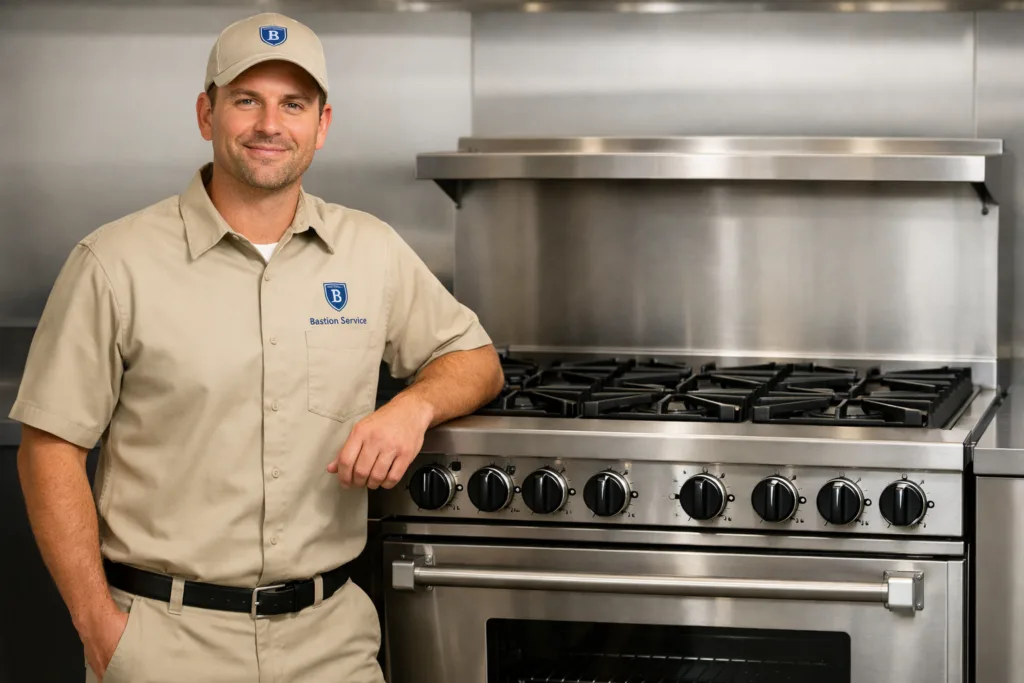




Range problems can slow ticket times, disrupt prep, and create inconsistent results long before the unit stops working entirely. For businesses in Hermosa Beach, service is most effective when the symptom pattern is evaluated first, the likely failure points are narrowed down, and repair is scheduled around the urgency of the problem and the role the range plays in daily kitchen output.
Related commercial service paths in Hermosa Beach include Vulcan Commercial Repair in Hermosa Beach, Vulcan Oven Repair in Hermosa Beach, and Vulcan Fryer Repair in Hermosa Beach.
Bastion Service works with Hermosa Beach businesses to diagnose Vulcan range issues tied to ignition, burner performance, oven heating, temperature control, and worn operating components. The goal is to identify what is failing, whether the problem is isolated or spreading, and what repair path makes the most sense for the unit’s condition and workload.
Common Vulcan range problems and what they may indicate
Burners will not light or take multiple tries
If a burner clicks repeatedly, lights only sometimes, or takes too long to ignite, the issue may involve the igniter, blocked burner ports, gas flow, contaminated components, or wear in related controls. Even when a burner eventually lights, delayed ignition should not be ignored. It often points to a condition that can worsen with continued use and lead to more erratic performance during busy service periods.
Weak flame or uneven burner heat
A burner that runs low, heats unevenly, or struggles to hold a steady flame can affect cooking speed and consistency across the line. Possible causes include burner buildup, regulator trouble, valve wear, airflow issues, or partial blockage. These symptoms may start with one section of the range and then show up elsewhere, which is why early diagnosis matters.
Oven section is not reaching or holding temperature
On Vulcan ranges with an oven base, long preheat times, temperature swings, hot spots, or poor recovery between loads may point to thermostat problems, sensor issues, ignition faults, gas delivery problems, or heat retention concerns. In many kitchens, this shows up first as product inconsistency rather than a total failure. If the oven is no longer tracking expected temperatures, service should be scheduled before production planning becomes more difficult.
Clicking, sparking, or unreliable ignition behavior
Persistent clicking, intermittent sparking, or ignition that works on one attempt and fails on the next can signal component wear or moisture, residue, or electrical faults affecting the ignition sequence. This kind of inconsistency often becomes more disruptive over time, especially when staff must relight burners or work around the problem during active service.
Knobs or controls feel loose, stiff, or unpredictable
If controls no longer turn smoothly, do not adjust flame as expected, or feel unstable during normal use, the problem may involve worn valves, damaged knobs, or internal control wear. These issues are more than a convenience concern. They can make heat adjustment unreliable and can eventually lead to loss of burner control or a broader operating failure.
Why symptom-based diagnosis matters
Two ranges can show the same visible symptom and still need different repairs. A burner that will not light could be caused by a simple burner-port issue, but it could also be tied to ignition failure, gas supply problems, or a worn control component. An oven that runs cold might involve a thermostat, sensor, igniter, or heat distribution problem. That is why a symptom-based approach is more useful than replacing parts based on guesswork.
For Hermosa Beach kitchens, this approach helps reduce repeat visits, unnecessary parts changes, and avoidable downtime. It also gives operators a better sense of whether the unit can return to normal use after repair or whether there are additional wear issues that need to be considered.
Signs the range should be serviced soon
- Burners fail to light consistently
- Flame output looks weak, uneven, or unstable
- Oven temperature drifts or preheat takes longer than usual
- Ignition clicks repeatedly without normal burner operation
- Controls feel rough, loose, or unresponsive
- The same problem keeps returning after cleaning or reset attempts
- Staff are avoiding certain burners or changing cooking routines to compensate
When operators start building workarounds around one faulty burner or an unreliable oven section, the problem is already affecting productivity. Service is usually easier to manage before the range drops out completely or puts more strain on nearby equipment.
When continued use can increase the repair scope
Running a range with delayed ignition, unstable flame, poor temperature control, or worn controls can lead to added wear on related components. What starts as one burner problem may eventually affect ignition parts, valves, heat consistency, or overall line workflow. The longer the unit is used in a degraded state, the more likely it is that labor and parts needs will increase.
If there is a persistent gas odor around the range, stop using the unit immediately. Address the immediate safety concern first through the appropriate gas utility or emergency response channel before arranging appliance repair.
Repair or replacement: how businesses usually decide
Many Vulcan range issues are worth repairing when the unit is otherwise in solid condition and the fault is limited to identifiable components. In other cases, replacement becomes a more realistic discussion when the range has multiple failing systems, recurring performance problems, or condition issues that make future reliability doubtful.
The most useful decision points are usually:
- What component or system has actually failed
- Whether other major wear is already present
- How important the unit is to daily production
- Whether post-repair reliability is likely to meet kitchen needs
A service visit should help clarify that decision instead of forcing a one-size-fits-all answer.
How to prepare for a Vulcan range service visit
Before service is scheduled, it helps to note which burners or oven functions are affected, when the problem started, whether the issue is constant or intermittent, and what staff have already observed. Details such as delayed ignition, weak flame on a specific burner, clicking that does not stop, or an oven that falls behind during peak use can make diagnosis more efficient.
If possible, businesses should also be ready to describe whether the problem occurs during startup, after the unit has been running for a while, or only under heavier cooking demand. Those details often help narrow down whether the fault is tied to ignition, control behavior, heat regulation, or gas flow.
Service focused on kitchen uptime in Hermosa Beach
Range repair is not just about restoring heat. It is about getting a kitchen back to predictable operation with a repair plan that fits the actual condition of the equipment. For businesses in Hermosa Beach, the next step is to schedule service when ignition, burner output, oven heating, or controls stop performing normally, so the problem can be diagnosed, repair options explained, and downtime kept as controlled as possible.


