
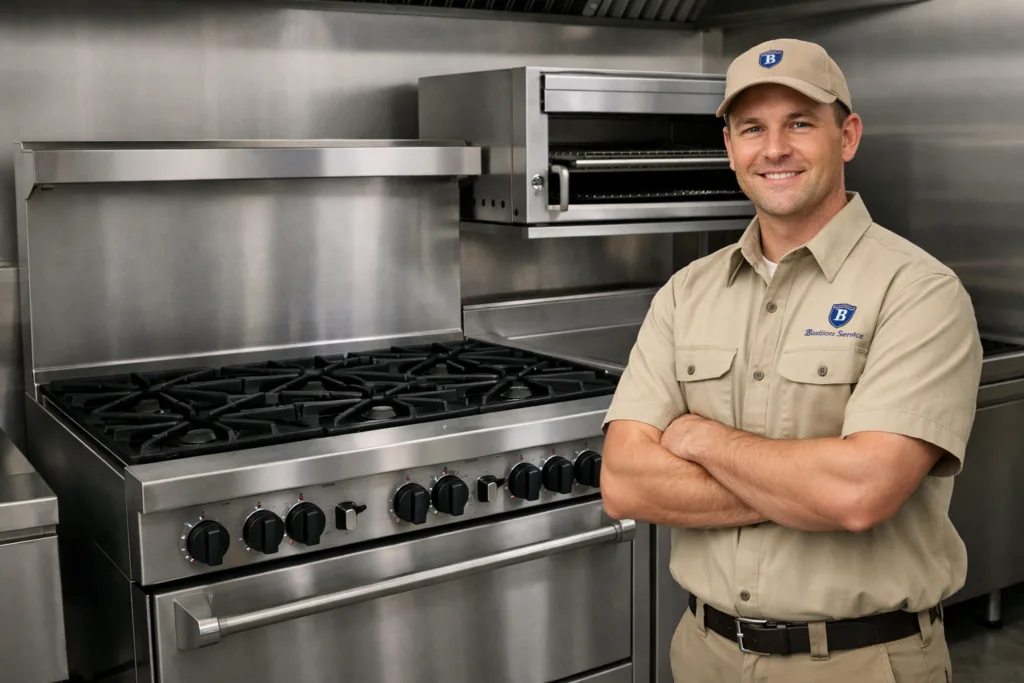




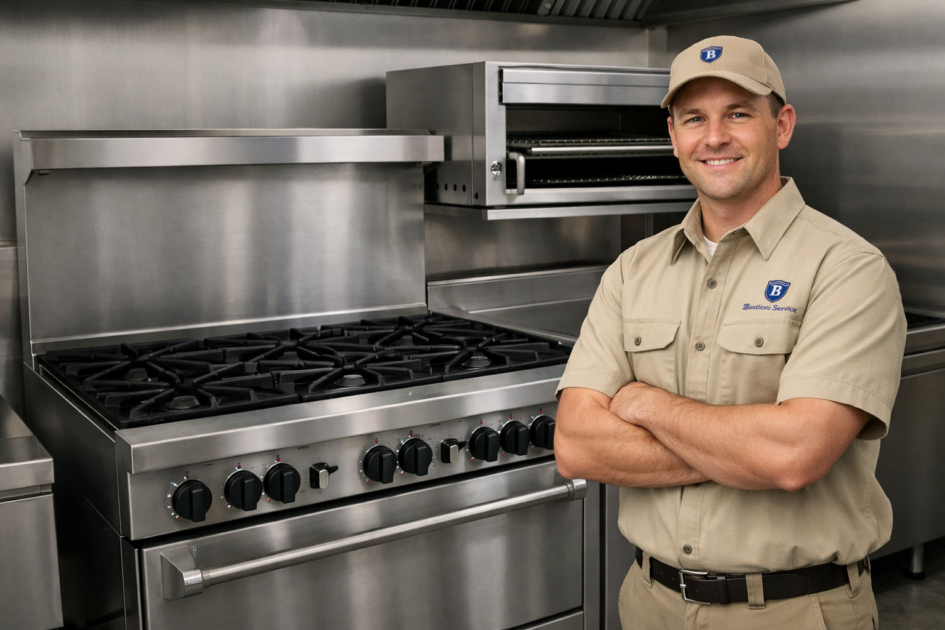
Kitchen downtime often starts with symptoms that seem minor at first: a fryer takes longer to recover, an oven drifts off set temperature, or a range burner needs multiple tries to light. In busy kitchens in Hermosa Beach, those early signs usually mean the equipment needs inspection before the issue grows into a shutdown, wasted product, or slower ticket times. Bastion Service handles Vulcan cooking equipment repair by tracing the symptom back to the failed component or system, then helping businesses schedule the repair around actual operating demands.
For specific equipment paths in Hermosa Beach, review Vulcan Oven Repair in Hermosa Beach, Vulcan Range Repair in Hermosa Beach, and Vulcan Fryer Repair in Hermosa Beach.
Because ovens, ranges, and fryers share overlapping heating, ignition, and control-related issues, the same complaint can have several possible causes. Weak heat may come from burner problems, sensor drift, ignition faults, control failure, or other heat-management issues inside the unit. That is why service decisions are more effective when based on testing and symptom pattern rather than guesses or repeated restarts.
What service calls usually look like on Vulcan cooking equipment
Most businesses do not call only because a unit is completely dead. More often, the problem shows up as inconsistent performance during production. The equipment may still turn on, but it no longer supports normal kitchen flow. Common complaints include:
- Units not reaching set temperature
- Slow heat recovery between cycles or batches
- Burners that click, spark, or light inconsistently
- Temperature swings that affect food quality
- Shutdowns during use
- Controls that do not respond normally
- Extended preheat times
- Uneven cooking or uneven heat across the surface
These problems matter because they affect throughput long before the equipment fully fails. A unit that is technically running but no longer reliable can create more disruption than a unit already taken off the line.
Heating and temperature problems
Not reaching or holding temperature
When a Vulcan oven, fryer, or range does not reach target heat or loses temperature during use, the issue may involve temperature sensing, burner performance, thermostat function, control response, or restricted heat delivery. From an operations standpoint, this often shows up as undercooked product, delayed prep, longer recovery times, or staff compensating with guesswork.
For businesses in Hermosa Beach, this is usually the point where repair scheduling becomes more urgent. Continued use can create inconsistent output and may place extra strain on related components as the equipment tries to keep up with demand.
Overheating or unstable cycling
Some units do the opposite and overshoot temperature, cycle too aggressively, or fluctuate enough to make production unpredictable. In fryers, this can affect product quality and timing. In ovens, it can lead to uneven results and avoidable waste. In ranges, unstable burner behavior can make line work harder than it needs to be. These symptoms often require testing of the temperature-control side of the system rather than replacing parts based only on visible behavior.
Ignition and burner faults
Failure to light or delayed ignition
If burners do not light on the first attempt, take too long to ignite, or require repeated resets, the problem should be checked before normal use continues. Delayed ignition and startup faults can point to issues involving ignition components, flame sensing, control problems, switches, or fuel-delivery-related parts within the appliance. Repeated attempts to force operation rarely solve the issue and can make downtime harder to plan around.
Flame loss during operation
When a unit starts normally and then drops flame or shuts down after warming up, the failure may be tied to a safety circuit, unstable control, overheating condition, or a component that fails intermittently under load. This type of problem is especially disruptive because it can appear only during active production. If the pattern repeats, the equipment should be evaluated before it is relied on for peak service periods.
Symptom patterns by equipment type
Oven issues
Vulcan oven repair calls often involve uneven cooking, slow preheat, poor heat retention, ignition trouble, or controls that no longer maintain a dependable temperature. These symptoms can affect prep timing, batch consistency, and overall kitchen planning. When an oven still heats but no longer heats correctly, it is usually better to address the issue before staff begin changing cook times as a workaround.
Range issues
Vulcan range repair commonly focuses on top burners that fail to ignite, produce weak flame, heat unevenly, or cycle irregularly. Since ranges are often in near-constant use, even one unstable burner can create a bottleneck across the line. If operators are avoiding certain sections or relighting burners throughout the shift, service is usually warranted before the problem spreads into broader control or ignition failure.
Fryer issues
Vulcan fryer repair frequently centers on slow recovery, temperature inconsistency, startup trouble, burner faults, or shutdowns during use. Fryers can appear functional while still creating serious production delays if they cannot recover properly between batches. In that situation, the key question is not just whether the fryer heats, but whether it can maintain output at the pace the kitchen requires.
When to stop using the equipment
Some symptoms suggest the unit should be taken out of regular use until it is inspected. These include repeated ignition failure, unreliable flame, major temperature swings, unexpected shutdowns, or signs that safe operation may be compromised. If the equipment cannot be trusted to heat consistently or remain stable during service, continued operation may increase product loss and potentially lead to a larger repair.
Other issues may allow for short-term scheduling flexibility, especially when the unit still runs but performance is declining rather than completely failing. In those cases, it helps to document the symptom pattern clearly: when the problem starts, whether it worsens during peak use, and whether the issue affects startup, temperature hold, or recovery speed.
Repair planning versus replacement decisions
Many Vulcan cooking equipment problems can be resolved when the failure is limited to serviceable parts such as controls, sensors, burners, ignition components, or related assemblies. Replacement becomes a bigger consideration when the equipment has repeated breakdowns across multiple systems, significant wear, or a repair cost that no longer supports reliable use for the business.
The value of a service visit is that it turns a vague complaint into a workable decision. Instead of wondering whether the unit is simply aging out, the business can evaluate what failed, what condition the surrounding systems are in, and whether repair is likely to restore dependable operation.
Scheduling service with production in mind
Repair scheduling is most effective when tied to the actual impact on kitchen operations. A fryer with slow recovery may still run, but not well enough for busy periods. An oven with drifting temperature may still heat, but not accurately enough for consistent output. A range with intermittent ignition may still be usable in short windows, but not dependable enough for a line that needs steady burner performance. Planning service around those realities helps reduce disruption and avoid surprise breakdowns.
If your Vulcan cooking equipment is showing heating problems, ignition trouble, control faults, shutdowns, or slower output in Hermosa Beach, the next step is to schedule diagnosis based on the symptom pattern and urgency of the kitchen schedule. That approach helps businesses decide whether the unit can stay in limited use, needs prompt repair, or should be removed from service until the issue is corrected.


