
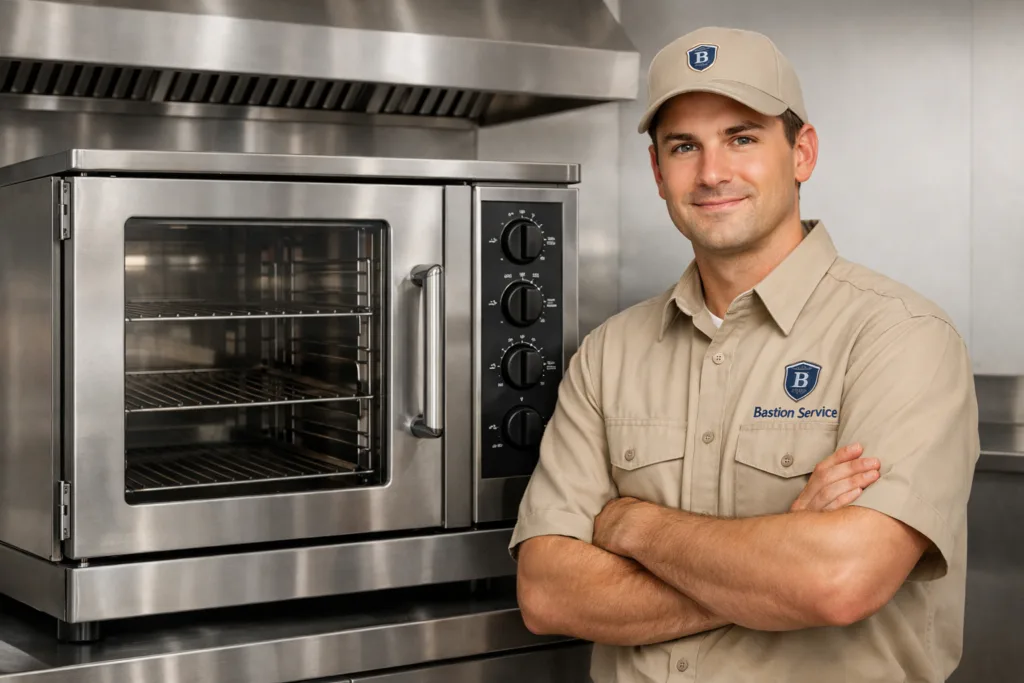




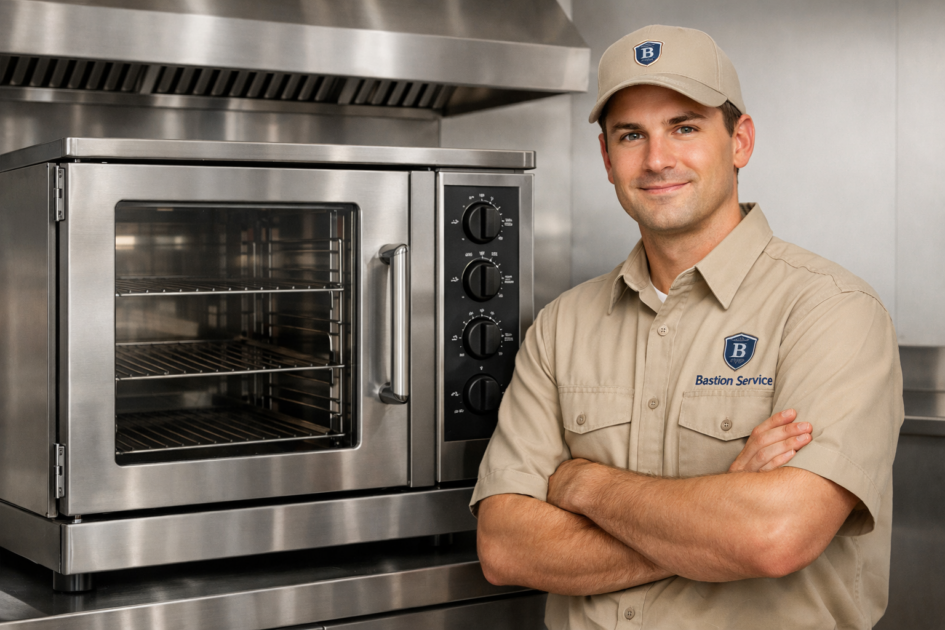
Oven problems tend to become urgent quickly when production depends on stable heat, predictable cook times, and safe operation. For businesses in Beverly Hills using Vulcan equipment, service is most effective when the problem is tied to the exact symptom pattern instead of guessing at parts. Bastion Service evaluates how the oven is failing, whether the issue is constant or intermittent, and what repair step is most likely to restore normal operation with the least disruption to the kitchen.
Related commercial service paths in Beverly Hills include Vulcan Commercial Repair in Beverly Hills, Commercial Oven Repair in Beverly Hills, and Vulcan Range Repair in Beverly Hills.
In day-to-day use, a Vulcan oven may show the same general complaint for very different reasons. An oven that runs cool can have a sensor issue, a control problem, weak burner performance, airflow trouble, or heat loss around the door. An oven that shuts down mid-cycle may point to electrical faults, overheating conditions, safety components, or unstable ignition behavior. That is why service planning should start with symptoms, timing, and operating conditions rather than assumptions.
Common Vulcan Oven Problems Businesses Notice First
Uneven baking and temperature inconsistency
One of the most common service calls starts with food finishing differently from one pan to the next. Staff may notice one side of the cavity cooking faster, top racks browning differently than lower racks, or recipes that suddenly need longer times than usual. In a busy kitchen, this leads to waste, re-fires, inconsistent quality, and slower ticket flow.
These symptoms can be related to sensor inaccuracy, thermostat or control issues, weak heat output, poor airflow, worn door gaskets, or misalignment that lets heat escape. Because several faults can create similar results, the right repair depends on confirming whether the problem is measurement, regulation, heat generation, or retention.
Not heating or taking too long to preheat
If the oven does not reach cooking temperature, takes much longer than normal to preheat, or falls behind during repeated use, the underlying issue may involve ignition components, burners, heating elements, relays, contactors, controls, or supply-related faults. Slow preheat is often treated as a nuisance at first, but it usually signals a performance problem that will continue to affect output during peak hours.
In Beverly Hills kitchens, slow recovery after the door opens is especially disruptive because the problem may not be obvious during light use. It often becomes noticeable only when staff are loading and unloading constantly, which is exactly when dependable heat matters most.
Ignition faults and startup failure
Gas-model ovens that click without lighting, light inconsistently, or shut off after partial heating need prompt attention. Ignition problems may involve the igniter, flame sensing, gas valve response, control sequencing, wiring, or safety components. Some ovens fail only on cold starts, while others begin acting up after the cavity has been hot for a while.
That timing matters. A morning-only failure suggests a different path than a shutdown that appears after extended operation. Tracking when the fault appears can help narrow the diagnosis and reduce unnecessary part replacement.
Controls, display, and power interruptions
When the control panel becomes unresponsive, settings do not save, the display behaves erratically, or the oven loses power at random, the cause may be tied to the control board, keypad, wiring, loose terminals, switches, or heat-related electrical failure. These issues can seem to disappear temporarily, then return under load, making them frustrating for kitchen staff.
Intermittent electrical faults should not be dismissed just because the oven comes back on after a reset. Repeated restarts can hide a worsening problem and make the unit less reliable during service windows when consistent operation is needed most.
What Specific Symptom Patterns Often Mean
Looking at the pattern behind the complaint can help determine whether the oven needs immediate repair, monitored follow-up, or broader evaluation.
- Food browns unevenly from front to back: often points to airflow imbalance, heat-distribution problems, or door-seal wear.
- Oven shows the correct setting but cooks too cool: may indicate sensor drift, control regulation errors, or weak heating performance.
- Unit overshoots temperature and scorches product: can suggest thermostat or sensor failure, control issues, or unstable cycling.
- Startup is inconsistent but improves later: may relate to ignition wear, cold-start electrical issues, or gas-side response faults.
- Oven shuts off during active use: may be caused by overheating protection, electrical interruption, control instability, or component failure under stress.
- Preheat seems normal, but recovery is poor: often indicates a performance issue that becomes more visible during repeated door openings and heavy production.
These patterns are useful because they help connect the complaint to likely systems, but final repair decisions still depend on testing the oven under the conditions that trigger the failure.
Why a Vulcan Oven May Not Heat Evenly or Reach Set Temperature
When a Vulcan oven will not hold the selected temperature or produces uneven results, the cause is usually one of a few core issues: inaccurate sensing, unstable regulation, weak burner or element output, air movement problems, or heat loss from the cavity. Each of those problems affects cooking differently.
For example, a sensor drifting out of range may cause the oven to believe it is hotter or cooler than it really is. A control fault may lead to poor cycling, where the oven alternates too aggressively or not enough. Weak burner performance can lengthen preheat and reduce recovery. Airflow issues can create hot and cool zones. A worn gasket or poor door closure can let enough heat escape to change bake consistency even if the rest of the system is still functioning.
Because these failures overlap, an oven that “kind of works” can still undermine food quality and labor efficiency. That is often the point where scheduling repair makes more sense than continuing to compensate with pan rotation, guesswork, or longer cook times.
When the Problem Is Starting to Affect Operations
Many businesses wait until the oven stops completely, but the better service window usually comes earlier. If staff are changing recipes to match the equipment, adding extra minutes to standard cook times, restarting the unit during the day, or avoiding certain racks because results are unreliable, the oven is already affecting production.
Those are not minor inconveniences. They create inconsistent output, disrupt prep flow, and make it harder to train staff around repeatable processes. In kitchens where timing and batch consistency matter, even a partially functioning oven can become a costly weak point.
When Continued Use Can Make Repair More Expensive
Some faults do more than reduce performance. Ovens that overheat, fail to ignite properly, short cycle, or repeatedly lose power may place added stress on surrounding components. Extended run times from heat loss or weak heating performance can also increase wear. What begins as a sensor or ignition issue can sometimes lead to secondary failures if the equipment is pushed through daily service without correction.
If the oven is producing inconsistent food quality, dropping out during production, or showing signs of unstable operation, it is worth having the problem assessed before the repair scope grows. Even when the unit is still running, unreliable operation can carry a higher cost than the service call itself.
Repair or Replacement Considerations
Repair is often the better choice when the problem is isolated and the rest of the oven remains in solid working condition. A targeted repair may restore dependable performance if the issue is limited to ignition parts, controls, sensing components, wiring faults, or another defined failure point.
Replacement becomes more relevant when the oven has repeated major breakdowns, multiple systems showing wear at the same time, or a repair outlook that does not match the condition of the unit overall. The useful question is not simply whether the oven can be repaired, but whether the repair is likely to return it to stable daily use without repeated interruption.
How to Prepare for a Service Visit
Before scheduling service, it helps to note what the oven is doing and when it happens. Useful details include whether the issue appears during startup or after the cavity is hot, whether the fault affects all racks or only part of the cavity, whether the display shows any error behavior, and whether the problem is constant or intermittent.
It is also helpful to note recent changes in cook times, recovery speed, shutdown patterns, or unusual noises and odors. In a business setting, this information can shorten diagnosis time and make it easier to determine whether the problem is tied to heat generation, controls, airflow, or power-related behavior.
Service-Focused Next Steps for Beverly Hills Businesses
When a Vulcan oven begins missing temperature, heating unevenly, failing to ignite, or dropping out during operation, the most practical next step is to schedule service based on the actual symptoms and the impact on daily workflow. For businesses in Beverly Hills, that means treating oven problems as an uptime issue, not just a maintenance inconvenience, so the repair can be prioritized before quality loss and downtime spread into the rest of the kitchen.


