
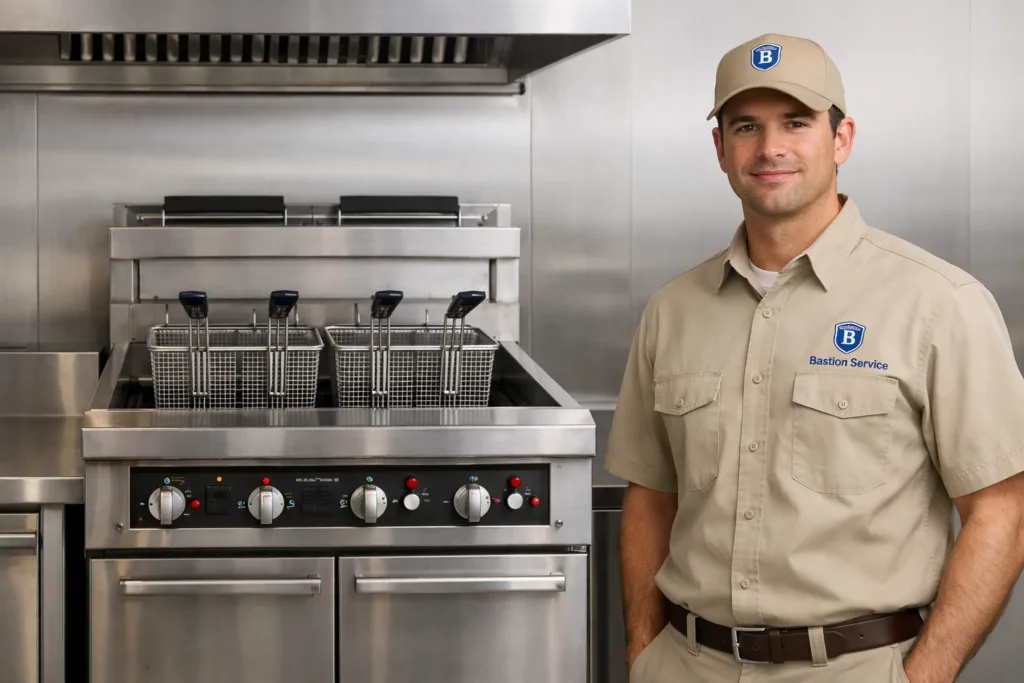




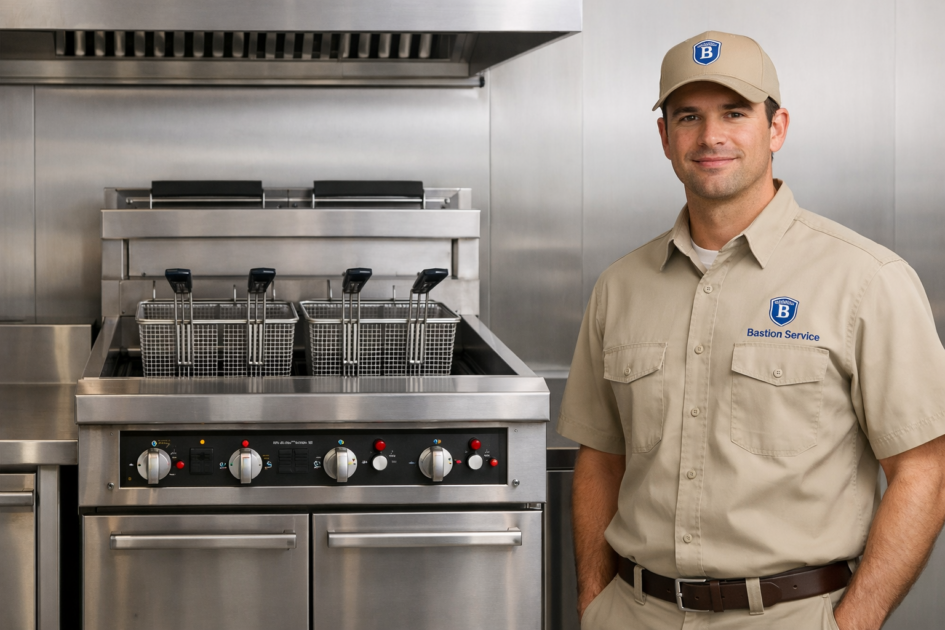
When a Vulcan fryer starts drifting off temperature, dropping out during a rush, or showing signs of leakage, the right next step is service built around the exact failure pattern. In a busy kitchen, the wrong repair decision can lead to repeat downtime, wasted oil, uneven product quality, and avoidable parts expense. For businesses in Beverly Hills, Bastion Service handles Vulcan fryer issues by tracing the problem to the heating system, ignition sequence, controls, gas components, safety devices, or wear points that are actually causing the disruption.
Related commercial service paths in Beverly Hills include Vulcan Commercial Repair in Beverly Hills, Commercial Fryer Repair in Beverly Hills, and Vulcan Oven Repair in Beverly Hills.
Fryer problems also tend to escalate when they are worked around instead of repaired. A unit that still runs but recovers slowly can drag down ticket flow. A fryer that overheats can shorten oil life and produce inconsistent results. A fryer that shuts down without warning can interrupt prep and service at the worst possible time. Early repair scheduling helps contain the issue before it spreads into broader operational loss.
Common Vulcan Fryer Problems in Beverly Hills Kitchens
Temperature inconsistency
If the fryer runs hotter than the set point, struggles to reach temperature, or swings noticeably during normal use, the cause may involve the temperature probe, thermostat or controller, high-limit system, burner performance, or gas supply behavior. Staff often notice this first through uneven browning, longer cook times, scorched oil, or batches that do not finish consistently. These symptoms may look similar on the surface, but they do not all point to the same repair.
Ignition and no-heat complaints
A Vulcan fryer that will not light, loses flame, or stops heating mid-cycle may have a problem with the ignition system, flame sensing, pilot-related components where applicable, gas valve operation, wiring, or a safety lockout condition. Intermittent no-heat issues are especially important to address quickly because they can be difficult for staff to predict and can disrupt service with little warning.
Slow recovery between batches
When the fryer heats initially but cannot recover fast enough during steady production, output suffers even if the unit appears to be running. Slow recovery may be tied to weak burner performance, heat-transfer buildup, control drift, or fuel-delivery issues. In practical terms, that means longer wait times, inconsistent cook results, and pressure on the rest of the line during peak periods.
Unexpected shutdowns
If the fryer drops out after reaching temperature or shuts off during use, the fault may involve overheating protection, control failure, ignition loss, electrical interruptions, or a problem within the gas train. Repeated shutdowns should not be treated as a minor nuisance. They usually indicate a condition that needs diagnosis before the fryer can be relied on for daily service.
Oil leaks and visible wear
Oil around the base of the fryer, near the drain, or at fittings should be checked promptly. Leaks can come from drain components, valves, seals, connections, or structural wear in the fryer body. Continued use can create safety concerns, sanitation issues, and added repair costs. In some cases, the condition of the tank or cabinet becomes part of the repair decision rather than just the leaking component itself.
Why a Symptom-Based Diagnosis Matters
Fryer repairs are most effective when the actual source of the problem is confirmed before parts are replaced. Similar complaints can come from very different failures. Poor heat may be caused by a bad sensor, but it can also result from burner trouble, gas-delivery issues, or safety interruptions. Repeated shutdowns may seem like a controller problem, yet the root cause could be ignition instability or overheating protection doing its job.
That is why symptom details from the kitchen are useful. Whether the fryer fails on startup, loses heat after a few baskets, overshoots the set temperature, or struggles only during heavy use can help narrow the repair path. Good diagnosis reduces guesswork and helps determine whether the issue is isolated, whether multiple worn components are involved, or whether the fryer’s overall condition should be evaluated more closely.
Signs the Fryer Should Be Serviced Soon
Scheduling service sooner is usually the better choice when any of the following patterns show up repeatedly:
- The fryer does not heat at all or takes much longer than normal to heat up
- Oil temperature fluctuates enough to affect food quality
- The burner or flame cuts out unexpectedly
- The fryer recovers too slowly during steady production
- The unit shuts down and must be restarted
- Oil is leaking from the drain area, fittings, or lower cabinet area
- Staff are compensating manually for known temperature or performance issues
Even if the fryer is still partially usable, operating around one of these problems can increase wear and make the repair larger than it needed to be. Service is easier to plan when the unit is still running intermittently than when it fails completely during a busy shift.
What to Note Before a Repair Visit
A few details from the kitchen can make troubleshooting faster and more accurate. If possible, note when the problem happens, how often it happens, and what the fryer is doing immediately before the fault appears. Useful observations include whether the fryer fails only during heavy output, whether it reaches temperature and then drops off, whether the display shows an error, or whether the issue began after cleaning, maintenance, or a recent shutdown.
It also helps to mention signs such as delayed ignition, unusual odors, overheating, visible leakage, or inconsistent product color. These details do not replace diagnosis, but they can help connect the complaint to the correct system more quickly.
Repair or Replacement: How the Decision Usually Gets Made
Many Vulcan fryer problems are repairable when the main structure is sound and the issue is limited to controls, burners, ignition parts, safety devices, valves, or other wear items. Replacement becomes more likely when there is major tank damage, severe structural deterioration, repeated high-cost failures across multiple systems, or ongoing downtime that no longer makes sense for the operation.
The best decision usually depends on the fryer’s condition, repair history, parts needs, and how much disruption the outage is causing. A service visit focused on the actual symptoms gives businesses in Beverly Hills a clearer path forward than guessing based on one visible issue alone.
Service Planning for Busy Kitchens
Fryer problems affect more than one piece of equipment because they ripple into prep flow, ticket timing, labor use, and product consistency. For that reason, repair decisions should be made with the kitchen’s schedule in mind. If the fryer is showing recurring no-heat complaints, unstable temperatures, or shutdowns, it makes sense to arrange service before the next heavy service window rather than waiting for a complete failure.
For businesses in Beverly Hills, the most useful next step is to schedule Vulcan fryer repair when symptoms first become repeatable, describe how the unit is failing in daily operation, and have the problem evaluated before it creates a larger interruption. A focused repair visit can help determine what is causing the issue, what needs attention now, and whether the fryer is a good candidate for repair or a broader replacement discussion.


