
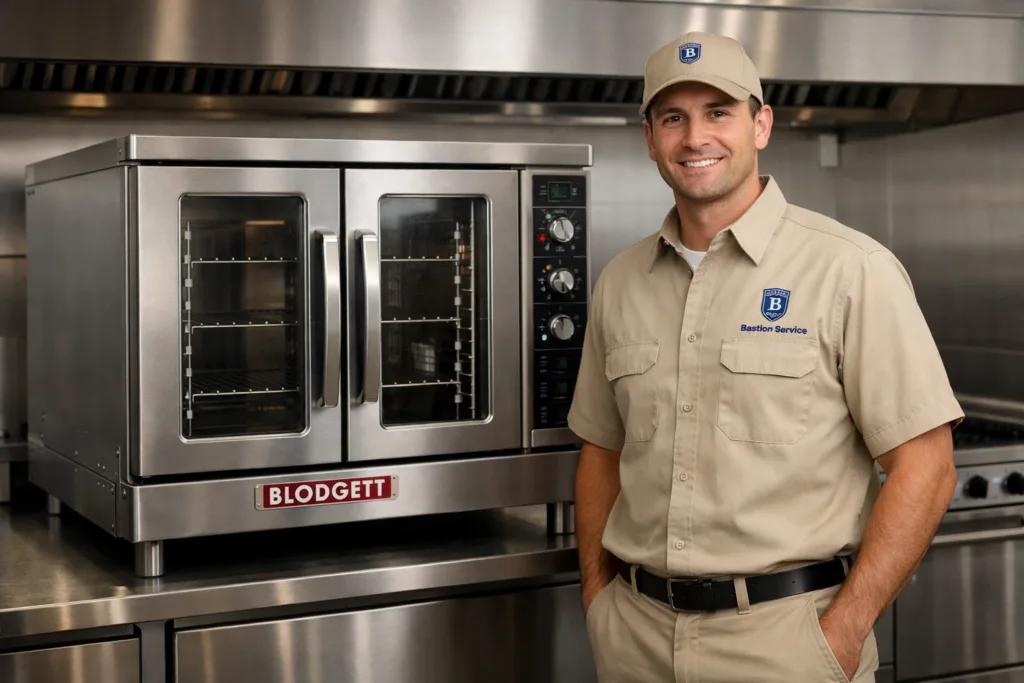




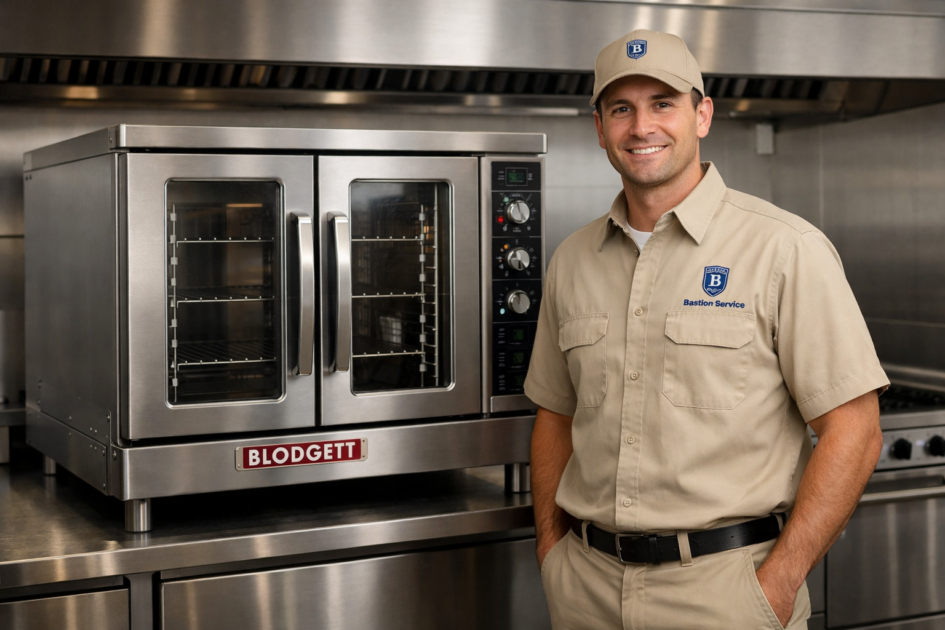
When a Blodgett oven starts missing temperature, shutting down mid-cycle, or producing inconsistent results, the issue can quickly affect ticket times, batch quality, and staff workflow. For businesses in Beverly Hills, service is most effective when the symptom is tied to a specific operating condition rather than treated as a generic oven problem. That is why repair scheduling should focus on what the unit is doing under load, how often the problem appears, and whether the fault points to ignition, heating, airflow, sensing, or control failure.
Related commercial service paths in Beverly Hills include Blodgett Commercial Repair in Beverly Hills, Commercial Oven Repair in Beverly Hills, and Southbend Oven Repair in Beverly Hills.
Bastion Service provides Blodgett oven repair for businesses in Beverly Hills with attention to downtime impact, symptom pattern, and the repair path that makes the most sense for continued daily use. In many cases, the goal is not only to restore heat, but to correct the underlying fault before it leads to wasted product, delayed service, or a full loss of oven availability during operating hours.
Common Blodgett Oven Symptoms That Need Service
Not heating evenly or not reaching set temperature
If the oven runs but products are coming out too light, too dark, or inconsistent from one rack position to another, there may be a problem with temperature sensing, calibration, airflow, burner performance, heating components, or door sealing. A unit that never reaches the programmed temperature can also have issues with relays, controls, weak ignition, or heat loss that prevents proper recovery.
This type of complaint often shows up first as longer cook times or the need for staff to keep adjusting settings. When that starts happening regularly, the oven is no longer performing predictably enough for reliable production.
Slow preheat and poor temperature recovery
Slow preheat can point to reduced heating output, failing ignition components, worn electrical parts, restricted airflow, or sensor problems that cause the oven to cycle incorrectly. Poor recovery after the door is opened is another sign that the oven may not be generating or circulating heat the way it should.
In busy kitchens, recovery matters just as much as peak temperature. If the oven falls behind between batches, productivity drops even when the unit appears to be working at first glance.
Ignition problems or delayed startup
Gas models may show trouble through delayed ignition, repeated ignition attempts, burner issues, or failure to stay lit. These symptoms can relate to igniters, flame sensing, gas delivery problems, controls, or safety components. Delayed ignition should not be ignored, especially if the startup sequence has changed or staff notice unusual operation.
Even when the oven eventually fires, unreliable ignition can lead to unstable heat, cycle interruptions, and added wear on related components.
Control panel issues and erratic operation
If the display is unresponsive, settings do not hold, temperatures drift without explanation, or the oven behaves differently from one cycle to the next, the fault may involve the control board, temperature probe, relays, wiring, or incoming power conditions. Some problems appear as obvious error codes, while others show up as inconsistent cooking performance with no single clear warning.
These issues usually do not improve on their own. Once controls begin misreading or cycling incorrectly, the oven becomes harder for staff to trust during normal production.
Unexpected shutdowns during use
An oven that starts normally and then cuts out can have overheating protection issues, intermittent electrical faults, loose connections, failing controls, fan-related problems, or ignition instability. Shutdowns that happen only after the oven has been running for a while are especially important to document, because heat-related failures often appear only once components are under stress.
Why a Symptom-Based Diagnosis Matters
Many Blodgett oven complaints sound similar at first. Uneven baking may be caused by a bad probe, but it can also come from airflow problems, control failure, a weak heating circuit, burner inconsistency, or a door that no longer seals tightly. A no-heat condition may trace back to ignition, but it could also involve power supply issues, safeties, relays, or a failed control component.
That overlap is why the best repair decision starts with testing rather than assumptions. Replacing one likely part without confirming the source of the problem can leave the main fault unresolved and create more downtime later. For Beverly Hills businesses that rely on predictable oven output, the right diagnosis saves time, avoids unnecessary parts replacement, and supports a more reliable repair outcome.
Signs the Oven Is Affecting Production More Than It Seems
Some ovens keep running even while performance is already slipping. Service should be considered if staff are noticing any of the following:
- Cook times are getting longer than normal
- Products need to be rotated more often to finish evenly
- The oven overshoots or undershoots temperature
- Preheat takes noticeably longer
- One section of the cavity cooks differently than another
- The oven needs frequent resets
- Controls respond inconsistently or lose programmed settings
- The unit shuts down after running for a period of time
These are often early warnings of a repair issue, not just minor operating quirks. Waiting too long can increase product loss and make failures harder to schedule around.
Repair Decisions: When Service Is Usually the Better Move
Repair is often the practical option when the oven frame and cavity are still in good condition and the fault is limited to serviceable components such as probes, igniters, elements, relays, fans, motors, contactors, thermostatic parts, or controls. If the unit is otherwise a strong fit for the operation, restoring dependable performance can be far more efficient than working around an unreliable oven day after day.
Replacement becomes a more serious consideration when the oven has extensive wear, repeated major failures, severe control problems across multiple systems, or repair costs that do not match the expected return in uptime. The right recommendation depends on how heavily the unit is used and how critical it is to output.
Preparing for a Blodgett Oven Service Visit
To help move the visit along, it is useful to have a few details ready before scheduling:
- Model and serial information if available
- Whether the oven is gas or electric
- What the staff is seeing: no heat, uneven baking, shutdowns, slow preheat, ignition trouble, or control errors
- Whether the issue is constant or intermittent
- Whether the problem appears more often after the oven has been running for a while
- Any recent service history or parts already replaced
These details can help narrow the likely cause before the unit is opened and tested. They are especially helpful when the complaint only appears during heavy use or after the oven reaches operating temperature.
What Businesses in Beverly Hills Can Expect From Oven Repair Planning
Service planning should match the role the oven plays in daily operations. A backup unit with an occasional temperature issue may be scheduled differently than a primary oven that is slowing production every shift. In both cases, the most useful next step is to address the symptom before it turns into a complete breakdown.
If your Blodgett oven is showing uneven heat, slow recovery, ignition faults, control trouble, or repeated shutdowns, scheduling repair early is usually the best way to limit disruption. For businesses in Beverly Hills, a focused service visit can clarify the fault, define the repair scope, and help restore stable oven performance with less guesswork and less unplanned downtime.


