




Range problems rarely stay isolated for long in a busy kitchen. A burner that hesitates to light, an oven that falls behind during rush periods, or controls that work only part of the time can quickly affect ticket times, batch consistency, and staff workflow. For businesses in Beverly Hills, the best next step is service that identifies the exact failure pattern, confirms whether the unit can keep operating safely, and helps schedule repair before downtime spreads to the rest of the line.
Related commercial service paths in Beverly Hills include Vulcan Commercial Repair in Beverly Hills, Vulcan Oven Repair in Beverly Hills, and Vulcan Fryer Repair in Beverly Hills.
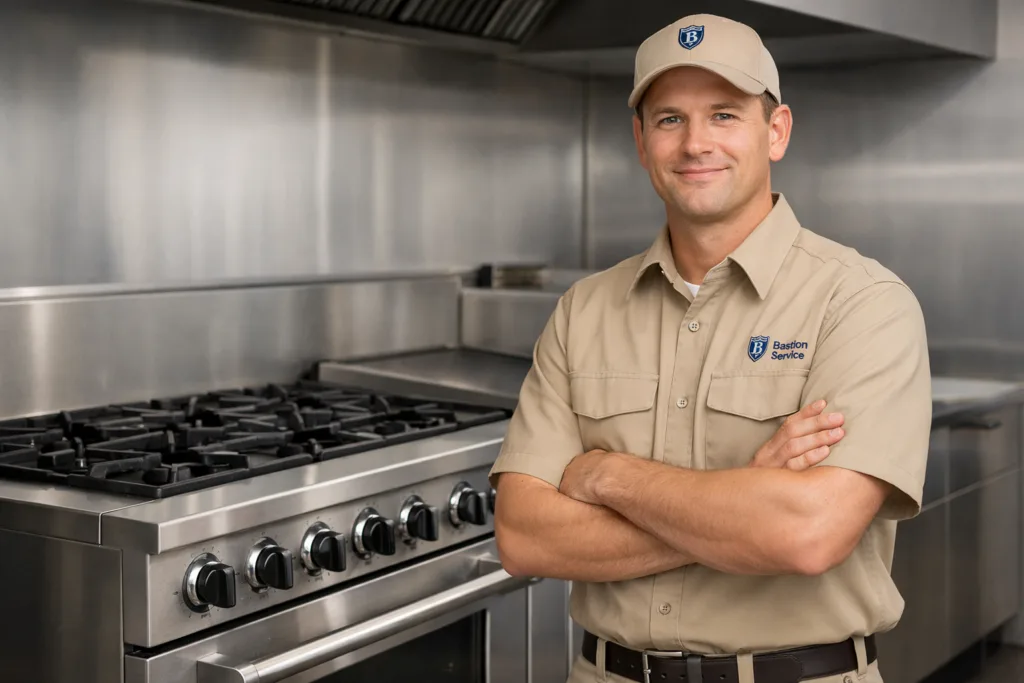
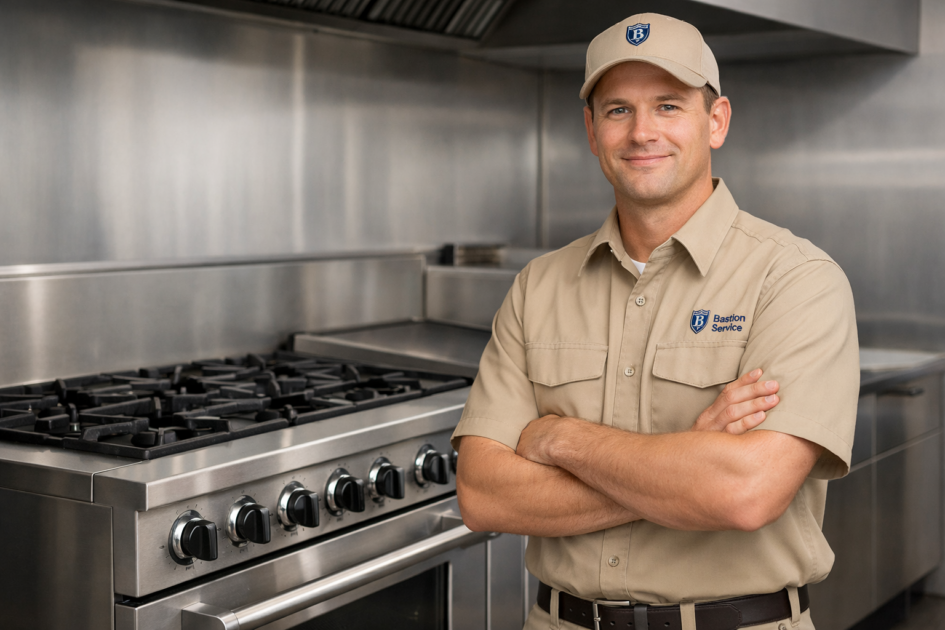
Bastion Service handles Vulcan range repair for Beverly Hills businesses with attention to symptom-based diagnosis, repair planning, and the operating impact of heat, ignition, and control failures. That matters when a range is used every day and even minor performance drift starts affecting output.
Common Vulcan Range Symptoms and What They Often Indicate
Vulcan ranges are built for demanding kitchen use, but constant heat, grease exposure, repeated cycling, and heavy production eventually wear down ignition, burner, temperature-control, and gas-delivery components. The most useful clues usually come from symptom patterns rather than from a single complaint.
Burners that do not light reliably
If a top burner clicks without lighting, lights only after several tries, or fails intermittently, the issue may involve ignition components, clogged burner ports, gas-flow restrictions, valve problems, or wear in the burner assembly. Delayed ignition should not be ignored, especially when operators notice inconsistent flame or need repeated attempts to start the burner.
When one burner acts up while others seem normal, the fault may be isolated. When several burners begin showing similar behavior, it can point to a broader ignition or gas-supply problem that deserves prompt inspection.
Weak flame, uneven flame, or burners dropping out
A burner that lights but does not hold a stable flame can create uneven heating across cookware and disrupt timing during service. Common causes include partial blockage, regulator-related issues, worn burner components, valve trouble, or conditions affecting proper gas delivery. If the flame looks smaller than usual, flickers, or cuts out under normal use, the range should be checked before staff start compensating with workarounds.
Oven not reaching temperature
When the oven section runs cool, preheats slowly, or struggles to recover between loads, the source may be an igniter problem, thermostat drift, sensor inaccuracy, burner performance loss, or a control issue. This type of failure often shows up first as longer cook times, uneven results, or repeated temperature adjustments by staff trying to maintain output.
Temperature swings or poor holding performance
If the oven overshoots, drops below the set point, or cannot maintain a stable cooking range, the problem may involve calibration, temperature sensing, controls, or inconsistent heat generation. In a production setting, that leads to rework, wasted product, and uncertainty from one batch to the next.
Controls not responding as expected
Intermittent switches, erratic thermostats, failed ignition response, or unexplained shutdowns often suggest worn controls, damaged wiring, connection issues, or heat-related component failure. These problems can appear random at first, but they usually become more frequent with continued use.
Why Accurate Diagnosis Matters
Two Vulcan ranges can show the same surface symptom and still require very different repairs. A unit that will not light may have a different root cause than one that lights but produces unstable flame. An oven that seems cold may be dealing with sensor inaccuracy, ignition weakness, or reduced burner output rather than a failed thermostat alone.
That is why diagnosis matters before parts decisions are made. Proper testing helps determine:
- Whether the fault is isolated or affecting multiple systems
- Whether ignition, burner, control, or gas-delivery components are involved
- Whether continued use could create safety or reliability concerns
- Whether repair is likely to restore dependable performance without repeated interruption
For kitchens in Beverly Hills, this kind of evaluation helps owners and managers make faster decisions about scheduling, staffing, and whether temporary workarounds are creating larger risk.
Signs It Is Time to Schedule Service
Some range issues are easy to postpone until they are not. What starts as occasional delayed ignition or minor temperature drift can turn into a failed service period, unusable oven section, or repeated production delays. Service is usually worth scheduling promptly when performance is no longer predictable.
- Burners need multiple attempts to light
- Clicking continues without proper ignition
- Flame looks weak, uneven, or unstable
- The oven heats slowly or does not match the set temperature
- Temperature fluctuates enough to affect food consistency
- Controls respond intermittently or shut down unexpectedly
- The range recovers too slowly during busy periods
- Staff are regularly adjusting settings to compensate for poor performance
If operators are changing their routine just to keep the unit usable, that is usually a sign the equipment needs more than observation. It needs repair planning based on the actual cause.
What Causes Heating and Temperature Problems in a Vulcan Range?
Heating complaints often come from one of several systems working together less effectively than they should. Burner performance, ignition strength, thermostatic accuracy, and control response all affect how the range behaves in real use. A problem in any one of those areas can appear as slow cooking, inconsistent heat, or poor recovery.
In many cases, the complaint is not simply that the range is “broken,” but that it has become unreliable. That distinction matters. A unit may still operate while failing to deliver repeatable heat, and that can be just as disruptive for a business as a full shutdown.
Ignition-related faults
Weak or inconsistent ignition can prevent burners from lighting properly or can cause delayed startup that affects both safety and performance. Over time, repeated ignition stress also tends to make the problem worse rather than better.
Burner and gas-flow issues
When burner output is restricted or uneven, the range may appear to be heating but still underperform in everyday use. That often shows up as slow pan response, uneven cooking, or poor oven recovery after the door opens.
Temperature control drift
A range that once held steady may gradually lose accuracy. This can happen when sensing or regulating components no longer respond the way they should, causing overcooking, undercooking, and inconsistent results from batch to batch.
Repair or Replacement: How Businesses Usually Decide
Repair is often the sensible option when the problem is confined to specific ignition, control, thermostat, burner, or gas-delivery components and the range remains in otherwise solid condition. If the frame, major structure, and overall operation still support reliable use after repair, restoring the unit can make operational and financial sense.
Replacement becomes more likely when there are multiple active faults, repeated breakdowns, significant deferred maintenance, or a history of unreliable performance that continues even after prior service. The right decision depends less on one bad day and more on the equipment’s overall condition, failure pattern, and remaining useful life.
How to Prepare for a Service Visit
A little symptom tracking can make a repair visit more productive. If possible, note what the range is doing, when the problem occurs, and whether it affects only one section or the entire unit. Helpful details include whether the issue appears during startup, after the range has been hot for a while, only under heavy use, or only in the oven section.
It also helps to be ready to answer questions such as:
- Which burners or sections are affected
- Whether the problem is constant or intermittent
- If the oven temperature is running high, low, or fluctuating
- Whether staff hear clicking, smell unburned gas, or see unusual flame behavior
- How long the issue has been present
These details can shorten the path from symptom to repair decision and reduce unnecessary guesswork.
Service Focus for Beverly Hills Kitchens
For businesses in Beverly Hills, range repair is not just about restoring heat. It is about getting a critical piece of kitchen equipment back into dependable rotation with less disruption to scheduling, prep, and service flow. When a Vulcan range begins showing ignition trouble, burner instability, oven heating issues, or control failure, timely service helps limit larger interruptions and supports more predictable daily operation.
If your range is no longer lighting, heating, or holding temperature the way it should, scheduling service based on the exact symptom pattern is the most practical next step. A focused repair visit can clarify what failed, what should be addressed first, and how to restore reliable performance with the least avoidable downtime.


