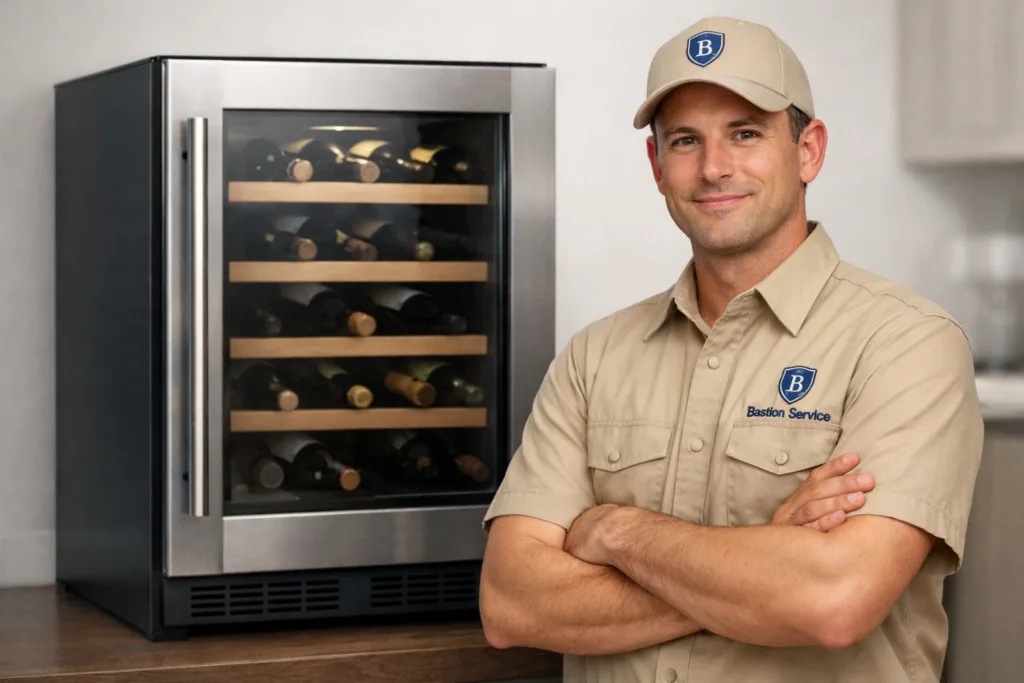
A U-Line wine cooler that starts warming, sweating, leaking, or cycling loudly can put a collection at risk quickly. In many El Segundo homes, the same symptom can come from very different causes, including restricted airflow, sensor drift, fan trouble, control faults, or a door that no longer seals evenly. Sorting out the pattern first helps avoid unnecessary part changes and points to the repair that actually fits the problem.
Common U-Line wine cooler symptoms homeowners notice
Most problems show up as temperature instability, moisture, noise, or control behavior that feels inconsistent. Even if the cabinet still seems partly cold, that does not always mean the unit is working correctly. Wine storage depends on stable conditions, so a cooler that is only cooling some of the time may already need attention.
Not cooling enough
If the interior is warmer than the display or setting suggests, the issue may be tied to condenser buildup, a weak evaporator or condenser fan, a faulty thermistor, control board problems, or a sealed-system fault. In some cases, the cooler runs for long periods but cannot pull the temperature down. In others, it cools after a reset and then drifts warm again. Both patterns usually mean the problem is more than a simple setting change.
Overcooling or freezing bottles
When bottles become too cold or contents start to freeze, the cooler may be misreading temperature, failing to cycle off at the right time, or moving air unevenly through the cabinet. Overcooling is often overlooked because the unit still seems powerful, but it can point to the same kind of control or sensor issue that later causes erratic temperature swings.
Condensation, water inside, or leaking near the base
Moisture inside a wine cooler can come from blocked drainage, excess humidity, poor door sealing, or a cabinet that is working too hard and producing more condensation than normal. Water near the base may be caused by a drainage issue or by moisture tracking out of the cabinet over time. Even a small amount of recurring water is worth checking before it affects shelves, surrounding surfaces, or flooring.
Buzzing, clicking, humming, or constant running
Some sound is normal in any refrigeration appliance, but new or louder noises matter. A fan may be rubbing or slowing down, the compressor may be struggling to start, or the unit may be running almost continuously because it cannot satisfy the temperature setting. Repeated clicking paired with weak cooling is often more significant than sound alone.
Controls, lights, or display issues
If the display is inaccurate, buttons respond intermittently, or the interior light behaves oddly, the cooler may have a control-related issue rather than a pure cooling-system failure. These symptoms can seem minor at first, but on an electronic wine cooler they can affect how the entire unit cycles and regulates temperature.
Why symptom overlap makes wine cooler problems tricky
Wine cooler issues are not always obvious from the first symptom. A warm cabinet can come from dirty condenser conditions, a failed fan motor, a sensor problem, a control issue, or a sealed-system problem. Condensation can be caused by a bad gasket, drainage trouble, or long run times caused by another fault altogether.
That overlap is why repeated resets and guess-based part replacement often waste time. A cooler may appear to improve temporarily after being powered off, only to return to the same behavior because the underlying fault was never addressed. A proper diagnosis narrows the failure to the system actually responsible.
What can happen if the unit keeps running in a faulty state
Continued use is most risky when the cooler cannot hold a stable temperature, shows signs of electrical inconsistency, or is leaking onto nearby surfaces. Running a unit that struggles to cycle properly can increase wear on the compressor and fan motors. Ignoring a gasket problem can lead to heavy condensation and near-constant run time. Letting pooled water continue can create avoidable cabinet or floor damage.
Homeowners sometimes try to compensate by lowering the setting further, opening the door less often, or unplugging the unit for a full reset. Those steps may briefly change the symptoms, but they rarely solve the actual cause when a component is failing.
When to schedule U-Line wine cooler repair in El Segundo
It is usually time to schedule service when the cooler no longer holds a consistent temperature, starts freezing unexpectedly, leaks more than once, develops heavy interior moisture, or begins making unfamiliar noises. The same applies when the display does not seem accurate, the door does not close securely, or the unit runs far longer than it used to.
Early service is especially helpful when the problem is intermittent. A cooler that works normally one day and struggles the next often has a developing issue that can be easier to identify before it becomes a complete no-cool failure.
Repair or replacement: what usually makes sense
Whether repair is worthwhile depends on the age of the unit, the condition of the cabinet and door, the type of failure involved, and the overall operating history. Many problems involving fans, sensors, controls, drainage, lighting, or gaskets can be reasonable to repair when the rest of the wine cooler is in good condition.
Replacement becomes a more serious consideration when a major sealed-system issue is combined with age, repeated breakdowns, or broader wear across the unit. The key question is not only whether the cooler can start running again, but whether it can return to stable storage conditions without turning into an ongoing cycle of issues.
What homeowners usually want from service
Most households want the same things: protect the bottles inside, avoid wasting money on the wrong parts, and get a straightforward explanation of what failed. Good service means matching the symptom to actual operating behavior, checking the relevant components, and explaining whether the repair path is sensible for the condition of the appliance.
If your U-Line wine cooler in El Segundo is warming, overcooling, leaking, or running louder than normal, the most useful next step is an inspection that identifies the fault and clarifies whether repair is the practical option for your home.