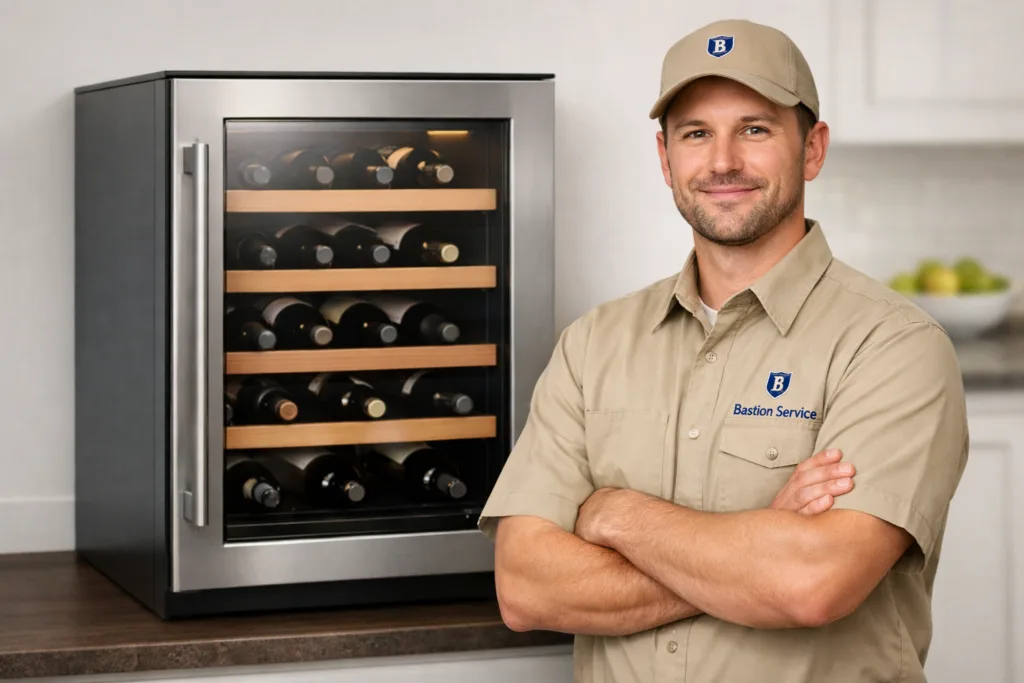
Wine storage problems rarely stay minor for long. A cabinet that runs warm one day and seems normal the next can be dealing with airflow trouble, a sensor issue, poor door sealing, or an early refrigeration failure. Finding the actual cause matters because wine coolers are designed to hold a steady environment, and repeated temperature swings can be harder on both the appliance and the bottles inside than a single obvious breakdown.
Common Marvel wine cooler symptoms and what they may mean
Most service calls start with one of a few patterns: not cooling, cooling too much, unusual noise, moisture buildup, or controls that do not respond normally. While those symptoms sound straightforward, they do not always point to one single part.
Not cooling or slowly losing temperature
If the cabinet is warmer than the setting, possible causes include dirty condenser components, restricted airflow, a weak evaporator fan, a faulty thermostat or sensor, a control problem, or a sealed-system issue. In built-in installations, limited ventilation around the unit can also affect performance and make the cooler run longer without reaching target temperature.
Too cold or freezing bottles
Freezing inside a wine cooler usually means the temperature regulation side needs attention. A sensor that is reading inaccurately, a control board fault, or uneven airflow can drive temperatures below the intended range. This is worth addressing quickly because overcooling can damage wine and place unnecessary strain on the system.
Buzzing, rattling, clicking, or louder fan noise
Some operating sound is normal, but a noticeable change in sound often points to a developing issue. Rattling may come from loose panels or vibration, buzzing can be tied to fan or compressor operation, and repeated clicking may indicate a start problem or control-related fault. If the noise appears along with poor cooling, it is a stronger sign that service is needed soon.
Condensation, leaks, and door-related problems
Water inside or under a Marvel wine cooler often comes from a drainage issue or excess moisture entering the cabinet. A blocked drain path can cause water to collect where it should not. A worn or misshapen door gasket can let warm air in, leading to condensation, longer run times, and temperature instability.
Door alignment also matters more than many homeowners expect. If shelves are loaded in a way that interferes with closing, or if the door is slightly out of position, the cooler may appear to work while quietly losing efficiency. In El Segundo homes, this can show up first as fogging on glass, moisture near the frame, or a cabinet that never seems to settle into a stable temperature.
Warning signs the problem is progressing
- The temperature keeps drifting after you adjust the settings
- The unit runs much longer than it used to
- Water returns after cleanup
- The door does not seal evenly all the way around
- New noises appear during startup or while running
- The display or controls act inconsistently
Basic checks homeowners can make before scheduling repair
A few simple observations can help narrow down the issue. Make sure the door is fully closing, check that shelves or bottles are not blocking airflow, and confirm the temperature setting has not been changed accidentally. If the unit is built in, look for signs of heat buildup or poor ventilation around the cabinet. It is also helpful to note whether the problem is constant or comes and goes, since intermittent symptoms often point to controls, sensors, or fan operation.
What usually is not worth doing is guessing at parts. Replacing a thermostat, fan, or control without testing can waste time and money, especially when similar symptoms can overlap. If the cooler is protecting a valuable collection or is already showing multiple symptoms together, it makes sense to move from basic checks to service.
When continued use can make the problem worse
It is usually best not to keep using the appliance as if nothing is wrong when cooling has become unreliable. A wine cooler that runs constantly, leaks repeatedly, or struggles to maintain temperature may be putting extra wear on the compressor and fans. Moisture issues can also affect surrounding cabinetry or flooring if they continue long enough.
Prompt service is especially important if the unit stops cooling completely, trips power, develops strong new noises, or shows erratic display behavior. Those symptoms tend not to resolve on their own, and delays can make the eventual repair more involved.
How repair decisions are usually made
Many Marvel wine cooler problems are repairable when the fault is tied to serviceable components such as sensors, fans, controls, gaskets, hinges, or drainage parts. Repair is often the practical choice when the cabinet is otherwise in good condition and the unit is an integrated part of the kitchen, bar area, or custom storage layout.
Replacement becomes a more serious consideration when there is a major sealed-system failure, repeated cooling breakdowns, or several age-related issues happening at the same time. The most useful way to make that decision is to compare the exact fault, the overall condition of the appliance, and the expected repair scope rather than relying on symptoms alone.
What a service visit should help clarify
A thorough appointment should sort out more than whether the cabinet feels warm. It should identify how the cooler is failing by checking temperature response, fan operation, condenser condition, control behavior, drainage, and door sealing. From there, homeowners can better understand whether the issue is minor, whether the unit should stay off until repaired, and whether repair or replacement makes more sense.
For households in El Segundo, the most useful next step is service that matches the actual symptom pattern instead of treating every cooling complaint the same way. That approach gives you a realistic path forward for protecting the appliance and the wine stored inside it.