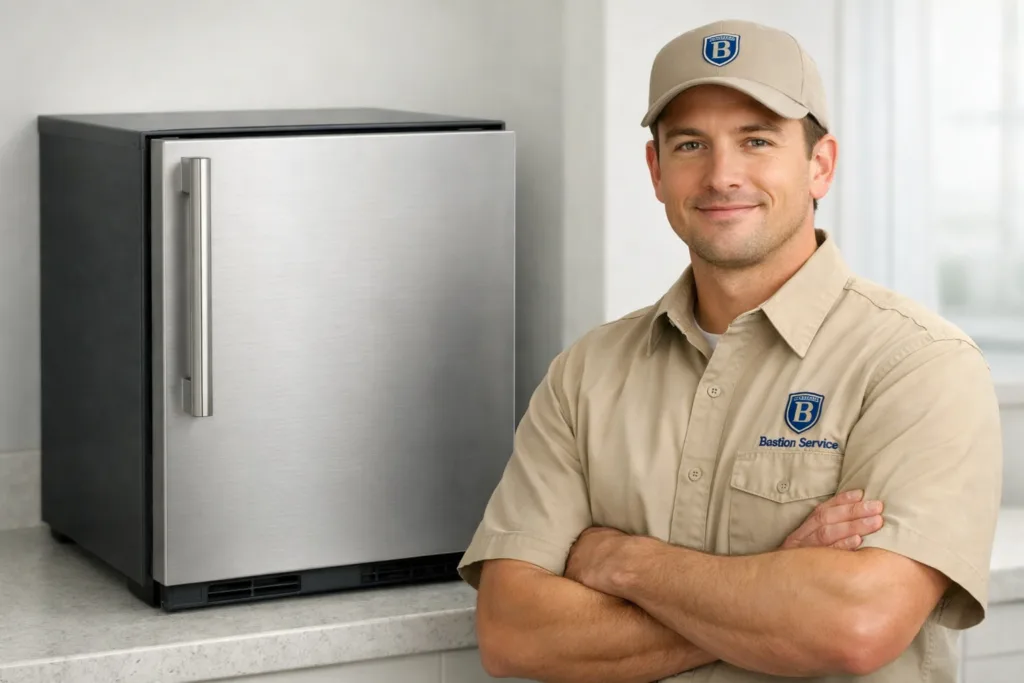
Freezer trouble rarely starts with a complete shutdown. More often, a U-Line unit begins with subtle signs such as softer frozen food, frost where it did not used to collect, longer run times, or a new noise during normal operation. Paying attention to those early changes can help prevent food loss and reduce the chance that a smaller problem turns into a more expensive repair.
Common U-Line freezer symptoms and what they can mean
One symptom can have several possible causes, so it helps to look at the full pattern rather than a single issue in isolation.
Not freezing well or slowly warming up
If the freezer is on but not holding a proper temperature, the cause may involve airflow restrictions, a weak evaporator fan, sensor or control trouble, frost buildup around internal components, or a problem in the cooling system. In some cases, the unit may still feel cold enough to be misleading while food quality steadily declines.
Signs to watch for include soft ice cream, bags of frozen food clumping together, thaw-and-refreeze texture changes, or ice production slowing down if the freezer section supports it. These are usually signs that the unit is no longer maintaining stable freezing conditions.
Frost buildup on walls, shelves, or drawers
Heavy frost often points to moisture entering the compartment or a failure in the defrost process. A worn door gasket, a door that is slightly misaligned, or an obstruction preventing a full close can let warm air in little by little. That moisture then freezes and accumulates.
Frost can also build when defrost components are not working properly. In that case, ice may collect behind interior panels first, reducing airflow and eventually affecting temperature throughout the compartment.
Water leaks or sheet ice at the bottom
Water under or inside a freezer is commonly tied to drainage problems. Defrost water may not be moving through the system correctly, leading to puddles, refreezing, or a slick layer of ice under drawers or baskets. While that may seem minor at first, trapped water can interfere with door closure, worsen frost problems, and make routine use more difficult.
Unusual fan noise, buzzing, or clicking
A change in sound is often one of the clearest clues that something has shifted. A fan hitting ice can create a scraping or ticking sound. Buzzing may come from the compressor area or from a fan motor under strain. Repeated clicking can point to a start issue, a control problem, or a component trying and failing to engage properly.
Because different failures can sound similar, noise is most useful when considered alongside temperature changes, frost patterns, and run behavior.
Why temperature swings matter
Freezers work best when they hold a steady temperature. When a U-Line freezer begins cycling unpredictably or drifting warmer and colder, food safety and food quality can both be affected. Even if items remain mostly frozen, repeated fluctuations can cause freezer burn, texture damage, and premature spoilage.
Temperature swings may be related to airflow problems, sensor errors, control issues, door sealing problems, or frost interfering with circulation. In undercounter and built-in configurations, installation conditions can also influence how hard the unit has to work, especially if ventilation is restricted.
Signs the problem should not be ignored
- Food is softening even though the display or controls seem normal.
- Frost keeps returning soon after being cleared.
- The freezer runs much longer than usual or seems to run almost constantly.
- You hear a fan scraping, frequent clicking, or a louder compressor sound.
- Water appears inside the cabinet or on the floor nearby.
- The door does not seal cleanly or pops open slightly after closing.
When these signs appear together, continued use can make the situation worse. Warm air entering repeatedly adds moisture, encourages more frost, and forces the freezer to work harder just to maintain a basic temperature.
What homeowners can check before service
There are a few simple things worth noticing before repair is scheduled. These checks do not replace diagnosis, but they can help narrow down the symptom pattern.
- Make sure the door closes fully without items blocking it.
- Look for gaps, tears, or stiffness in the door gasket.
- Notice whether frost is light and even or heavy in one area.
- Check whether noise happens all the time or only during certain cycles.
- See whether water is collecting in one consistent location.
- Watch for signs that the freezer is running longer after normal door use.
If the compartment is clearly warming, food is thawing, or the fan sounds like it is hitting ice, it is usually best to limit use until the unit is inspected.
Repair issues often seen in residential U-Line freezers
In El Segundo homes, freezer repairs commonly involve one of a few problem areas:
- Airflow components: fan motors, blocked passages, or ice restricting circulation
- Door sealing issues: worn gaskets, alignment trouble, or repeated moisture entry
- Defrost-related failures: parts that allow frost to build until cooling drops
- Drainage problems: defrost water backing up or freezing in place
- Control and sensing faults: the unit not responding correctly to actual temperature conditions
- Cooling system concerns: less common, but more serious when performance keeps declining
The right repair depends on which of these systems is actually failing. Similar symptoms can overlap, which is why replacing parts based on guesswork often does not solve the problem for long.
Repair or replacement: how the decision is usually made
Many U-Line freezer problems are repairable when the issue is limited to a fan motor, gasket, drain blockage, control component, or another serviceable part. Replacement becomes a more serious consideration when the freezer has repeated cooling failures, multiple component problems at once, or a major sealed-system issue compared with the appliance’s age and overall condition.
For homeowners in El Segundo, the most useful answer usually comes from comparing the symptom history, test results, expected repair scope, and how the freezer has been performing over time. A unit with one isolated failure is very different from one that has been losing reliability across several systems.
What a service visit should help clarify
A worthwhile appointment should do more than confirm that the freezer is not working properly. It should identify whether the main issue is temperature control, airflow, frost accumulation, drainage, sealing, or a mechanical cooling problem. That makes it easier to decide on the next step with confidence.
For a household freezer, the goal is to restore stable performance, prevent recurring frost or leaks, and avoid unnecessary parts replacement. When the actual cause is identified, the repair path becomes much more straightforward.
Focused help for U-Line freezer problems in El Segundo
If your freezer is thawing food, building frost, leaking, or making new noises, the symptom pattern matters. Bastion Service helps homeowners in El Segundo evaluate U-Line freezer problems based on how the unit is cooling, how consistently it is holding temperature, and whether the fault points to a practical repair. That kind of direct assessment is often the fastest way to tell whether the problem is minor, urgent, or a sign of a larger failure.