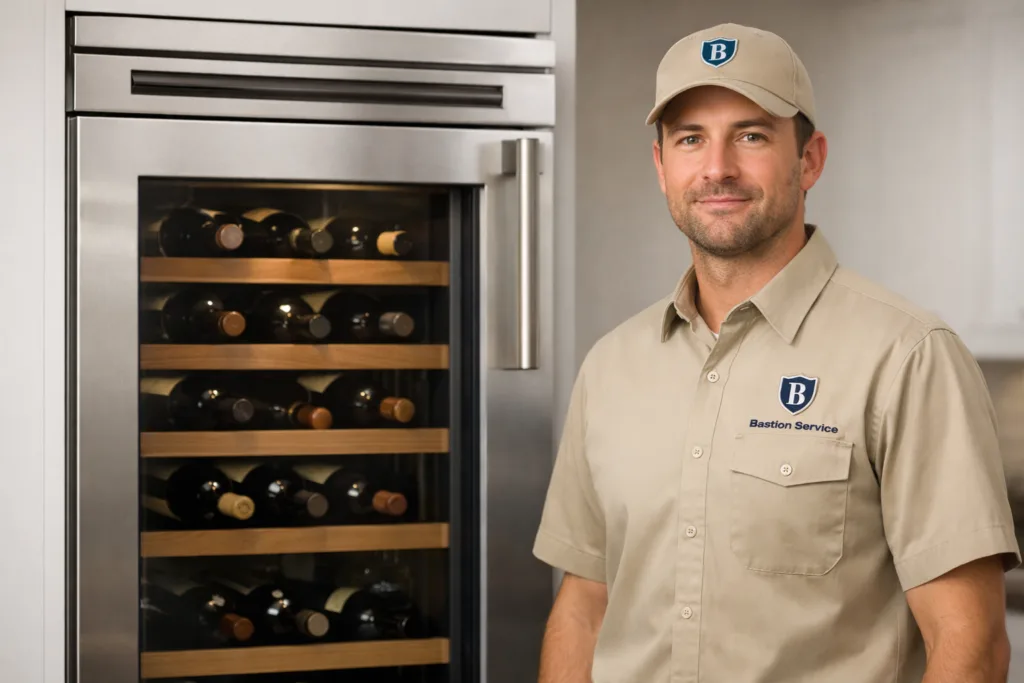
Small performance changes in a wine cooler often show up before a complete breakdown. A cabinet that feels only slightly warm, a little moisture on the glass, or a fan that sounds different than usual can all point to a developing issue. With Sub-Zero units, the most useful next step is symptom-based testing to determine whether the problem involves airflow, controls, door sealing, drainage, or the cooling system itself.
Common Sub-Zero wine cooler problems in El Segundo homes
Wine coolers are built for steady storage conditions, so even modest temperature drift can affect performance. When a Sub-Zero wine cooler starts acting differently, the symptom pattern usually offers clues about where the fault may be.
Not cooling enough
If bottles are warmer than expected or the cabinet struggles to reach the selected setting, possible causes include restricted airflow, dirty condenser components, a weak evaporator fan, sensor problems, or a control issue. In some cases, the compressor may continue running but fail to bring the interior down to proper storage temperature.
This kind of problem should not be ignored. A unit that runs longer and longer without stabilizing can place extra strain on other components and may eventually stop cooling altogether.
Uneven temperatures from shelf to shelf
When one area feels colder than another, the issue often involves circulation. Interior fans, blocked vents, frost buildup, or a control problem can all interrupt balanced airflow. Uneven temperatures are especially frustrating with wine storage because some bottles may be exposed to wider swings than others even when the display seems close to normal.
Condensation, water, or frost inside the cabinet
Moisture problems can come from a worn door gasket, a door that is not closing squarely, a blocked drain, or a defrost-related fault. Condensation on the glass may seem minor at first, but recurring moisture usually means the unit is not managing temperature and humidity the way it should.
Frost is another warning sign. Light frost can quickly turn into restricted airflow, and once airflow drops, cooling performance usually follows.
Fan noise, buzzing, or constant running
A sudden change in sound matters. Rattling, buzzing, clicking, or a fan that becomes louder than normal may indicate a failing fan motor, vibration from loose mounting, compressor stress, or an electrical component problem. If the wine cooler seems to run almost nonstop, it may be trying to compensate for heat gain, a sensor issue, or declining cooling efficiency.
Display problems or no response
If the controls do not respond, the display is blank, or the unit appears to have power but will not operate correctly, the cause may be tied to the control board, wiring, start components, or another electrical fault. These symptoms are hard to solve by guesswork and usually require direct testing.
What specific symptoms can mean
Different failures can create similar symptoms, which is why a proper diagnosis matters before parts are replaced. A warm cabinet does not always mean a compressor problem, and moisture on the door does not always mean the gasket is the only issue.
- Warm cabinet with normal fan sound: possible sensor, control, airflow, or condenser issue
- Warm cabinet with long run times: possible airflow restriction, dirty condenser, fan failure, or sealed-system concern
- Water at the bottom of the unit: possible drain blockage or moisture management problem
- Frost on interior surfaces: possible gasket leak, airflow problem, or defrost issue
- Clicking with no cooling: possible start component or compressor-related fault
- Intermittent operation: possible control board, thermostat, sensor, or wiring issue
Because these patterns overlap, replacing parts based on the most obvious symptom can waste time and money while the real cause continues in the background.
Why prompt repair helps protect the appliance
Many wine cooler problems become more expensive when left alone. A door sealing issue can lead to extra moisture, frost, and longer run times. A dirty condenser can contribute to overheating and wear. A fan that is slowing down may still work for a while, but weak airflow can eventually affect the entire cooling cycle.
Early service also helps protect the contents of the cabinet. Wine storage depends on stability, not just a cold interior. Repeated temperature swings, excess humidity, or chronic warming can undermine the purpose of having a dedicated Sub-Zero wine cooler in the first place.
When to stop normal use and schedule service
Some issues allow limited short-term use, but others should be addressed quickly. It is time to arrange service when performance is noticeably off or the unit is showing signs that a larger failure may be developing.
Schedule service promptly if you notice:
- The cabinet is no longer holding the set temperature
- The unit runs constantly or cycles in an unusual pattern
- There is repeated condensation on the glass or around the door
- Water collects inside or beneath the unit
- Frost keeps returning after being cleared
- The fan becomes noisy or the cooler starts clicking or buzzing
- The controls stop responding normally
If the interior is clearly too warm for proper storage, it is best not to rely on the unit until the cause is identified.
Repair or replacement: what to consider
Not every malfunction points to the same level of repair. Problems involving gaskets, fans, drains, sensors, or some control components are often more manageable than major cooling-system failures. The right decision depends on the confirmed fault, the age of the unit, how well it has been performing overall, and whether there have been repeated recent issues.
For homeowners in El Segundo, repair is often worthwhile when the problem is isolated and the rest of the wine cooler remains in solid condition. If the unit has a history of repeated cooling loss, extended run times, or multiple major repairs, it may make sense to weigh the repair scope against long-term reliability.
What a service visit should focus on
A worthwhile service call should move past assumptions and check how the unit is actually behaving. That includes verifying temperature performance, airflow, fan operation, condenser condition, sealing around the door, drainage, and control response. On a Sub-Zero Wine Cooler Repair in El Segundo call, that process helps determine whether the issue is straightforward or whether a more significant repair path is involved.
When the cause is identified correctly, homeowners can make better decisions about timing, use of the appliance, and whether repair is practical for the current condition of the unit.
Helpful steps before the technician arrives
There are a few observations that can make service more efficient. You do not need to disassemble anything, but it helps to note what the cooler has been doing over the last few days.
- Check whether the temperature problem affects the whole cabinet or only certain shelves
- Notice whether the noise comes and goes or stays constant
- Look for moisture around the gasket, on the glass, or under the unit
- Pay attention to whether the display is showing normal information
- Note if the door feels loose, uneven, or not fully sealed
These details can help narrow down whether the issue is related to airflow, controls, drainage, or cooling performance.
If your Sub-Zero wine cooler is no longer keeping stable conditions, acting noisier than usual, or showing signs of moisture or temperature drift, prompt service can help prevent a smaller issue from turning into a larger one.