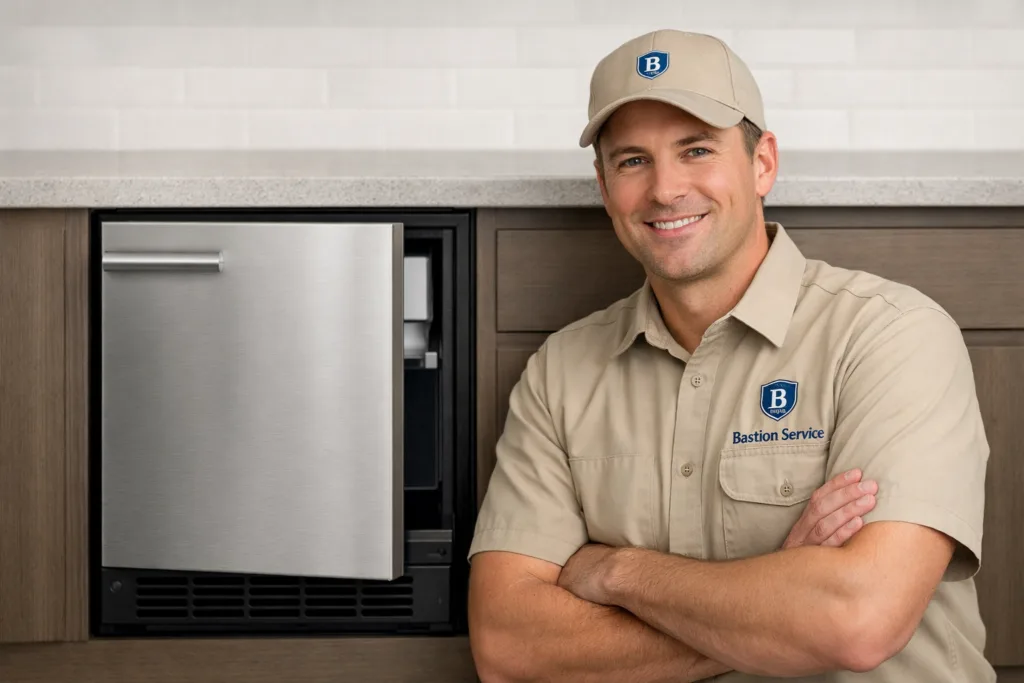
U-Line ice makers are built for steady household use, but when output drops or water starts appearing where it should not, the cause is not always obvious from the symptom alone. A machine that makes no ice may have a water supply problem, a freezing problem, or a cycle control issue. A unit that still makes ice but leaves clumps in the bin may be dealing with drainage, temperature regulation, or a harvest fault.
For homeowners in Los Angeles, the most useful approach is to look at the full symptom pattern rather than assume one part is to blame. That helps narrow down whether the problem starts with fill, freezing, release, storage, or drainage inside the machine.
What common U-Line ice maker symptoms usually mean
No ice in the bin
If the unit runs but the bin stays empty, there may be a restricted water line, a weak inlet valve, a control issue, or insufficient cooling inside the ice-making section. In some cases, the machine begins a cycle but never completes it, which can happen when the unit cannot reach the temperatures needed to form and release ice properly.
Slow ice production
Slow output often points to a developing issue rather than a complete failure. Reduced airflow, scale in the water path, warm operating conditions, or a sensor problem can all slow the cycle down. Homeowners may first notice this when the ice maker can no longer keep up during normal daily use.
Small, hollow, or uneven cubes
Cube quality tells you a lot about water delivery. When cubes are thin, hollow, or incomplete, the machine may not be filling correctly. Mineral buildup, a partially restricted supply, or a valve that is not opening fully can prevent the unit from getting the right amount of water for each batch.
Water leaking from the unit
Leaks can come from more than one place. A clogged drain, loose fitting, cracked line, overfill condition, or meltwater problem can all leave water under the appliance. Even a minor leak is worth addressing quickly because repeated moisture exposure can damage flooring, trim, and surrounding cabinetry.
Clumped ice or excess frost
When ice fuses together in the bin or frost builds up where it should not, the machine may be struggling with temperature control, door sealing, drainage, or moisture management during the cycle. This symptom is especially important because it can point to a problem that affects both performance and long-term component wear.
Buzzing, clicking, or grinding sounds
Some operating noise is normal, but new or worsening sounds usually indicate a mechanical or flow-related problem. A pump, fan, valve, or ice movement issue can all change how the unit sounds during fill, freeze, or harvest. If the noise is accompanied by poor output or leaking, it is a stronger sign that service is needed.
Why U-Line ice makers often need symptom-based diagnosis
Ice makers combine water supply, refrigeration, sensors, controls, and drainage in a small appliance. Because those systems work together, very different faults can produce similar results. For example, “no ice” can be caused by low water flow, poor cooling performance, a failed sensor, or a stalled cycle. “Leaks” might come from an external supply line or from an internal drain problem.
That is why guessing based on one visible symptom can lead to unnecessary part replacement. A proper inspection should look at fill behavior, freeze pattern, harvest timing, drain performance, and temperature conditions before deciding on a repair path.
Issues that can get worse if the unit keeps running
Some U-Line ice maker problems become more expensive when they are ignored. A small leak can turn into cabinet or floor damage. A weak cooling issue can lead to longer run times and more strain on other components. A drain blockage can create melt and refreeze problems that affect both performance and sanitation inside the machine.
If the unit is leaking, frosting heavily, or making unusual sounds, continued use is usually not the best choice. Stopping operation until the problem is checked can help limit additional wear and prevent water-related damage in the kitchen or bar area.
When repair makes sense
Many U-Line ice maker problems are repairable when the issue is isolated to a specific part or system. Water inlet faults, drain issues, sensor problems, and certain control-related failures can often be corrected without replacing the appliance. Repair is usually more appealing when the machine is otherwise in good condition and has been operating normally up to this point.
A focused diagnosis is also helpful when the symptoms seem minor. A machine that still makes some ice may only need one targeted repair before the problem spreads into poor cycle performance, overflow, or repeated shutdowns.
When replacement may be the better option
Replacement becomes a more serious consideration when the unit has multiple failures, major sealed-system trouble, severe corrosion, or a repair cost that is hard to justify based on the age and condition of the appliance. If the ice maker has had several recent problems and reliability is already poor, replacing it may offer a better long-term outcome than continuing with repeated repairs.
The key is not to assume repair or replacement too early. The smarter decision depends on what failed, how the rest of the machine looks, and whether the repair is likely to restore normal household use without ongoing trouble.
What to note before scheduling service
A few details can make diagnosis easier. It helps to notice whether the problem started suddenly or developed over time, whether the issue is constant or intermittent, and whether you have seen leaks, frost, noise, or changes in cube size. If the unit was recently cleaned, moved, shut off, or reconnected to water, that information can also matter.
- Whether the machine makes no ice at all or just less ice than usual
- Whether cubes look smaller, thinner, or irregular
- Whether water appears under the appliance or inside the cabinet area
- Whether the bin contains clumped or partially melted ice
- Whether the unit sounds different during fill, freeze, or harvest
U-Line ice maker repair for Los Angeles households
In a home setting, an ice maker problem is rarely just an inconvenience. It can affect daily use, create cleanup issues, and leave homeowners unsure whether the appliance is worth fixing. When a U-Line unit begins showing repeat symptoms, the next step is to identify the actual failure, not just the visible result.
Bastion Service helps Los Angeles homeowners evaluate U-Line ice maker problems based on how the machine is behaving, what components appear to be involved, and whether repair is likely to be a sensible solution for the appliance as it stands today.