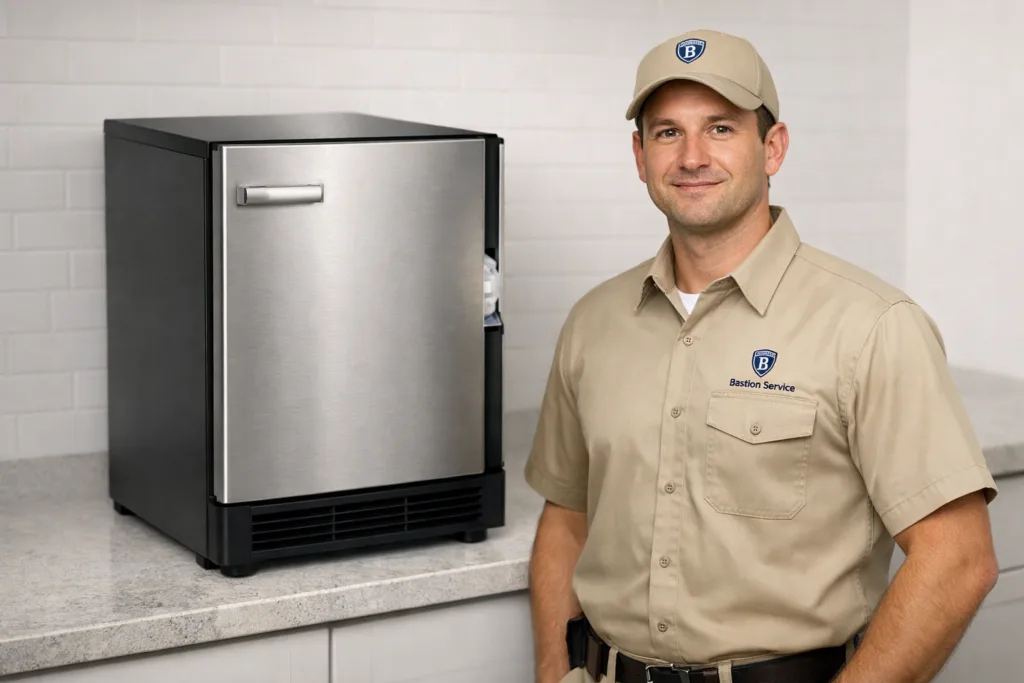
EdgeStar ice makers usually show a pattern before they fail completely. A unit may stop filling, freeze too slowly, make soft or hollow cubes, leak during part of the cycle, or run with new noises that were not there before. Looking at that pattern is the fastest way to narrow the problem, because similar symptoms can come from very different causes inside the water, drain, cooling, or control systems.
Start with what the ice maker is doing now
For homeowners in Los Angeles, it helps to notice whether the problem appeared suddenly or developed over time. A sudden shutdown can point to a failed valve, sensor, switch, or control issue. Gradual decline often suggests mineral buildup, restricted water flow, poor heat exchange, drainage trouble, or wear in moving parts. That distinction matters because an ice maker that still runs but performs badly is often giving early warning signs rather than failing all at once.
Useful details include whether the machine powers on, whether water enters the unit, whether ice forms but does not drop, and whether the problem is constant or intermittent. If the bin is wet, the floor has pooled water, or the cubes look smaller or cloudier than normal, those clues can help separate a simple flow issue from a larger cooling or harvest-cycle problem.
Common EdgeStar ice maker symptoms and what they may mean
No ice production
If the unit has power but makes no ice, possible causes include a blocked water line, a failing inlet valve, a control fault, a sensor problem, or weak cooling performance. Some machines appear to start a cycle but never complete it. Others fill once and then stop, or do not fill at all. A reset may temporarily restart operation, but if the same symptom returns, the underlying fault still needs attention.
Slow production or very small batches
Slow output often points to reduced water supply, scale buildup, ventilation problems, or trouble reaching and holding the right freezing temperature. This symptom is easy to overlook because the ice maker is still producing some ice, just not enough. In many households, that drop in output is the first sign that service is needed before the machine stops altogether.
Leaking or water under the unit
Leaks can come from loose connections, cracked lines, drain restrictions, overflow during fill, internal ice melt, or improper leveling. Water around the base should not be treated as a minor annoyance, especially in kitchens, wet bars, and built-in cabinet areas where moisture can affect flooring and nearby finishes. Intermittent leaking can also make diagnosis harder if the water dries before the source is identified.
Clumped ice or melting in the bin
When stored ice starts sticking together, melting, or refreezing into large masses, the issue may be poor temperature control, a sealing problem, harvest-cycle trouble, or an interruption in normal bin conditions. Clumped ice is often a sign that the machine is making ice inconsistently or allowing partial melt between cycles.
Odd noises, grinding, or repeated cycling
New sounds can suggest a pump problem, a fan issue, strain during harvest, an ice jam, or wear in a motor-driven component. Repeated starts and stops may also indicate that the machine is trying to move from fill to freeze to release, but something in the sequence is not happening correctly. If noise and low output show up together, that usually points to more than normal operating variation.
Why symptom-based diagnosis matters
An EdgeStar ice maker relies on several systems working together: water enters at the right time, the evaporator section freezes properly, sensors read conditions accurately, and the machine completes harvest and drainage as expected. A visible symptom only shows the result, not the cause. For example, poor ice quality can come from weak water flow, but it can also come from temperature instability. A leak may be a connection issue, but it can also happen when ice forms where it should not and melts later in the cycle.
That is why replacing parts based only on a guess can waste time and money. A fill complaint is not always a valve. A no-ice complaint is not always a cooling-system failure. And a noisy machine is not always a motor. Matching the symptom to the exact stage of operation usually leads to a more accurate repair plan.
Signs the problem may be getting worse
Some ice maker failures remain stable for a while, but many become more expensive if ignored. Watch for these signs that the issue is progressing:
- Ice production keeps dropping week by week
- The unit needs frequent resets to start making ice again
- Leaks are becoming more frequent or spreading farther
- Cube size or shape changes from batch to batch
- The machine runs longer than normal to produce less ice
- Noise levels increase during fill, freeze, or harvest
When an ice maker still works part of the time, it is easy to postpone service. The drawback is that continued operation can add wear, allow hidden water damage, and make the original fault harder to isolate.
When to stop using the unit and schedule service
It makes sense to stop or limit use when the machine is leaking, showing internal ice buildup, tripping power, or making harsh grinding or buzzing sounds. Those symptoms can point to issues that may damage the unit further if it keeps cycling. Service is also a smart next step when the machine technically runs but no longer produces reliable batches, because partial operation often hides a deeper issue in water flow, temperature control, or the harvest sequence.
If the ice maker is only producing a few cubes, making slushy batches, or taking far longer than usual, the problem may still be repairable without major work. Catching that stage early often gives a better chance of addressing one failing component rather than multiple related problems.
Repair versus replacement
Many EdgeStar ice maker issues are worth repairing when the fault is limited to a valve, pump, drain issue, sensor, connection, or other isolated component. Repair is usually the better option when the machine has been otherwise consistent and the current problem is specific and recent.
Replacement becomes more reasonable when the unit has repeated breakdowns, multiple systems are failing at once, there is major internal corrosion, or cooling performance has declined beyond a simple fix. If the machine has been unreliable across different symptoms over time, replacing it may make more sense than continuing to address one issue after another.
What helps before a service visit
A few observations can make the evaluation more efficient:
- Note the last time the machine made a normal full batch
- Check whether water is reaching the unit
- Pay attention to where leaking appears and when
- Notice whether the problem happens every cycle or only sometimes
- Listen for changes during fill, freezing, and ice release
- Look at cube size, clarity, and whether ice is clumping in the bin
For EdgeStar ice maker repair in Los Angeles, the most useful approach is to match the repair to the exact behavior of the unit. That can mean correcting a fill issue, resolving a drain problem, addressing poor freezing performance, or replacing a worn component that is interrupting the cycle. When the symptom pattern is identified clearly, the next step is usually much easier to define.