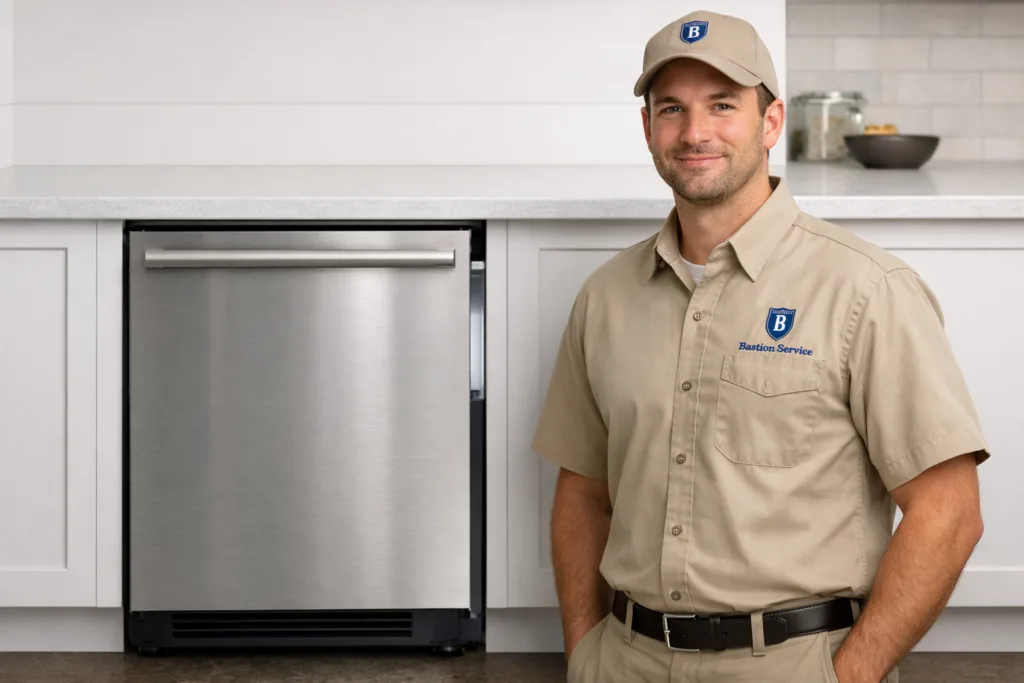
Freezer problems tend to get more expensive when the early warning signs are ignored. A U-Line unit that is a few degrees too warm today can become a full thaw tomorrow, and a little frost around the door can turn into blocked airflow and uneven temperatures across the compartment. For homeowners in Santa Monica, the most useful starting point is to match the symptom pattern to the likely system involved.
How U-Line freezer symptoms usually point to the source of the problem
Different failures can create similar results, which is why symptom details matter. Whether the freezer is warming, icing up, leaking, or sounding different than usual, the location, timing, and severity of the issue often reveal whether the problem is related to airflow, defrost, door sealing, controls, drainage, or the cooling system itself.
Freezer is cold, but food is still soft
If the cabinet feels chilly but frozen food is not staying fully solid, the freezer may not be circulating air correctly. This often happens when an evaporator fan weakens, frost begins blocking vents, or a temperature sensor is no longer reading accurately. It can also happen when condenser components are dirty enough to reduce cooling efficiency.
This type of issue is easy to underestimate because the freezer may seem to recover for short periods. In practice, partial cooling usually means the unit is struggling to maintain stable temperatures, especially after the door is opened.
Frost keeps building up inside
Heavy frost on shelves, the rear panel, or around the door usually means moisture is entering the compartment or the automatic defrost process is not working as it should. Common causes include a worn gasket, a door that is slightly misaligned, a defrost heater problem, or a control issue that prevents proper defrost cycling.
Once frost gets thick enough, airflow drops and temperature consistency gets worse. That is when homeowners often notice one section staying colder than another, or the freezer running longer than normal.
Water under or inside the freezer
Leaks often trace back to meltwater that cannot drain properly during the defrost cycle. A blocked or frozen drain can force water to collect where it should not. In other cases, water appears because ice buildup has started melting after a temperature swing or temporary shutdown.
If leaking is paired with warming, the problem may be larger than a simple drain issue. That combination often deserves prompt attention because it can affect both food storage and nearby flooring.
Clicking, buzzing, humming, or fan noise
Some sound is normal in a freezer, especially when it starts a cooling cycle. New or louder noises are different. Clicking can suggest a start or relay problem. Buzzing may point to compressor strain or restricted airflow. A scraping or rubbing sound can happen when a fan blade is hitting ice. A constant hum without enough cooling can signal the system is working harder than it should.
Noise changes are most useful when considered alongside temperature changes. If the freezer is also warming, frosting over, or running nonstop, the sound is usually part of a larger fault rather than an isolated annoyance.
Signs the problem is getting worse
Some symptoms suggest the freezer is moving beyond a minor inconvenience and toward a more serious failure. Watch for these changes:
- Food thaws and refreezes
- Ice buildup returns soon after manual defrosting
- The freezer runs for very long periods without reaching the set temperature
- The door no longer closes with a firm seal
- Water pooling becomes frequent
- Cabinet temperatures vary widely from top to bottom or front to back
When those patterns appear, continued use can increase wear on fans, controls, and the compressor. It can also make the final diagnosis less straightforward if several issues begin overlapping.
Common repair paths for U-Line freezer problems
Not every freezer problem points to a major failure. Many service calls involve parts or conditions that are repairable when identified early enough. Depending on the symptom, likely repair paths can include:
- Replacing a worn or damaged door gasket
- Correcting airflow restrictions caused by frost or blocked vents
- Repairing defrost system components
- Addressing fan motor issues
- Resolving thermostat, sensor, or control faults
- Clearing a blocked defrost drain
- Evaluating compressor or sealed-system performance when cooling loss is severe
The important point is that a freezer should not be judged by one symptom alone. Two units with the same “not freezing” complaint can need very different repairs.
When repair is usually worth considering
Repair is often sensible when the issue is isolated to a specific functional part such as a gasket, fan, control, drain, or defrost component. If the cabinet is otherwise in good shape and the problem has not been going on for too long, homeowners in Santa Monica can often restore normal performance without replacing the unit.
It is also worth considering repair when the symptom has a clear trigger, such as frost growth after sealing problems, or intermittent warming tied to airflow or sensor behavior. These are often more manageable than broad cooling failures affecting multiple systems at once.
When replacement may become the better option
Replacement may deserve serious consideration if diagnosis points to major sealed-system trouble, repeated compressor-related failures, or a combination of expensive issues occurring at the same time. A freezer that has already gone through multiple cooling problems can become difficult to justify if the next repair still leaves uncertainty about long-term reliability.
Homeowners usually make the best decision by comparing three things: the actual failed system, the overall condition of the freezer, and whether the proposed repair addresses the root cause rather than only the visible symptom.
What to do before service arrives
A few simple steps can help protect food and make the problem easier to evaluate:
- Avoid adding new food if the freezer is already struggling to stay cold
- Limit door openings to preserve remaining cold air
- Check whether frost is concentrated near the door, back panel, or vents
- Listen for changes in fan or compressor sound
- Look for water under the unit or inside the compartment
- Note whether the issue is constant or comes and goes
Those observations can be helpful because they narrow the likely cause and show whether the problem is progressing quickly or behaving intermittently.
Residential U-Line freezer repair in Santa Monica
In homes throughout Santa Monica, freezer issues are easiest to solve when they are addressed before food loss, ice blockage, or nonstop run time creates extra damage. A focused diagnosis helps determine whether the trouble is coming from airflow, defrost, controls, drainage, sealing, or a larger cooling-system fault.
If your U-Line freezer is no longer holding temperature, keeps building frost, leaks water, or has started making unfamiliar noises, early service usually gives you more options and a better chance of avoiding a complete cooling failure.