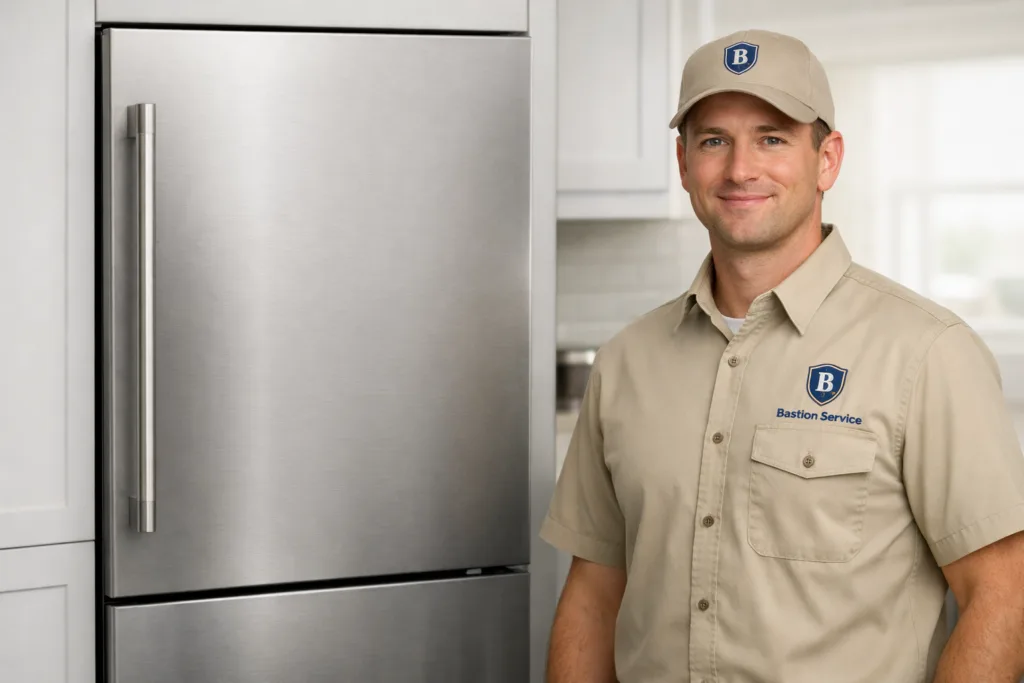
A Marvel freezer that starts softening food, frosting over shelves, or running nonstop can move from minor annoyance to real food-loss risk quickly. In Santa Monica homes, the same symptom can come from very different causes, including restricted airflow, a thermostat or sensor issue, a defrost failure, a worn door gasket, or a larger cooling-system problem.
What common freezer symptoms usually mean
Temperature problems are one of the main reasons homeowners schedule service. If food is no longer staying fully frozen, ice cream is soft, or one section feels colder than another, the issue may involve an evaporator fan, control fault, frost blocking airflow, or trouble in the cooling system itself. A freezer that still gets cold but cannot hold a steady temperature usually needs testing before any part decision is made.
Frost buildup often points to either moisture getting into the compartment or a defrost problem preventing normal ice melt. If frost is collecting on the back wall, around drawers, or near the door opening, likely causes include a poor door seal, a door that is not closing evenly, or a failed defrost component. What starts as a thin layer of frost can gradually reduce airflow and make the freezer work much harder.
Water under the unit or inside the compartment can come from a clogged defrost drain, excess condensation, or leveling issues that affect how the door seals. A leak may not seem urgent at first, but standing water can damage surrounding flooring and often signals an underlying cooling or moisture-control issue that should not be ignored.
New noises also tell an important story. Buzzing, clicking, fan rubbing, or repeated start attempts can indicate ice around a fan blade, a failing motor, weak start components, or compressor stress. Even if the freezer is still operating, unusual sounds often mean a part is struggling and performance may decline soon after.
Why Marvel freezer diagnosis needs to be symptom-specific
Marvel units can show the same outward symptom for several different failures. Poor cooling may be caused by a fan issue, sensor problem, control fault, or sealed-system trouble. Frost may be related to defrost components or simply warm air entering through a bad gasket. Intermittent temperature swings may be caused by controls, airflow, or startup problems.
That is why useful service begins with the actual pattern of failure: how the freezer is cooling, whether frost is forming, how the door is sealing, what the fans and compressor are doing, and whether the problem is mechanical, electrical, or related to the sealed system. This kind of practical repair guidance helps avoid unnecessary part swapping and gives the homeowner a better basis for deciding what to do next.
Signs you should schedule service soon
Some freezer issues can wait a short time, but others tend to worsen quickly. It is smart to arrange service promptly if you notice:
- Food softening or partially thawing
- Heavy frost on walls, drawers, or stored items
- Water pooling under or inside the freezer
- A door that does not seal tightly
- Constant running or very long run times
- Clicking, buzzing, or louder-than-normal fan noise
- The unit trying to start repeatedly
Waiting too long can add compressor strain, increase frost accumulation, and make food loss more likely. If the freezer has stopped cooling almost entirely, protecting stored food becomes the immediate priority.
When continued use can make things worse
A freezer that is short-cycling, running nonstop, or fighting through blocked airflow is often under more stress than it appears. If the door gasket is torn, the door sits slightly open, or frost is building around internal panels, continued operation may cause the appliance to run longer and cool less effectively. Early service can sometimes prevent a smaller problem from turning into a major repair.
Repair versus replacement: how homeowners usually decide
Many Marvel freezer problems are repairable when the issue is isolated to a fan motor, thermostat, control component, door gasket, defrost part, or drain problem. In those cases, repair is often the sensible path if the appliance is otherwise in good condition.
Replacement becomes a more serious consideration when diagnosis points to major sealed-system failure, compressor trouble, repeat breakdown history, or repair cost that no longer makes sense for the freezer’s age and condition. The most useful decision is usually based on the exact failed system, overall appliance condition, and whether the repair is likely to restore reliable household use.
Household freezer situations we often see in Santa Monica
Some homeowners notice the problem after opening the freezer and finding food partly thawed even though the unit still sounds normal. Others see frost taking over the interior, hear a fan scraping against ice, or realize the door only stays shut if pushed firmly. Another common situation is a freezer that seems to run nearly all day but still does not feel consistently cold.
These cases may sound similar at first, but they often come from different failures. One home may have a simple sealing issue. Another may have a defrost problem hiding behind an interior panel. A third may be dealing with a cooling-system issue that changes the repair decision entirely. The goal is to identify the source of the problem accurately and match the repair to the actual failure.
What to do before the service visit
If your freezer is still running, a few observations can make the visit more productive. Check whether frost is concentrated in one area or spread throughout the compartment. Notice whether the door closes smoothly or needs extra pressure. Listen for fan noise, clicking, or repeated startup attempts. If possible, note whether food is softening evenly or only in certain sections.
It also helps to avoid overloading the freezer right before service and to keep door openings to a minimum if temperatures are unstable. If stored food is already at risk, moving sensitive items to another freezer can help reduce loss while the problem is being diagnosed.
Focused Marvel freezer repair for Santa Monica homes
For homeowners in Santa Monica, the most helpful service approach is one that stays focused on the actual symptom pattern rather than treating every cooling complaint the same way. Whether the issue involves frost buildup, leaks, temperature swings, poor airflow, or new noise, the repair path should be based on what has truly failed and what will restore stable freezer performance for everyday household use.