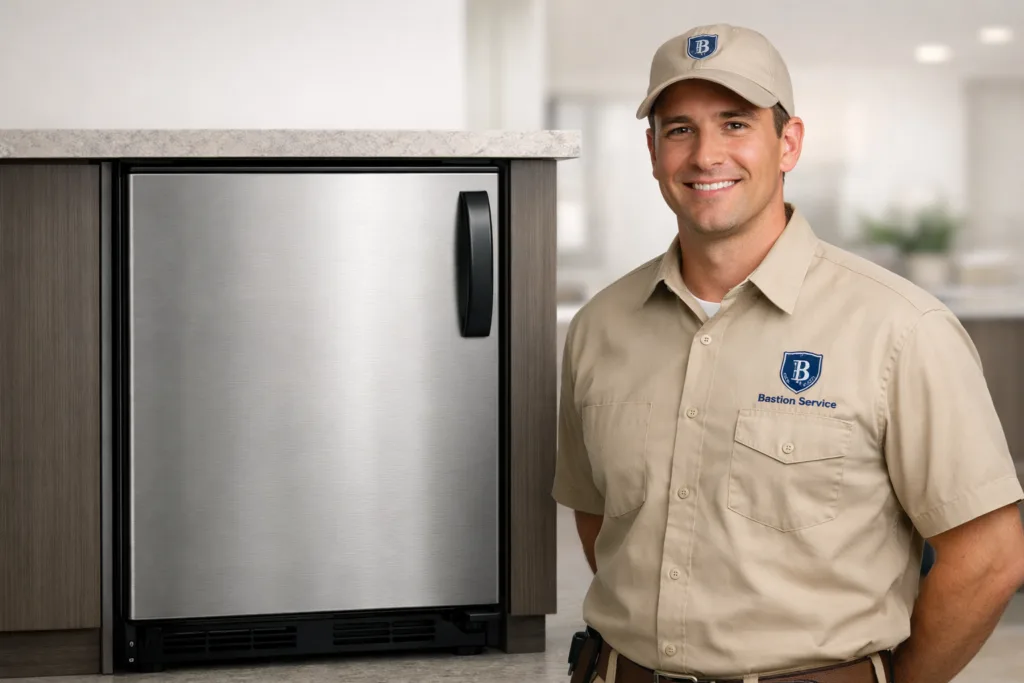
Ice makers often show one symptom while the real problem is happening somewhere else in the system. A machine that seems to have a simple no-ice issue may actually be dealing with weak water fill, poor cabinet temperature, a drainage problem, or a control fault. For a built-in U-Line unit in Santa Monica, identifying which system is failing first is usually what keeps the repair targeted and cost-conscious.
Common U-Line ice maker symptoms and what they may mean
No ice production
If the unit has power but the bin stays empty, the cause may be a restricted water line, a faulty inlet valve, a blocked filter setup, a sensor issue, or a cooling problem that prevents normal freezing and harvest. In some cases, homeowners assume the icemaker assembly itself has failed when the real issue is that the cabinet is not reaching the temperature needed to complete a cycle.
Slow ice production
When the machine still makes ice but far less than usual, look at the pattern rather than the total amount alone. Slow production can point to partial water fill, scale buildup, reduced airflow, or temperature instability inside the unit. It can also happen when the machine is running longer to make each batch because a cooling component is losing efficiency.
Small, thin, or hollow cubes
Cube shape is one of the clearest clues in an ice maker diagnosis. Thin or hollow cubes often suggest the mold is not getting enough water. That can happen because of low incoming pressure, a kinked supply line, mineral buildup, or a valve that is opening weakly or inconsistently. If cube size changes from one batch to the next, intermittent fill problems are often worth checking early before the unit stops producing altogether.
Leaking or water around the unit
Water under a U-Line ice maker should be treated as an active problem, not a cosmetic one. Depending on the model and installation, the source may be a loose connection, drain issue, pump problem, overflowing fill, melting ice, or door sealing problem that is causing excess moisture. In a residential kitchen or bar area, even a small leak can affect flooring, trim, or surrounding cabinetry if it continues unnoticed.
Clumped ice or a wet bin
When fresh ice fuses together or the bin stays damp, the machine may be making ice correctly but failing to hold stable storage conditions. Warm air entering through a poor seal, a door that is not closing fully, or a refrigeration issue can all lead to melting and refreezing. This symptom is easy to dismiss at first, but it often points to a condition that gets worse with time.
Unusual noises or repeated cycling
Some sound is normal during fill, freeze, harvest, and drain stages, but new or changing sounds matter. Clicking, buzzing, extended humming, or unusually frequent cycling may suggest a pump issue, obstructed water flow, scale buildup, fan trouble, or a component struggling to complete a cycle. A noise change is often most useful when paired with another symptom such as slow production or leaking.
Why U-Line ice maker problems are not always straightforward
These units combine water delivery, drainage, temperature control, and mechanical harvest functions in a compact space. One weak point can create symptoms that look like a different failure. For example, a drain problem may leave excess water in places it should not be, while a temperature problem may show up first as poor cube quality rather than obvious warming.
Built-in placement can add another layer to the diagnosis. Tight clearances, leveling issues, and the routing of water or drain lines can all affect performance. That is why replacing one part based only on the visible symptom does not always solve the issue.
When to stop using the ice maker and schedule service
It is usually smart to stop using the machine and schedule service if you notice any of the following:
- Water leaking onto the floor or into nearby cabinetry
- No ice production lasting beyond a normal cycle delay
- Repeated thawing and refreezing in the bin
- New electrical issues such as tripping power
- Long run times with very little ice output
- Grinding, buzzing, or other persistent unusual noises
Continuing to test a leaking or temperature-unstable unit can increase repair scope. What starts as a fill or drain problem can become cabinet damage, and a machine that keeps running under strain may put extra wear on other components.
Symptoms that should not be ignored
Some problems seem minor because the ice maker still works part of the time. Partial operation, however, often means the unit is in the early stages of a bigger failure. If it still produces some ice but the cubes are smaller, wetter, slower to form, or more likely to clump, that is often the best time to address the issue before the machine stops completely.
Another sign worth taking seriously is inconsistency. If the unit works normally one day and poorly the next, the problem may be tied to a control, sensor, valve, or temperature condition that comes and goes. Intermittent issues are frustrating, but they are also important because they rarely correct themselves for long.
Repair versus replacement for a residential U-Line ice maker
Many U-Line ice maker problems are repairable, especially when the issue is limited to water supply components, a drain or pump problem, a door-sealing issue, sensor failure, or a single control-related fault. If the cabinet is in good shape and the machine has otherwise been reliable, repair is often the more sensible path.
Replacement becomes more likely when there are several problems at once, when the unit has ongoing leak history, when corrosion is present, or when a major cooling or control failure is paired with age and declining reliability. The best decision usually comes after the fault is narrowed down, because the symptom alone does not tell you how extensive the repair will be.
What homeowners in Santa Monica can expect from a focused service visit
A helpful service visit starts with the pattern you are seeing at home: no ice, slow production, leaking, clumping, wet ice, or unusual noise. From there, the problem is narrowed to the relevant system instead of guessing based on one visible symptom. That process helps determine whether the issue is happening during fill, freeze, harvest, drainage, or temperature hold.
For homeowners in Santa Monica, that means a better basis for deciding whether to repair now, stop using the appliance, or consider replacement if the machine has multiple concerns. The goal is not just to get the unit running again for a short time, but to identify whether the repair path is likely to restore stable day-to-day use.