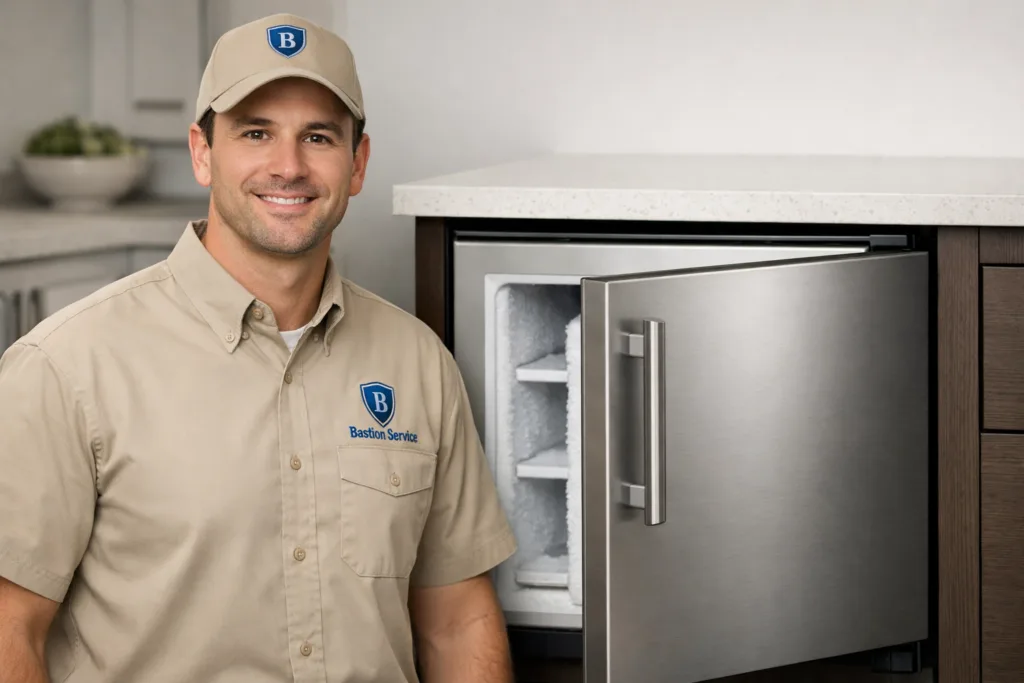
Freezer trouble rarely stays minor for long. A small temperature swing can turn into soft food, frost can block airflow, and a simple drain issue can leave water on the floor. With U-Line units, the most useful approach is to match the symptom to the system that is likely failing, then decide whether repair makes sense before the problem spreads to other components.
Common U-Line freezer symptoms and what they often mean
Many freezer complaints sound similar at first, but they do not all point to the same repair. Looking at the full pattern matters: how long the issue has been happening, whether the unit is still running, whether frost is appearing in one area or throughout the cabinet, and whether the door is sealing as it should.
Not freezing well or slowly warming up
If food is softening, ice is melting, or the cabinet never seems cold enough, the cause may be restricted airflow, a failing evaporator fan, dirty condenser areas, a sensor or control problem, a defrost issue, or a sealed-system fault. In some cases, the freezer still runs constantly but cannot pull the temperature down. That usually means the unit is working harder than normal without getting the result it should.
This symptom should be addressed quickly because food safety becomes a concern, and prolonged strain can push a borderline compressor or fan motor closer to failure.
Frost buildup on walls, shelves, or packages
Frost usually means moisture is getting in or the freezer is not defrosting properly. A worn gasket, a door that does not close fully, an item blocking the door, or a failed defrost component can all create heavy frost. Once frost accumulates, airflow drops and cooling becomes less even, so the freezer may seem to have two problems when one issue is causing both.
If frost returns soon after you clear it, the underlying cause is still active and needs attention.
Water leaks or sheets of ice inside the freezer
Water under the appliance or ice forming where it should not often points to a clogged defrost drain, drainage restriction, or excess condensation. In a home kitchen, that can damage nearby flooring and cabinetry in addition to affecting freezer performance. A leak is worth checking promptly even if cooling still seems normal.
Buzzing, clicking, rattling, or nonstop running
Some operating noise is expected, but a noticeable change matters. Repeated clicking can indicate a compressor start problem. Rattling may come from a loose panel or vibration. A loud fan sound can mean ice interference or motor wear. If the freezer seems to run almost all the time, it may be struggling with airflow, heat exchange, door sealing, or a deeper refrigeration issue.
Simple checks homeowners can do first
Before scheduling service, a few quick observations can help narrow down the problem and prevent unnecessary downtime:
- Make sure the door closes fully and nothing inside is pushing against it.
- Check the gasket for tears, gaps, or areas that look flattened.
- Look for heavy frost on the back panel or around vents.
- Confirm the temperature setting was not changed accidentally.
- Listen for the fan and note whether the unit is running constantly or cycling strangely.
- Check for water beneath the unit or ice collecting in the bottom of the compartment.
These checks do not replace testing, but they can make the symptom pattern clearer and help determine how urgent the repair is.
Why accurate diagnosis matters with U-Line freezers
Several different faults can create the same visible symptom. For example, poor cooling can come from a weak fan, iced-up evaporator, bad sensor, control issue, or sealed-system trouble. Frost can be caused by a door seal problem or by a defrost failure. Replacing a part based only on the most obvious symptom can waste time and money while the real issue continues.
A useful service call should sort out whether the problem is related to airflow, controls, drainage, door sealing, or the refrigeration circuit itself. That distinction is what guides the repair decision.
When to stop using the freezer
If the unit is no longer keeping food fully frozen, it is best to move food elsewhere and arrange service as soon as possible. The same goes for repeated clicking, strong burning odor, tripped power, or major leaking. Continuing to run a struggling freezer can worsen wear on important components and increase the chance of complete cooling loss.
You should also pause normal use if the door will not stay shut, if frost is so heavy that shelves or vents are blocked, or if interior temperatures swing widely from one day to the next.
Repair issues that are often worthwhile
Many U-Line freezer problems are repairable, especially when the issue is found early. Common examples include:
- Door gasket replacement
- Evaporator or condenser fan repair
- Defrost heater, sensor, or control replacement
- Drain cleaning and moisture-related corrections
- Thermostat, sensor, or control troubleshooting
These repairs are often more straightforward than homeowners expect, particularly when the freezer cabinet and core refrigeration system are otherwise in good condition.
When replacement may be the better choice
Replacement becomes more likely when testing points to major sealed-system failure, compressor-related problems with high repair cost, or multiple issues in an older unit. The decision is usually based on condition, repair scope, parts investment, and whether the freezer can realistically be returned to stable long-term performance.
For households in Playa Vista, the best choice is usually the one that restores reliable freezing without turning into repeated follow-up repairs.
What to expect from a focused service visit
A proper evaluation should do more than confirm that the freezer is warm or frosted. It should identify why the problem is happening, whether any food-safety risk is present, and what repair path is realistic. That typically includes checking temperature behavior, fan operation, frost pattern, drain condition, gasket seal, control response, and signs of stress in the cooling system.
Once the actual fault is identified, the next step is clearer: repair the failed component, correct the condition causing the problem, or recommend replacement if the unit is no longer a sensible candidate for repair. That gives Playa Vista homeowners a practical way to decide what to do next with a malfunctioning U-Line freezer.