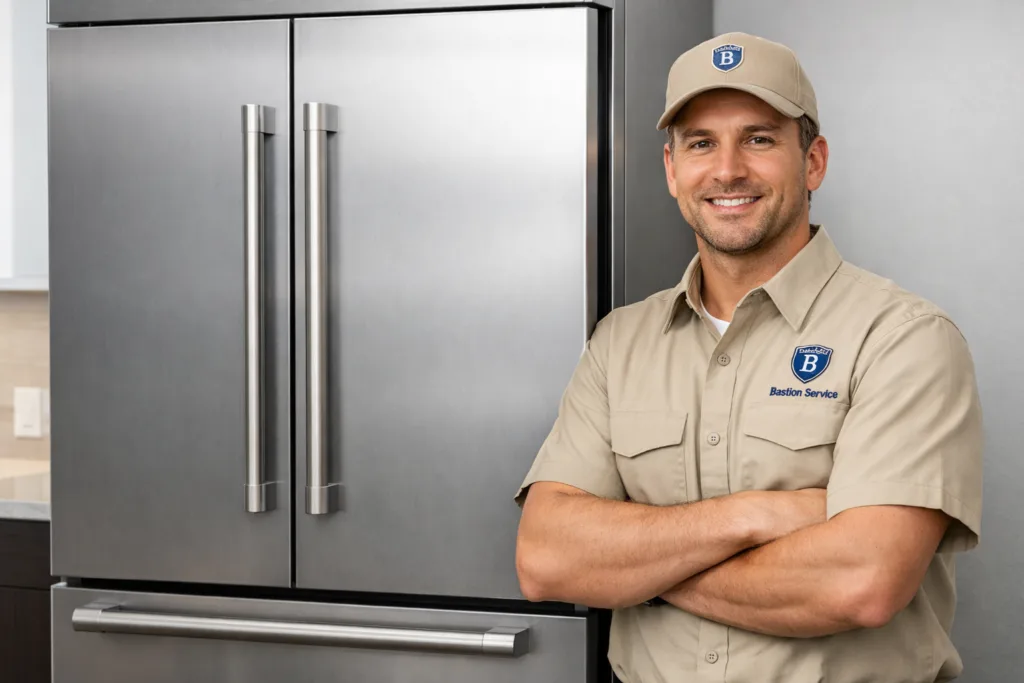
Food loss usually starts before a freezer fully stops working. Softening items, uneven ice, longer run times, and new sounds are all signs that something in the cooling or defrost process is off. With JennAir freezers, the visible symptom does not always point to the actual failed part, so it helps to look at the full pattern rather than one isolated complaint.
Common JennAir freezer symptoms and what they can mean
Freezer not freezing hard enough
If frozen food feels softer than usual or temperatures seem to rise and fall, several issues may be involved. Airflow problems are common, especially when frost begins to collect behind interior panels and blocks circulation. A weak evaporator fan motor can also keep cold air from moving where it needs to go. In other cases, the problem may involve a sensor, control fault, start device, or a more serious sealed-system issue.
A useful clue is whether the freezer is running constantly or cycling on and off in an unusual way. Constant operation often points to airflow restriction, dirty heat exchange areas, a poor door seal, or cooling loss that the appliance is struggling to overcome.
Frost buildup on shelves, drawers, or the back wall
Heavy frost is often tied to moisture entering the compartment or to a defrost system that is not clearing ice as designed. A torn gasket, a door that sits slightly out of alignment, or containers preventing full closure can all let humid air into the freezer. Once that moisture freezes, airflow can drop and cooling performance often gets worse.
When frost keeps returning after manual removal, the problem usually needs more than simple cleanup. Defrost heaters, sensors, and related controls may need to be tested so the root cause is addressed instead of just the ice you can see.
Clicking, buzzing, or louder fan noise
Not every sound is a problem, but repeated clicking, harsh buzzing, or scraping fan noise deserves attention. An evaporator fan can become noisy when ice interferes with the blade path. A start device or compressor problem may create clicking without proper cooling. Rattling can come from panels, tubing vibration, or an appliance that is no longer sitting level.
If unusual noise appears at the same time as warming temperatures, that combination usually suggests a repair issue that should not be delayed.
Water inside the freezer or on the floor
Leaks often trace back to a clogged or frozen defrost drain. When meltwater cannot drain correctly during the defrost cycle, it can refreeze inside the compartment or end up on the floor later. Moisture can also show up when warm air is entering through a compromised door seal and creating excess frost that melts in the wrong place.
Even a small recurring leak is worth checking promptly because it can lead to slipping hazards, floor damage, and continuing ice buildup inside the unit.
Why the same symptom can come from different failures
A JennAir freezer that seems to have a major cooling problem may actually have an airflow restriction caused by frost. Another unit may appear to have a bad control board when the real issue is a fan motor that is not moving enough air. That overlap is why part-swapping based on a symptom alone often leads to wasted time and money.
Good troubleshooting usually includes checking temperature behavior, frost pattern, fan operation, door sealing, drain condition, and how the freezer responds during normal cooling and defrost cycles. Once those basics are confirmed, it becomes easier to tell whether the repair path is relatively straightforward or whether the unit is dealing with a larger system problem.
Signs the issue should be scheduled soon
- Food is no longer staying fully frozen
- Frost keeps coming back after being cleared
- The freezer clicks but does not cool properly
- Water is collecting under or inside the unit
- Run times are much longer than normal
- The door does not seem to close or seal evenly
These symptoms tend to worsen with continued use. What starts as a minor airflow or sealing issue can develop into fan strain, heavy icing, or a full no-cool condition.
Repair or replace? What usually makes sense
Many freezer problems are still good repair candidates, especially when the fault is tied to a gasket, fan motor, defrost component, drain blockage, sensor, or control-related issue. Those failures are often isolated and may restore normal operation once corrected.
Replacement becomes a more serious consideration when the freezer has major sealed-system trouble, repeated expensive breakdowns, or broader age-related wear affecting multiple parts at once. The decision is usually less about whether a repair is technically possible and more about whether it is sensible for the condition of the appliance.
What Playa Vista homeowners should watch between now and service
If the freezer is still operating, avoid overfilling it to the point that vents are blocked. Check whether the door is closing cleanly and whether food packaging is interfering with the seal. Notice whether frost is concentrated near the door opening, across the back panel, or around drawers, since the frost location can help narrow down the cause. Also pay attention to whether noise happens continuously or only during certain cycles.
In Playa Vista homes, these details can make service more efficient because they help distinguish between a sealing issue, a defrost failure, a circulation problem, or a deeper cooling fault.
Focused help for household freezer problems
When a JennAir freezer starts warming, icing over, leaking, or getting noisy, the most important next step is understanding which system is actually causing the symptom. That keeps the repair decision grounded in the appliance’s real condition and helps restore reliable freezing without unnecessary guesswork.