
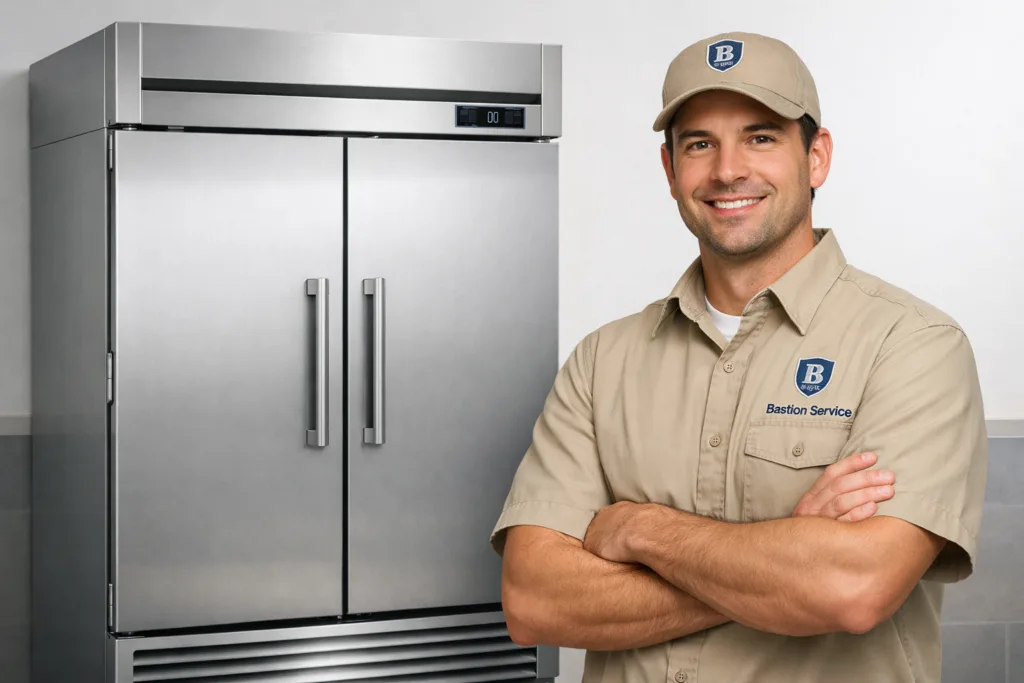




When a True freezer starts warming, building frost, leaking, or running louder than normal, the biggest concern is usually not just the equipment itself but the effect on product storage, prep flow, staffing, and daily operations. For businesses in Palos Verdes Estates, timely service matters because freezer problems often worsen while the unit is still technically running. Bastion Service works to identify the actual fault, explain what the symptom pattern suggests, and help operators move toward the right repair decision without unnecessary delays.
Related commercial service paths in Palos Verdes Estates include True Commercial Repair in Palos Verdes Estates, Commercial Freezer Repair in Palos Verdes Estates, and True Fridge Repair in Palos Verdes Estates.
True freezer problems that usually need service
Freezer issues do not always begin with a full breakdown. Many units first show early warning signs such as inconsistent cabinet temperature, longer recovery after the door opens, ice around the evaporator area, or unusual fan noise. On a True freezer, these symptoms can point to restricted airflow, a defrost failure, a weak door seal, sensor or control issues, fan motor problems, condenser performance trouble, or a more serious refrigeration-system fault. Because several different failures can create similar symptoms, diagnosis is what separates a targeted repair from wasted time and avoidable downtime.
Freezer not staying cold enough
If stored product is softening or the cabinet cannot hold temperature, the cause may be as simple as poor airflow or as involved as a cooling-system problem. Dirty heat-rejection surfaces, evaporator ice buildup, failing fan motors, bad sensors, and control issues can all reduce freezing performance. In some cases, the freezer may appear to recover eventually but take much longer than it used to. That slower pull-down time is often a sign that the equipment is struggling and should be checked before it turns into a complete no-cool condition.
Frost buildup inside the cabinet
Excess frost usually means moisture is entering the cabinet or the unit is not clearing ice properly during defrost. Worn gaskets, doors that do not close squarely, hinges that allow gaps, and repeated infiltration of warm air can all lead to frost around the opening or on stored product. If the buildup spreads into the evaporator section, airflow can become restricted enough to make the freezer run longer and cool less effectively. What starts as a door-sealing issue can eventually create fan interference, poor circulation, and unstable temperatures.
Constant running or short cycling
A True freezer that seems to run all the time may be compensating for air leaks, dirty condenser conditions, blocked airflow, or loss of cooling efficiency. Short cycling can point toward electrical issues, unstable controls, or compressor starting trouble. Neither pattern should be ignored. Constant running adds strain and may still fail to protect product, while short cycling can signal a control or component problem that leads to sudden shutdown.
Fan noise, buzzing, clicking, or alarms
Changes in sound are often one of the clearest signs that service is needed. A scraping or ticking sound can happen when ice interferes with the evaporator fan. Buzzing or repeated clicking may indicate a starting issue or electrical problem. Alarms that return after being cleared usually mean the underlying condition is still present, whether that is high temperature, poor airflow, or a fault in the control system. Noise complaints are worth evaluating early because they often precede a larger cooling failure.
Water around the freezer
Water near a freezer can come from defrost drainage problems, melting ice buildup, or door-related moisture intrusion. Even when the cabinet is still cooling, visible water can mean internal ice is changing how air moves through the unit. Left unresolved, this can lead to heavier frost accumulation, slipping hazards, and worsening temperature performance.
Symptom patterns that help narrow down the cause
Looking at one symptom in isolation can be misleading. A better service approach is to consider which issues are appearing together.
- Warm cabinet plus heavy frost: often suggests an airflow or defrost-related problem.
- Soft product plus long run times: may indicate reduced cooling capacity, dirty condenser conditions, or air leakage.
- Fan noise plus temperature swings: can point to ice interference or a failing fan motor affecting circulation.
- Water on the floor plus frost near the door: commonly relates to gasket, sealing, or moisture-intrusion issues.
- Alarm conditions plus no obvious ice: may involve sensors, controls, electrical faults, or a developing refrigeration issue.
These patterns do not replace testing, but they do help operators understand why two freezers with “the same” complaint may need very different repairs.
When to schedule repair instead of waiting
Service should be scheduled when the freezer is still running but showing repeated warning signs. Waiting is risky because partial cooling performance often creates uncertainty around inventory condition while also stressing the equipment. If the cabinet temperature drifts, frost returns quickly after being cleared, the door is not sealing well, or recovery after openings is noticeably slower, the unit is already telling you something has changed.
More urgent attention is warranted when the freezer is warming despite continuous operation, interior airflow feels weak, alarms keep returning, or ice buildup is affecting normal use. In those situations, continued operation can increase the chance of product loss and lead to a more disruptive repair event later.
Repair or replace: what businesses should consider
Not every freezer problem points to replacement. Many issues involving gaskets, hinges, fan motors, controls, sensors, and defrost components can be practical repairs when the cabinet and core refrigeration system are otherwise in solid condition. A focused service visit helps determine whether the problem is isolated and repairable or part of a broader pattern of declining reliability.
Replacement becomes a more serious consideration when the unit has a history of repeated major failures, significant cabinet deterioration, or a high-cost sealed-system problem combined with age. For businesses in Palos Verdes Estates, the right decision usually comes down to whether the repair supports stable operation or simply delays another interruption. That choice is easier to make when the fault has been clearly identified and the likely next steps are understood.
What to have ready before a service visit
A little preparation can make freezer diagnosis faster and more useful. If possible, have the following information available before the appointment:
- When the problem started and whether it is constant or intermittent
- Any recent alarm messages, unusual sounds, or visible leaks
- Whether frost is forming near the door, shelves, or evaporator area
- How quickly the cabinet recovers after normal door openings
- Any recent cleaning, loading changes, or power-related events
Even simple observations can help narrow the issue more quickly, especially when the freezer has not failed completely but is showing unstable performance.
Service-focused next steps for a True freezer
If a True freezer is no longer holding temperature, building frost faster than normal, leaking, or making new noises, the smartest next step is to schedule service before a minor performance issue becomes a larger outage. For Palos Verdes Estates businesses, the goal is not just to restore cooling but to understand what caused the problem, how urgent it is, and whether repair is the best path for reliable operation. A symptom-based diagnosis gives you a clearer repair plan, better scheduling decisions, and a more confident path back to normal workflow.


