
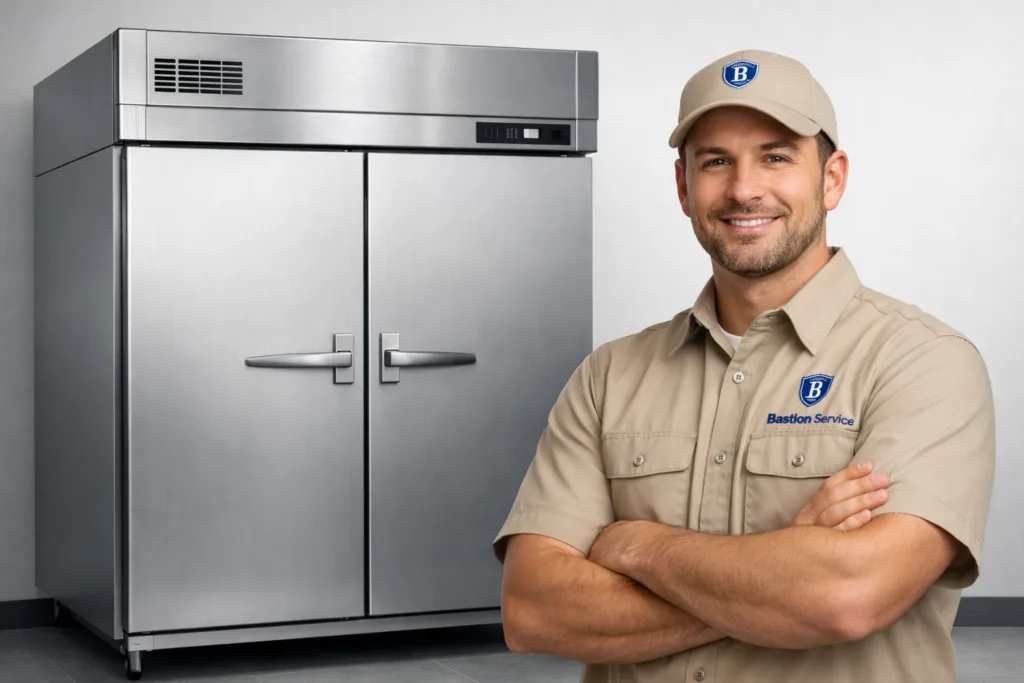




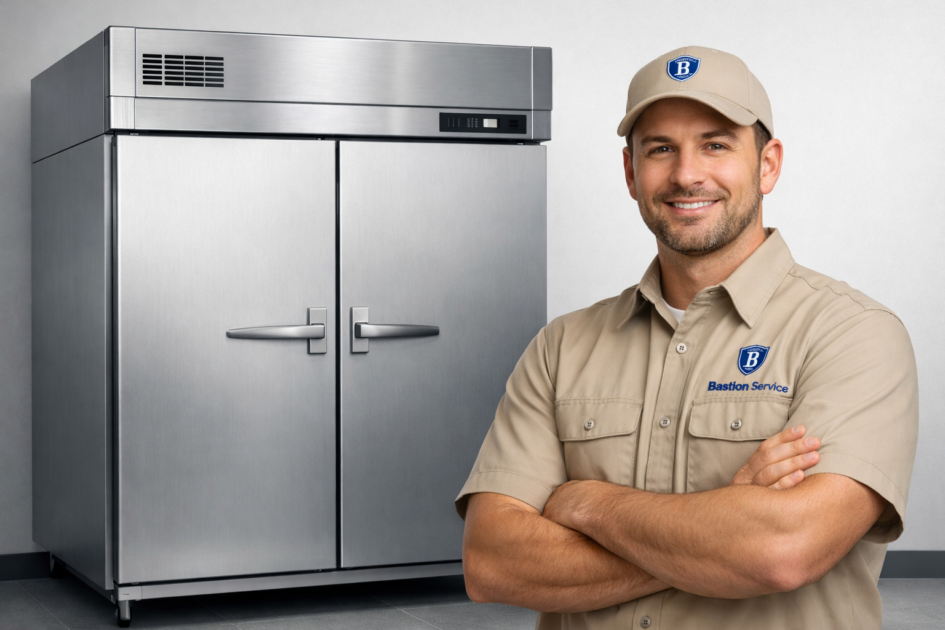
Frozen product loss, slow service, and repeated staff workarounds usually start with a freezer problem that was small at first and then spread into a larger operating issue. When a Beverage-Air freezer begins running warm, icing over, leaking, or making unusual noise in Palos Verdes Estates, service is most useful when it focuses on the actual failure pattern, the urgency of the problem, and whether the unit can keep supporting daily operations without creating more risk.
Related commercial service paths in Palos Verdes Estates include Beverage-Air Repair in Palos Verdes Estates, Commercial Freezer Repair in Palos Verdes Estates, and Beverage-Air Fridge Repair in Palos Verdes Estates.
For many businesses in Palos Verdes Estates, the real question is not just what symptom is showing today, but what that symptom means for the next shift. Bastion Service helps identify whether the issue points to airflow restriction, a defrost problem, a control fault, a fan failure, a door-seal leak, or a larger refrigeration-system concern so repair scheduling can be based on the unit’s condition rather than guesswork.
Common Beverage-Air freezer problems that need service
Not freezing hard enough
If items are soft, cabinet temperature is drifting upward, or the freezer takes too long to pull down after the door is opened, several causes are possible. Dirty condenser coils, blocked airflow, weak evaporator fan performance, sensor or thermostat issues, refrigerant loss, and compressor trouble can all produce similar temperature complaints. What matters is confirming why the freezer is underperforming before more stress is placed on the system.
Frost buildup on panels or around the evaporator
Heavy frost usually means moisture is getting in or defrost is not working as it should. Worn gaskets, doors that do not close fully, a failed heater, a control issue, or restricted air movement can all allow ice to build. As frost thickens, airflow drops, run time increases, and temperature stability gets worse. A freezer may still appear to be cooling while moving toward a full no-cool condition.
Water leaks or thawing around the unit
Water near a freezer often points to thawing caused by poor cooling, excessive frost melt, or a blocked drain path. Even when the puddle looks minor, it can signal a problem that is already affecting interior temperature and component performance. In a busy work area, leaking also creates cleanup delays and a safety concern for staff.
Fan noise, rattling, buzzing, or clicking
Noise changes can be an early warning sign. An evaporator fan motor may be failing, a blade may be hitting ice, panels may be vibrating, or the compressor may be having trouble starting. Clicking at startup, repeated buzzing, or airflow noise that suddenly changes often helps narrow the fault, but these sounds should be tested rather than assumed.
Constant running or short cycling
A freezer that rarely shuts off may be fighting dirty coils, gasket leaks, warm air infiltration, icing, or declining refrigeration performance. A freezer that cycles too frequently may have a control issue, electrical problem, sensor fault, or starting-component problem. Either pattern can increase wear, raise operating cost, and make temperature swings more noticeable during busy periods.
Why one symptom can point to several different faults
Beverage-Air freezer problems often overlap. A warm cabinet may come from an iced evaporator, weak fan operation, poor condenser airflow, a control problem, or a sealed-system issue. Frost buildup may be caused by a bad gasket, a misaligned door, defrost failure, or low airflow across the coil. That is why repair decisions should follow testing of temperatures, fan operation, frost pattern, electrical components, and system behavior under load.
This matters because replacing a visible part without confirming the root cause can leave the freezer unreliable. For example, clearing ice without addressing a defrost fault only delays the return of the same problem. Replacing a thermostat will not solve a unit that is actually losing cooling capacity because of airflow restriction or compressor weakness.
Signs the freezer should be scheduled for service soon
- Cabinet temperature is above normal holding range
- Product texture is changing or inventory is softening
- Frost returns quickly after being cleared
- The evaporator fan is weak, noisy, or not running normally
- Door gaskets are torn, loose, or no longer sealing tightly
- The unit runs almost constantly
- The compressor area is unusually hot
- There are repeated alarms, erratic control readings, or unexplained resets
- Water is collecting near the cabinet
- Recovery after door openings has become noticeably slower
When continued operation can make the repair more expensive
Some freezer issues become costlier if the unit stays in use without correction. Restricted condenser airflow can overheat the system and shorten compressor life. A fan motor problem can lead to uneven temperatures and heavier icing. A gasket leak can drive long run times and constant moisture intrusion. Defrost problems can turn a minor frost complaint into a fully iced evaporator with little or no usable airflow.
If staff are already changing settings repeatedly, moving inventory to other storage, forcing doors shut, or manually removing ice to keep the freezer going, the problem has moved beyond routine use. Those workarounds often hide the real failure for a short time while increasing downtime risk.
Repair considerations for a Beverage-Air freezer
Many Beverage-Air freezer issues are repairable when the cabinet is in otherwise solid condition. Fan motors, gaskets, sensors, controls, door hardware, drain issues, and several defrost-related components are often straightforward service items. The bigger question is whether the freezer can return to stable operation after the needed repair or whether the problem suggests deeper system decline.
Replacement becomes a more serious discussion when there are repeated major failures, poor overall cabinet condition, significant age-related deterioration, or a compressor or sealed-system issue that no longer makes sense for the unit’s role. For businesses in Palos Verdes Estates, the right choice usually depends on downtime exposure, parts investment, and how critical that freezer is to daily workflow.
How businesses can prepare before the technician arrives
A few details can make service faster and more accurate:
- Note the current box temperature and how long the problem has been happening
- Record whether the issue is constant or appears only at certain times of day
- Pay attention to new noises, alarm patterns, or signs of icing
- Keep the area around the freezer accessible for inspection
- Let staff know whether product has been moved or controls have been adjusted recently
- If safe to do so, avoid repeated setting changes that can confuse the symptom pattern
These observations help connect the complaint to actual operating behavior, especially when the problem is intermittent or gets worse during peak use.
What a service visit should accomplish
A productive freezer repair visit should do more than confirm that the cabinet is warm. It should identify the source of the temperature problem, explain whether the issue is isolated or part of a larger reliability concern, and outline the next step in a way that fits the urgency of the operation. That may mean immediate repair, short-term precautions while parts are arranged, or a recommendation to stop using the unit to avoid product loss and additional damage.
If your Beverage-Air freezer in Palos Verdes Estates is showing temperature swings, repeat frost, leaks, slow recovery, or unusual fan noise, the best next step is to schedule service based on the symptom pattern and the impact on your operation. Timely diagnosis helps protect inventory, reduce interruption, and restore the freezer to dependable use as quickly as the equipment condition allows.


