
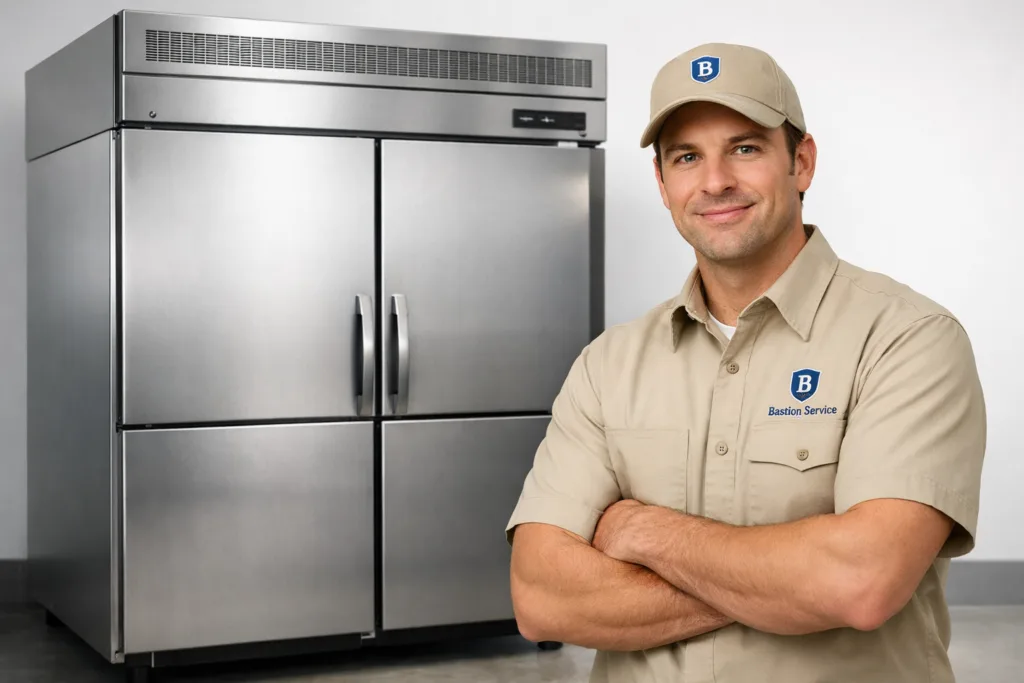




Fast service matters when a Hoshizaki freezer starts warming, icing over, leaking, or making unusual noise during the workday. For businesses in Palos Verdes Estates, the most useful repair visit starts by narrowing the failure to the actual system involved rather than treating every symptom like the same problem. Bastion Service handles Hoshizaki freezer issues with a service-first approach focused on diagnosis, repair scheduling, downtime impact, and the next steps needed to restore stable operation.
Related commercial service paths in Palos Verdes Estates include Hoshizaki Repair in Palos Verdes Estates, Commercial Freezer Repair in Palos Verdes Estates, and Hoshizaki Fridge Repair in Palos Verdes Estates.
Common Hoshizaki freezer symptoms that need repair attention
Cabinet not staying cold enough
If the freezer is running but product temperature is drifting upward, the problem may be tied to restricted airflow, evaporator icing, fan motor trouble, sensor or control faults, door seal leakage, or refrigeration performance loss. A unit that is only slightly warm in the morning but much warmer during busy periods often points to a recovery or airflow problem. A freezer that never reaches set temperature can indicate a more direct mechanical or control failure.
Frost buildup on panels, shelves, or around the evaporator area
Heavy frost usually means moisture is entering the cabinet or defrost is not working correctly. Worn gaskets, doors not closing fully, damaged hinges, loading patterns that block circulation, or a fault in the defrost cycle can all create ice buildup. As frost thickens, airflow drops and the freezer may run longer while cooling less effectively.
Temperature swings during normal operation
Repeated swings between too warm and too cold are often linked to control response, sensor placement, fan issues, intermittent icing, or door-related heat gain. Staff may first notice this as inconsistent product texture, longer pull-down times, or alarms that appear and clear without a full shutdown. Temperature instability is worth addressing early because it rarely corrects itself.
Water on the floor or inside the cabinet
Water can come from a blocked or frozen drain, defrost-related overflow, melting ice caused by temperature loss, or poor door sealing that introduces excess moisture. Even when cooling still seems close to normal, water around a freezer is often a sign that another problem is developing behind the panels.
Fan noise, rattling, buzzing, or unusual cycling sounds
Noises can come from evaporator fan interference, condenser fan wear, loose mounting hardware, vibration, compressor strain, or ice contacting moving parts. The sound pattern matters. A scraping or ticking noise may suggest ice buildup, while a harsh hum or repeated hard starts may point to a system working under stress.
Why a Hoshizaki freezer may not be staying cold enough
One of the most common service calls is a freezer that is operating but not holding the expected temperature. That symptom has several possible causes, and the repair path depends on which one is confirmed during inspection.
- Airflow restriction: Ice on the coil, blocked air channels, or weak fan operation can keep cold air from moving where it needs to go.
- Door and gasket problems: Warm air entering through a poor seal can create both temperature loss and frost buildup.
- Defrost faults: If frost is not clearing as intended, cooling performance often declines gradually before the unit appears to fail outright.
- Control or sensor issues: Incorrect readings can cause the system to run at the wrong times or stop short of the target temperature.
- Refrigeration-system weakness: When the sealed system is not performing normally, the freezer may run longer and recover more slowly after door openings.
Because these issues can look similar from the outside, symptom-based part replacement alone can waste time and extend downtime. The goal is to identify whether the problem starts with airflow, controls, defrost, cabinet sealing, or cooling-system performance before repair work is approved.
What technicians look at during diagnosis
A useful freezer diagnosis is not just a quick temperature check. It should compare the complaint with operating conditions inside the cabinet and with the way the machine is cycling. That helps separate a minor service issue from a larger reliability concern.
- Actual cabinet temperature and recovery behavior
- Frost pattern and evaporator condition
- Evaporator and condenser fan operation
- Door alignment, hinges, and gasket sealing surfaces
- Drain condition and signs of defrost drainage trouble
- Control response, sensor behavior, and alarm history
- Condenser cleanliness and heat rejection conditions
- Signs of compressor strain or declining refrigeration output
This type of inspection is especially important when the freezer still runs but no longer performs consistently. In many cases, the machine is giving warning signs well before a complete loss of cooling.
Service situations that should not wait
Some symptoms point to a rising risk of product loss or a much larger repair if the unit continues running under strain. Businesses in Palos Verdes Estates should schedule service promptly when they notice:
- Stored items softening or showing uneven freezing
- Rapid frost return after manual clearing
- Doors that no longer close tightly on their own
- Repeated alarms or unexplained resets
- Long run times with poor temperature recovery
- Water collecting near the base of the unit
- New fan noise or mechanical vibration
These patterns usually mean the freezer is compensating for a fault rather than operating normally. Continuing to use it as if nothing is wrong can increase wear on motors and other critical components.
Repair decisions based on symptom pattern
Not every Hoshizaki freezer problem points to the same level of repair. Some calls involve a seal issue, fan motor, drain blockage, control component, or defrost-related failure that can be addressed without major disruption. Others reveal broader performance decline, recurring icing, or multiple faults affecting both temperature control and recovery speed.
The symptom pattern often helps guide urgency:
- Gradual warming with frost: often associated with airflow, door leakage, or defrost trouble.
- Sudden loss of cooling: may indicate a control failure, fan stoppage, or more serious system problem.
- Only warm during heavy use: may reflect poor recovery, restricted circulation, or sealing problems.
- Noise plus temperature problems: can suggest a mechanical issue that is now affecting cooling performance.
That is why good service is not only about fixing what is visible. It is about confirming whether the freezer has a single repairable fault or a combination of issues that should be addressed together.
Preparing for a freezer repair visit
Before service is scheduled, it helps to note how the problem behaves. Staff observations can speed up diagnosis and make the appointment more productive.
- When the temperature issue started
- Whether the problem is constant or intermittent
- If frost appears in a specific area
- Whether alarms or error indicators have appeared
- If the door has been difficult to close
- Any recent changes in noise, leaks, or recovery time
If inventory protection is already a concern, move product as needed and avoid repeated door openings before the technician arrives. Preserving the condition of the unit for inspection can make the source of the failure easier to identify.
Repair versus replacement considerations
Many freezer problems are still worth repairing when the cabinet is in good condition and the issue is limited to controls, fans, defrost components, door hardware, drainage, or other isolated failures. Repair usually makes the most sense when the unit can return to stable operation without recurring shutdowns or escalating part needs.
Replacement becomes a more serious discussion when the freezer has repeated major failures, poor overall condition, or ongoing performance decline that affects daily operations. The right choice depends on the severity of the fault, the age and condition of the equipment, and how much interruption the business can tolerate.
For Palos Verdes Estates businesses, the best next step is usually to schedule service as soon as the freezer shows a repeatable symptom instead of waiting for a full cooling failure. A focused diagnosis, a realistic repair recommendation, and timely scheduling can reduce downtime, protect stored product, and help the equipment return to dependable operation with fewer surprises.


