
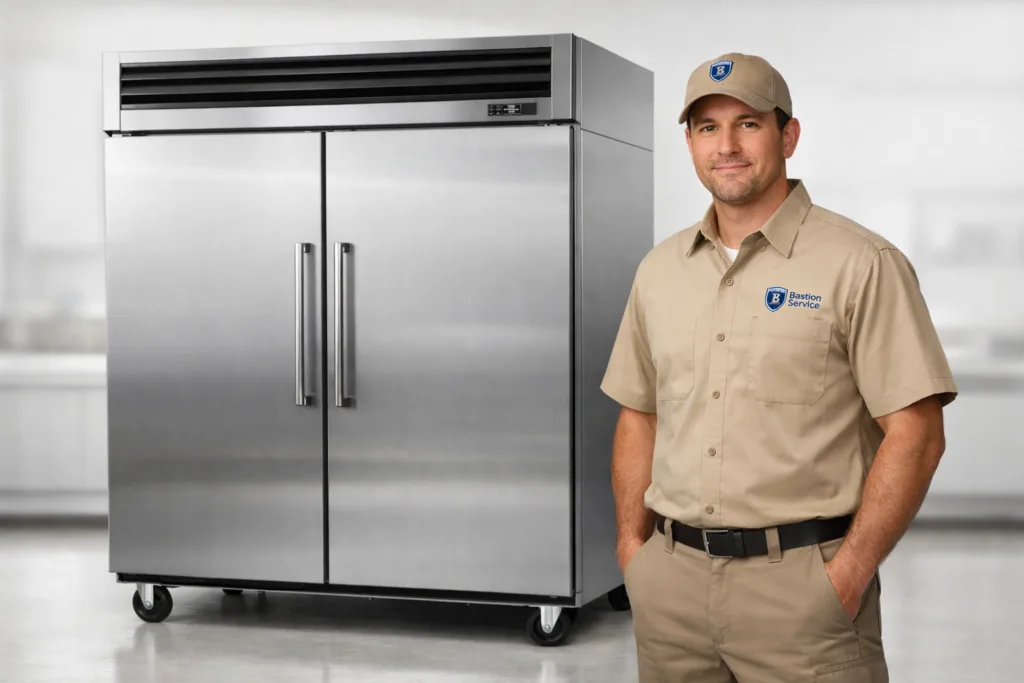




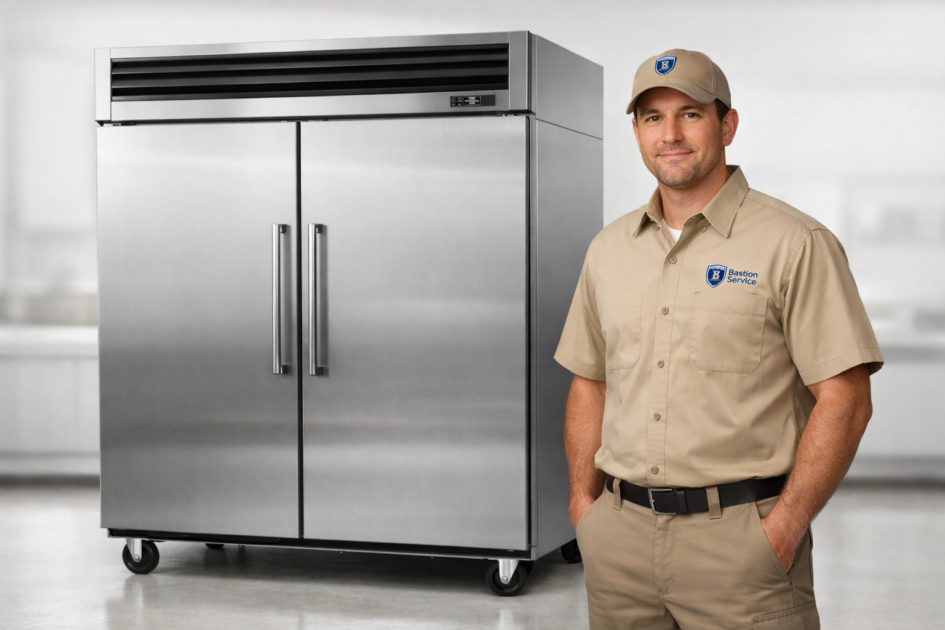
When a True refrigerator or freezer starts falling behind, the main concern is usually how fast the problem could affect product, prep flow, or daily service. Temperature drift, frost buildup, leaking water, or weak airflow can all point to different failures, and those failures do not all carry the same urgency. The most useful next step is a service visit that identifies the fault, explains whether the equipment can remain in limited use, and helps your team decide how quickly repair should be scheduled to reduce downtime.
For specific equipment paths in Palos Verdes Estates, review True Fridge Repair in Palos Verdes Estates, True Freezer Repair in Palos Verdes Estates, and Commercial Appliance Repair in Palos Verdes Estates.
Bastion Service works with businesses in Palos Verdes Estates that rely on True refrigeration equipment during daily operations. The goal is not just to identify a bad part, but to connect the symptom pattern to a repair decision, expected labor, and realistic scheduling so managers can respond before a minor issue turns into a product-loss event or a full equipment outage.
True refrigeration equipment support for business use
True units are often expected to recover quickly after door openings, hold consistent cabinet temperature, and maintain airflow across stored product. When that performance changes, the issue may involve controls, fan motors, door sealing, drainage, defrost components, condenser airflow, or deeper cooling-system faults. Similar symptoms can come from very different causes, which is why repeated resets or trial-and-error adjustments often waste valuable time.
For businesses in Palos Verdes Estates, repair decisions usually come down to a few practical questions:
- Is the unit still holding an acceptable temperature?
- Can it stay in service temporarily without risking inventory?
- Does the symptom suggest a contained repair or a larger failure?
- Should service be scheduled now before the problem interrupts operations further?
A proper inspection helps answer those questions with more confidence than visual checks alone.
Temperature problems that need prompt attention
Cabinet running warm
A warm refrigerator or freezer cabinet is one of the most common reasons businesses request service. The cause may be restricted condenser airflow, evaporator fan problems, a failing control, a door that is not sealing correctly, frost affecting circulation, or a cooling-system issue that is reducing capacity. Because multiple faults can create the same temperature complaint, the repair path depends on testing rather than assumption.
If the unit is no longer recovering after routine door openings or product loading, it is wise to schedule service before staff begin compensating in ways that strain the equipment further. Lowering setpoints repeatedly or overloading a struggling cabinet rarely solves the root problem.
Inconsistent temperature recovery
Some True equipment appears normal during slower periods but loses ground when demand increases. That pattern can point to a developing fan issue, partial airflow blockage, dirty coils, defrost timing trouble, or early compressor-related weakness. Intermittent warming matters because it can look manageable right up until the cabinet stops recovering altogether.
For business operators, this is often the best stage to act. Service at this point may prevent an avoidable interruption during a busier shift or a heavily used storage period.
Freezer not pulling down properly
When a freezer takes too long to return to temperature, the problem may involve ice accumulation, fan performance, door leakage, control faults, or declining cooling output. Slow pull-down times are not just an efficiency issue. They can also change how safely product is stored and how reliably the unit supports normal kitchen or storage routines.
If staff notice that recovery is taking longer than it used to, that change is worth evaluating before the freezer reaches a full no-cool condition.
Airflow issues and uneven cabinet performance
Weak airflow inside the cabinet
Poor airflow often shows up as warm spots, inconsistent product temperature, or sections of the cabinet that do not seem to cool evenly. In many cases, the issue traces back to evaporator fan trouble, blocked air passages, frost around internal components, or controls that are not managing circulation correctly.
Because airflow problems can mimic broader cooling failures, it helps to have the unit inspected before assuming the compressor or sealed system is at fault. Restoring proper air movement can be the difference between a targeted repair and a worsening chain of failures.
Product near the door staying warmer than product deeper inside
This symptom can be tied to door gasket wear, alignment issues, frequent air intrusion, or circulation problems that are preventing steady cabinet balance. It may also reflect how the unit is being loaded, but if the pattern continues even with normal loading practices, service is the better next step.
Uneven cabinet conditions are especially important in businesses that depend on predictable holding temperatures throughout the day rather than occasional spot checks.
Fans making new or abnormal noise
Scraping, buzzing, rattling, or sudden changes in fan sound can point to motor wear, blade interference, loose mounting, or ice affecting moving parts. These sounds should not be ignored, especially when they appear alongside weak cooling or frost buildup. A noisy fan can quickly become a no-airflow problem, and that can accelerate temperature loss across the cabinet.
Frost and ice buildup on True refrigerators and freezers
Frost forming inside the cabinet
Frost usually indicates that moisture is entering or that the unit is not completing defrost or airflow functions correctly. Common causes include worn gaskets, a door not closing properly, defrost heater or sensor issues, blocked air movement, or controls that are not cycling as expected.
What starts as a small amount of visible frost can reduce efficiency, narrow airflow passages, and create a much larger service issue if left alone. That is why recurring frost is more than a cosmetic concern.
Heavy ice near the evaporator area
Ice accumulation around internal cooling components often points to a defrost-related failure or prolonged airflow restriction. In freezers, this can lead to reduced circulation, longer run times, and increasingly unstable temperature control. In refrigerators, it can create cold and warm zones that make normal storage harder to manage.
If staff are repeatedly clearing ice manually just to keep the unit usable, the equipment likely needs repair rather than another temporary workaround.
Door hard to open or seal after ice buildup
When ice begins affecting the door area, the problem can spread beyond cooling performance into access, sealing, and moisture control. That often leads to more warm-air intrusion, more condensation, and faster frost return. At that stage, service becomes important not only for temperature stability but also for restoring normal use of the cabinet.
Leaks, condensation, and drainage concerns
Water under or around the unit
Leaks can come from blocked drains, defrost drainage problems, excess condensation, or internal temperature issues that are creating more moisture than the cabinet should normally produce. Even when the cooling complaint seems minor, water around the equipment deserves attention because it can affect flooring, create slip risk, and point to a condition that is steadily getting worse.
Diagnosis helps determine whether the leak is primarily a drainage issue or a symptom of a broader cooling or frost problem.
Condensation on doors or inside surfaces
Excess moisture on doors, frames, or interior surfaces may indicate gasket problems, alignment issues, airflow imbalance, or temperature control concerns. In some situations, it is the first visible sign that the cabinet is no longer managing moisture the way it should. If condensation keeps returning, it is usually worth checking before it develops into frost, leaks, or product temperature inconsistency.
When continued operation can increase risk
Not every symptom means a unit must be shut down immediately, but some conditions do call for caution. If the cabinet is running well above target temperature, short cycling, making severe mechanical noise, building frost rapidly, or leaking regularly, continued use can make the repair larger and less predictable.
It is also a warning sign when staff begin adapting to the equipment instead of trusting it. Examples include rotating product to avoid warm spots, adjusting setpoints frequently, limiting door openings just to maintain cooling, or planning tasks around a unit that only performs well during part of the day. Those patterns usually mean the equipment needs service rather than more operational workarounds.
Repair versus replacement considerations
Many True refrigeration problems are repairable when they involve fan motors, controls, gaskets, drainage components, defrost parts, or related serviceable failures. In other situations, replacement becomes part of the conversation when the equipment has repeated cooling breakdowns, significant system wear, or repair cost that no longer matches the condition and role of the unit.
The most useful evaluation is not based on age alone. It should consider the actual fault, repair scope, recent service history, current performance, and how important that refrigerator or freezer is to daily operations. A unit that supports constant product access may justify a different decision than one used for backup storage.
Scheduling True refrigerator and freezer repair in Palos Verdes Estates
If your True refrigeration equipment is showing warm cabinet conditions, poor recovery, airflow loss, frost buildup, leaks, or uneven cooling, scheduling service is the practical next step. A repair visit in Palos Verdes Estates can confirm the source of the problem, clarify whether the unit should remain in operation, and help your business move forward with a repair plan based on the symptom severity rather than guesswork.
For businesses trying to protect inventory and avoid a larger interruption, early scheduling is often the most cost-conscious move. When a refrigerator or freezer begins showing repeat performance issues, a timely diagnosis makes it easier to plan labor, parts, and next steps before the problem affects the rest of your operation.


