





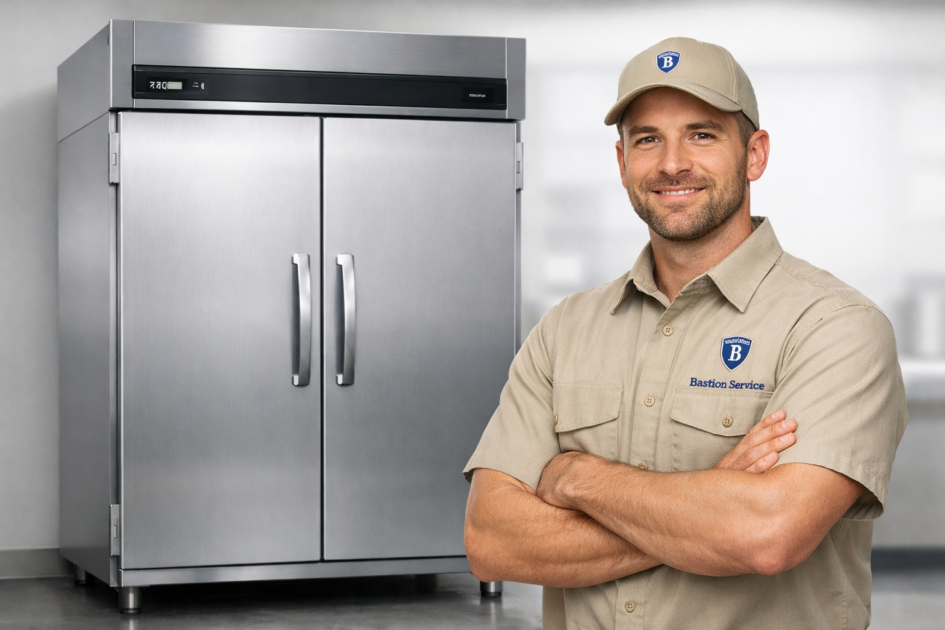
Freezer problems are easiest to manage when service is scheduled before inventory loss or a full shutdown forces an emergency decision. For businesses in Hermosa Beach, Traulsen freezer repair is often about more than restoring cold air. It is about identifying why the unit is drifting, frosting, leaking, or running abnormally, then choosing the repair that protects product, workflow, and equipment life. Bastion Service handles symptom-based freezer diagnosis so managers can make informed next steps instead of guessing at the cause.
Related commercial service paths in Hermosa Beach include Traulsen Commercial Repair in Hermosa Beach, Commercial Freezer Repair in Hermosa Beach, and Traulsen Refrigerator Repair in Hermosa Beach.
A Traulsen freezer can show the same outward symptom for several different reasons. A cabinet that feels warm may be dealing with poor airflow, a defrost problem, a sensor issue, a door-seal failure, fan trouble, or a refrigeration-side fault. A freezer that still cools part of the time can be especially misleading, because partial performance often hides a problem that is already affecting recovery time, internal temperature consistency, and daily reliability.
Common Traulsen freezer problems businesses notice first
Not staying cold enough
When the cabinet cannot hold set temperature, takes too long to recover after door openings, or develops warm spots, the issue may involve condenser buildup, weak evaporator airflow, failing motors, control or sensor errors, door gasket wear, or sealed-system performance loss. In a busy operation, this usually shows up first as soft product, inconsistent storage conditions, or a unit that seems acceptable early in the day but struggles during normal use.
Frost buildup inside the cabinet
Frost on product, shelving, door frames, or interior panels usually points to moisture entering the cabinet or a defrost issue that is no longer clearing ice properly. As ice accumulates, airflow becomes restricted and the freezer may run longer while cooling less effectively. That can lead to uneven temperatures, fan noise, and a cabinet that appears to be running constantly without delivering stable freezing performance.
Fan noise, buzzing, or unusual operation sounds
Noise changes often matter because they can signal an airflow restriction, an evaporator fan problem, condenser fan trouble, ice contacting moving parts, or compressor stress. A freezer that becomes louder than normal should not be treated as a minor annoyance if cooling performance is also slipping. Sound changes are often one of the earliest signs that a developing issue is affecting how the system is working under load.
Water leaks or ice near the unit
Water on the floor, ice near the base, or signs of internal drainage trouble can result from a clogged drain line, freezing in the drain path, defrost trouble, or excess moisture entering through a door that is no longer sealing well. In addition to refrigeration concerns, this creates cleanup and safety issues that can disrupt kitchen or storage areas.
Constant running or short cycling
If the freezer rarely shuts off, runs hot and hard, or turns on and off more often than usual, that pattern can point to poor heat rejection, controls that are not responding correctly, airflow restrictions, or deeper refrigeration stress. A Traulsen freezer that is overworking to reach temperature will usually become less reliable before it stops cooling altogether.
Why a symptom-based diagnosis matters
Authorizing repair based only on the visible symptom can lead to unnecessary parts replacement and repeat downtime. Frost does not always mean the same failure. A warm cabinet does not automatically mean compressor failure. Slow recovery may come from airflow loss rather than a major sealed-system problem. Good service starts by checking the freezer’s actual operating condition, including temperature behavior, fan operation, defrost performance, door sealing, and overall response during normal cycling.
This matters most when the freezer is still partly usable. Businesses often keep operating because the cabinet has not failed completely, but partial performance can still put stored inventory at risk and increase stress on other components. Catching the root problem early can prevent a narrower repair from turning into a larger one.
What specific symptoms may indicate
Temperature swings during the day
If the freezer cools overnight but struggles during open hours, look closely at door traffic, gasket condition, condenser cleanliness, and airflow through the evaporator section. This pattern often means the unit can no longer handle normal demand, even though it may still appear functional during lighter periods.
One area freezes well while another does not
Uneven freezing usually points to circulation problems rather than a simple setting issue. Ice around the evaporator, blocked air movement, fan problems, or loading patterns that interfere with airflow can all contribute. A service visit can determine whether the problem is operational, mechanical, or a combination of both.
Repeated ice returns after staff clear it
If frost or ice comes back soon after being removed, the underlying issue has not been corrected. Persistent recurrence often means the freezer is dealing with an active defrost fault, a door closure problem, or continuous moisture intrusion that staff workarounds cannot solve.
The freezer sounds normal but product is softening
A unit does not have to be completely silent or completely dead to be failing. Freezers can appear to run normally while losing temperature control due to sensor inaccuracies, low airflow, coil conditions, or declining refrigeration performance. Product condition is often a more useful warning sign than whether the cabinet seems to be running.
When to schedule Traulsen freezer repair in Hermosa Beach
Service should be scheduled when the freezer starts showing any of the following:
- Cabinet temperature rising above normal holding range
- Slow recovery after doors are opened
- Frost buildup that keeps returning
- Unusual fan, buzzing, or mechanical noise
- Water leaks, drain issues, or ice on the floor
- Door gaskets that are torn, loose, or no longer sealing tightly
- Constant running or frequent short cycling
- Cold spots and warm spots inside the same cabinet
It is also worth scheduling service when staff start compensating for the problem by moving product around, adjusting settings repeatedly, limiting door use more than usual, or clearing ice by hand. Those workarounds may reduce disruption for a day or two, but they usually mean the freezer is no longer operating as it should.
How door seals and airflow affect freezing performance
Two of the most common contributors to poor freezer performance are failed door sealing and restricted airflow. Worn gaskets allow warm, moist air to enter the cabinet, which increases frost buildup and forces the system to work harder. Airflow restrictions, whether from ice, dirty coil conditions, blocked interior circulation, or weak fan motors, reduce the freezer’s ability to move cold air where it is needed.
These issues can overlap. A poor seal can increase moisture, which can lead to ice formation, which can then restrict airflow and create temperature inconsistency. That is why a freezer that seems to have “just a frost problem” may actually need attention to both sealing and internal system performance.
When continued operation may make things worse
If a Traulsen freezer is running nonstop, building heavy frost, making abnormal noise, or failing to hold product safely frozen, continued use may increase the chance of secondary failures. Fan motors can be strained by ice and restricted circulation. Compressors can be stressed by long runtimes. Defrost-related issues can become more disruptive as ice spreads through the evaporator area and air movement drops further.
Delaying service is especially risky when the cabinet is no longer recovering well after normal use. At that point, the freezer is not just operating inefficiently; it is showing that the existing problem is affecting core performance.
Repair versus replacement considerations
Repair is often the right move when the cabinet is structurally sound, the issue is isolated, and the freezer still fits the needs of the business. Replacement deserves a closer look when there are repeated failures, multiple systems showing wear, significant cabinet deterioration, or repair costs that are high compared with the unit’s remaining useful life.
The best choice depends on current condition, downtime impact, parts involved, and whether the unit can return to stable service after repair. A proper evaluation helps separate a fixable problem from signs that the equipment is approaching the end of its practical service life.
How to prepare for a service visit
Before the appointment, it helps to note when the problem started, whether it changes during the day, what temperatures staff have observed, and whether alarms, leaks, frost, or noise have become more frequent. If possible, avoid changing settings repeatedly just before service, since that can make symptom patterns harder to evaluate. Information about recent cleaning, gasket wear, and whether the unit struggles more during busy periods can also help narrow the cause faster.
For Hermosa Beach businesses, the goal of service is not just to get the freezer temporarily cold again. It is to identify the source of the problem, understand the effect on daily operation, and move quickly toward a repair plan that supports stable frozen storage and reduced downtime.


