
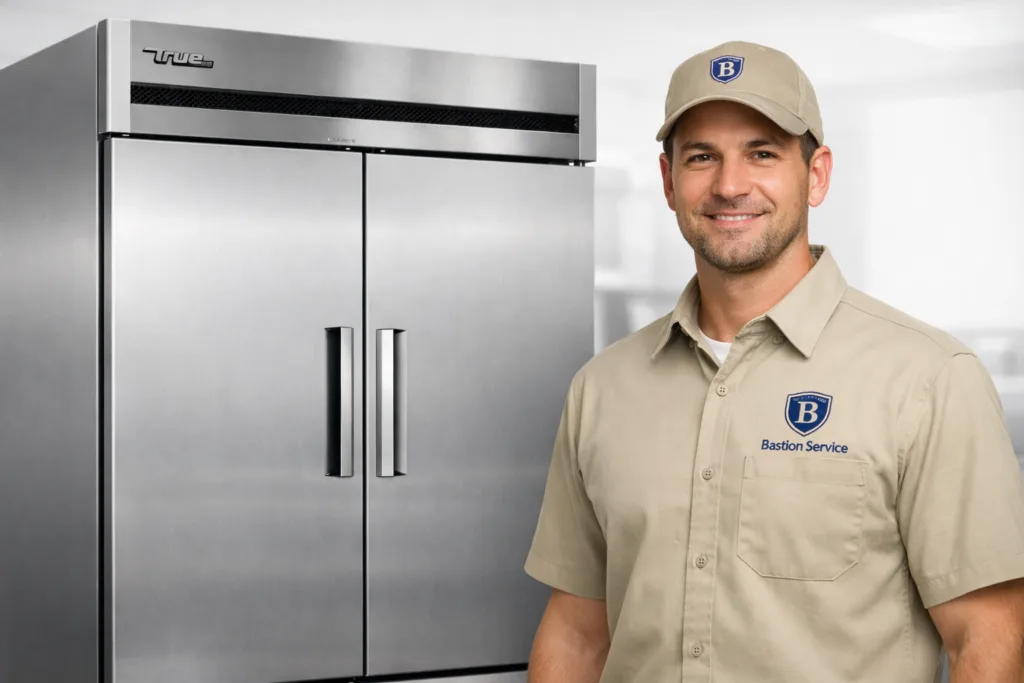




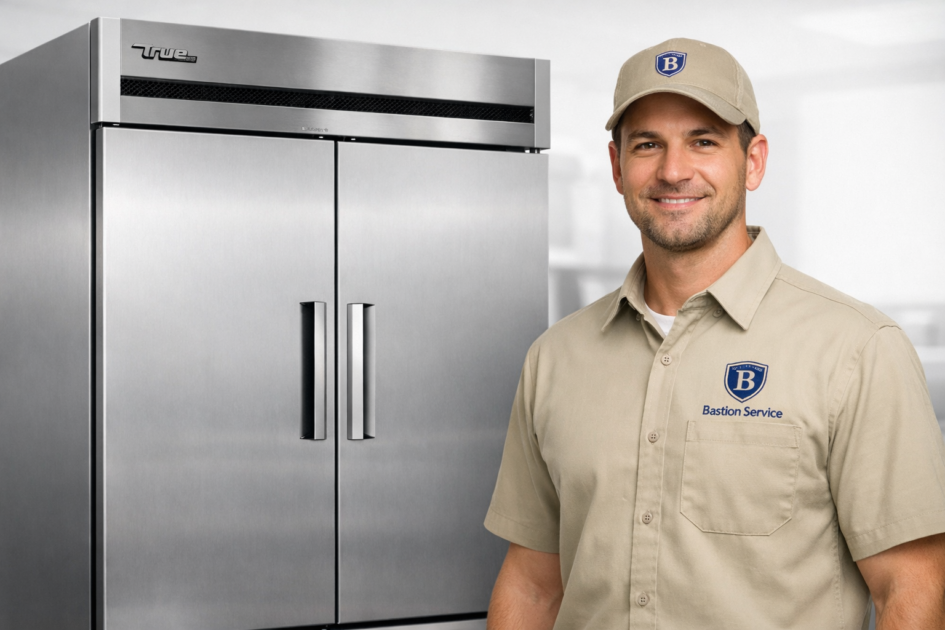
When a True freezer begins drifting warm, icing over, leaking, or making new noise, the right next step is a service visit focused on the exact symptom pattern and how the unit is performing during normal business use. In Hermosa Beach, freezer trouble can quickly affect inventory protection, prep flow, staffing routines, and opening readiness. Bastion Service works with businesses that need the problem identified correctly so repair decisions are based on the actual failure, not guesswork.
Related commercial service paths in Hermosa Beach include True Commercial Repair in Hermosa Beach, Commercial Freezer Repair in Hermosa Beach, and True Refrigerator Repair in Hermosa Beach.
What to look at first when a True freezer starts acting up
Freezer problems rarely stay minor for long. A cabinet that is only slightly off temperature early in the day may struggle much more after repeated door openings, restocking, or peak-hour use. The most useful service approach is to check temperature consistency, airflow strength, frost pattern, fan operation, door seal condition, control response, and overall cooling recovery. That helps determine whether the issue is tied to maintenance-related restrictions, a failed component, a defrost problem, or a deeper refrigeration fault.
For businesses in Hermosa Beach, prompt scheduling is often the difference between a contained repair and a larger disruption. If the freezer is taking too long to pull down, running nonstop, or warming after normal loading, it should be evaluated before food safety concerns, excess ice buildup, or compressor strain create a more expensive situation.
Common True freezer symptoms and what they can mean
Not staying cold enough
If the cabinet is running but product temperatures are rising, several faults may be involved. Restricted condenser airflow, evaporator fan problems, weak door sealing, sensor issues, control faults, defrost failures, or declining refrigeration performance can all lead to unstable temperatures. Some units cool acceptably when mostly closed but fail during regular use, which is an important clue that recovery performance is part of the problem.
This symptom usually calls for more than a quick setting adjustment. If temperatures vary from one section to another, the freezer may have an airflow issue, an evaporator icing problem, or a component that works intermittently rather than failing completely.
Frost buildup on shelves, panels, or around the door
Heavy frost often points to warm air entering the cabinet or a defrost system that is not clearing ice as it should. A worn gasket, misaligned door, damaged hinge, blocked drain area, or failed defrost component can all contribute. Ice accumulation around the evaporator area can eventually choke off circulation and make the freezer seem like it has a major cooling failure even when airflow restriction is the main issue.
If staff are noticing that the door closes but does not fully seal, or that frost returns quickly after being removed, the unit should be inspected before the ice load grows enough to affect temperature control across the cabinet.
Running constantly or cycling at the wrong times
A True freezer that rarely shuts off is usually compensating for something. That may be heat intrusion from a poor seal, dirty coils, weak fan performance, inaccurate sensing, or reduced refrigeration capacity. On the other hand, short cycling can point to control issues, overheating, electrical faults, or protective shutdown behavior.
Either pattern matters because abnormal run time places extra stress on key components. A freezer that is always on but still not holding temperature should be treated as a repair issue, not just an efficiency complaint.
Fan noise, rattling, buzzing, or clicking
Noise complaints often help narrow the diagnosis. A scraping or grinding sound may suggest fan blade obstruction or motor wear. Repeated clicking at startup can indicate trouble with electrical starting components or compressor stress. Rattling may come from loose panels, mounting issues, or vibration caused by a struggling system.
When unusual noise appears together with warm temperatures, frost, or slow recovery, it usually means the freezer is not just loud but operating under a fault condition that should be addressed soon.
Water inside or around the unit
Water under a freezer does not always mean the same thing as a refrigeration leak. It can be related to defrost drainage problems, ice melting from blocked airflow, door-seal air intrusion, or a drain line issue. If water is reappearing, the goal is to identify why moisture is forming and whether it is tied to a larger cooling or defrost problem.
Why a True freezer may recover slowly after the door opens
Slow recovery is a common operational complaint in busy kitchens, storage areas, and service environments. If the freezer struggles to return to target temperature after loading or routine access, possible causes include weak airflow, evaporator icing, dirty condenser conditions, a worn gasket, improper product arrangement, or declining system performance.
This matters because a freezer can appear to be cooling while still failing under real working conditions. A unit that only performs when left mostly untouched is not operating the way a business needs it to. Recovery testing during service helps separate normal use impact from an actual equipment fault.
When continued use can make the repair worse
There are times when keeping the freezer running creates more risk than benefit. If the cabinet cannot maintain storage temperature, if frost is blocking airflow, if the compressor is overheating, or if the unit is repeatedly shutting down and restarting, continued operation can increase wear and reduce the chance of a smaller repair.
- Product temperature is rising even though the unit is running
- Ice buildup is spreading quickly or returning after manual clearing
- The door is not sealing consistently
- The freezer is making new loud noises while cooling performance drops
- Water is collecting around the base or inside the cabinet
- The unit needs frequent resets to resume cooling
In these situations, businesses in Hermosa Beach are usually better served by moving product to backup storage if available and scheduling repair promptly rather than waiting for a complete no-cool failure.
Repair decisions: minor fault, major fault, or replacement question
Many True freezer problems are repairable when the issue is limited to fans, controls, gaskets, door hardware, defrost parts, drainage components, or airflow-related faults. More serious decisions come into play when the unit has a repeated breakdown history, major cooling-system trouble, poor pull-down even after prior service, or cabinet wear that affects day-to-day reliability.
The deciding factor is not simply age. What matters is the scope of the failure, the condition of the cabinet, downtime impact, and whether the unit can return to steady operation after repair. A freezer used every day for inventory protection has to do more than run; it has to recover properly, hold temperature consistently, and support workflow without constant monitoring.
How service is typically approached for a True freezer
A productive repair visit should focus on the complaint the staff is actually seeing, not just the label attached to it. That means confirming temperature performance, checking the frost pattern, inspecting fan and airflow conditions, reviewing door closure and gasket integrity, testing controls and defrost operation, and determining whether the problem is isolated or part of a broader refrigeration issue.
This kind of evaluation is especially helpful when the symptoms seem to overlap. For example, a freezer with frost buildup and warm product may look like a cooling failure when the immediate cause is airflow blockage. A freezer that runs constantly may appear to need major work when the root issue is heat intrusion from a poor seal. Careful testing helps avoid replacing parts based only on surface symptoms.
How to prepare before the technician arrives
A few details from staff can make service more efficient and help narrow the likely fault faster. It helps to note when the problem started, whether it is constant or intermittent, how the cabinet temperature has been behaving, and whether any alarms, leaks, or unusual sounds have appeared.
- Record the warmest temperatures being observed
- Note whether the issue is worse after loading or frequent door openings
- Check whether frost is concentrated at the door, back panel, or evaporator area
- Listen for fan noise, clicking, or buzzing at startup
- Look for gaps in the door seal or doors that do not self-close properly
- Identify whether water is appearing inside the cabinet or on the floor nearby
Even simple observations like these can help connect the symptom to the right diagnostic path and reduce delays in deciding what repair the freezer actually needs.
Scheduling service for a freezer that supports daily operations
If a True freezer is warming, icing up, leaking, cycling abnormally, or failing to recover under normal use, the most useful next step is to schedule repair before the problem disrupts more of the workday. For Hermosa Beach businesses, that means treating freezer symptoms as an equipment reliability issue tied directly to product protection and workflow, then moving quickly toward diagnosis, repair planning, and the fastest sensible path back to stable operation.


