
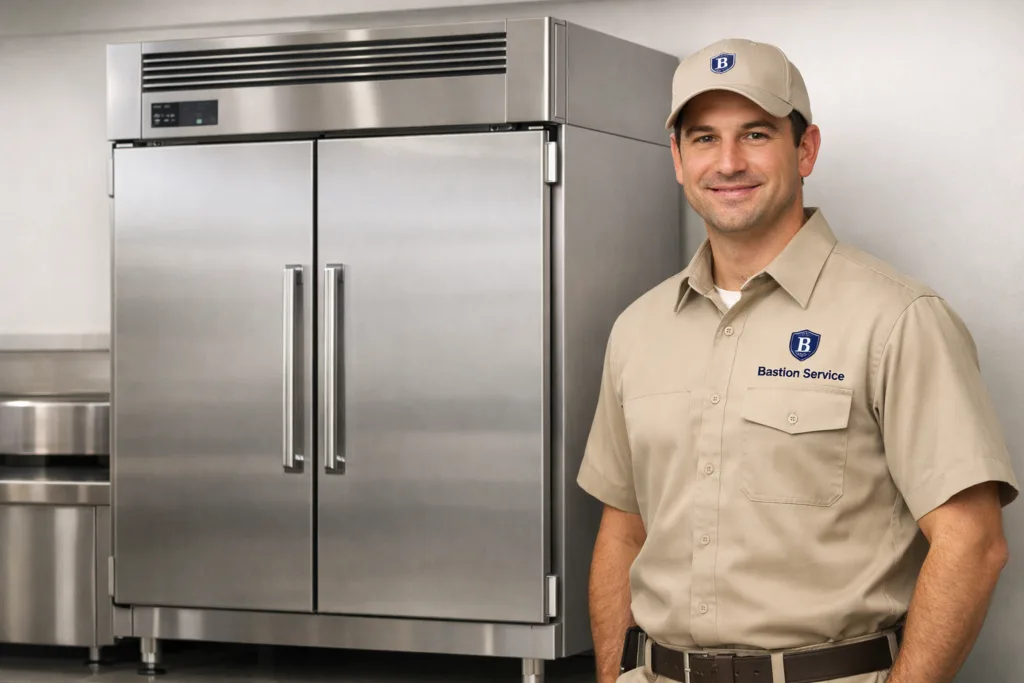




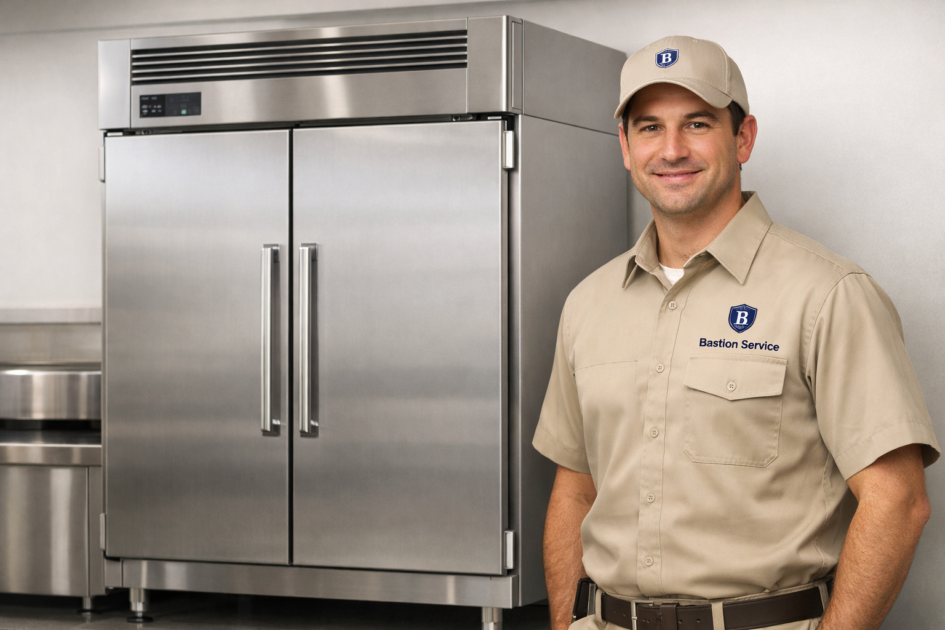
When a Traulsen refrigerator or freezer starts drifting out of range, the immediate concern is not just the symptom itself but how quickly it will affect stored product, prep schedules, and daily operations. The right service approach starts with confirming what is actually failing, whether the unit can remain in limited use, and how soon repair should be scheduled to avoid a bigger interruption. Bastion Service helps Hermosa Beach businesses assess these equipment problems, isolate the likely cause, and move toward repair with less guesswork.
For specific equipment paths in Hermosa Beach, review Traulsen Refrigerator Repair in Hermosa Beach, Traulsen Freezer Repair in Hermosa Beach, and Commercial Appliance Repair in Hermosa Beach.
What Traulsen refrigeration equipment problems do you troubleshoot?
Traulsen refrigeration equipment can show early warning signs well before a full cooling failure. In business kitchens and food-service settings, the most common service calls involve warm cabinets, unstable temperatures, frost buildup, airflow restrictions, standing water, noisy operation, and freezers that do not recover properly after normal door openings. These symptoms may look similar on the surface, but they often come from different faults in controls, fans, defrost components, door sealing, drainage, or the cooling system itself.
Because refrigerators and freezers are used differently throughout the day, symptom patterns matter. A refrigerator that struggles during high traffic periods may have a different repair path than a freezer that stays cold overnight but warms during active service. Looking at when the issue happens, how often it repeats, and whether the cabinet can return to setpoint helps guide the repair decision.
Refrigerator and freezer symptoms that usually mean service is needed
Warm cabinet temperatures or temperature swings
If a Traulsen refrigerator feels cool but not cold enough, or a freezer begins creeping upward without fully thawing, the equipment may be operating with reduced capacity. This can happen because of restricted airflow, sensor and control issues, failing fan motors, condenser performance loss, or sealed-system stress. In day-to-day operations, temperature instability often shows up first as soft product, longer pull-down times, or alarms that return after being cleared.
Service becomes more urgent when the cabinet cannot recover after loading, openings, or normal use. At that point, the problem is usually affecting more than convenience; it is affecting product protection and workflow.
Frost buildup, ice formation, and blocked airflow
Frost on interior panels, ice around the evaporator area, or uneven temperatures from top to bottom usually point to a problem with defrost performance, air movement, or moisture entering the cabinet where it should not. In refrigerators, this can lead to hot and cold spots that make storage inconsistent. In freezers, it can slow recovery and make the unit work harder for longer periods.
Excess ice is not just a cosmetic issue. When airflow is blocked, the cabinet may appear to be running normally while stored product is exposed to unstable conditions. A proper inspection helps determine whether the issue is tied to a fan problem, gasket leakage, a defrost fault, or another condition that will continue to worsen if ignored.
Water leaks and excess condensation
Water on the floor, moisture inside the cabinet, or condensation around doors can come from blocked drains, melting frost, damaged gaskets, or operating conditions that are pushing the equipment outside normal performance. In active kitchen environments, leaks also create sanitation and slip concerns, making the issue more than just an inconvenience.
The repair decision depends on where the water is coming from and what else is happening with the unit. A simple drain issue is different from a leak pattern tied to icing, poor door sealing, or a temperature control problem that is causing repeated moisture buildup.
Constant running, short cycling, or unusual noise
If the unit seems to run nonstop, cycles on and off too frequently, or starts making fan noise, buzzing, clicking, or rattling sounds, it is often a sign that the equipment is under strain. That strain may come from airflow problems, controls not cycling correctly, fan motor issues, or heat rejection problems that keep the system from stabilizing.
These symptoms are worth addressing early. Equipment that runs harder than normal tends to wear faster, use more energy, and move from a smaller repair into a more disruptive breakdown.
How symptom patterns help guide repair decisions
Two Traulsen units with similar complaints do not always need the same repair. A freezer with heavy frost and weak airflow may be dealing with a defrost-related issue, while another freezer with similar warming symptoms may have a deeper cooling problem. A refrigerator that only warms during busy periods may point to door sealing or airflow concerns, while one that stays warm all day may be struggling with controls or capacity loss.
That is why diagnosis matters before parts are assumed or major decisions are made. For business operators, the important question is not only what is wrong, but whether the equipment can continue operating safely until service is completed, whether product should be relocated, and whether the repair is likely to restore stable performance.
When continued use can increase risk
Some equipment problems allow for short-term monitored use, but others should be treated as urgent. If a refrigerator or freezer is no longer holding a consistent range, has severe frost restricting airflow, is leaking heavily, or is showing repeated failure to recover after normal use, continuing to rely on it can increase product risk and place more strain on major components.
Repeat symptoms also matter. If the same cabinet has already had recent issues with cooling, controls, or defrost performance, a new service call should look beyond the visible symptom and consider the broader condition of the equipment. Repeated interruptions often signal that the underlying fault has not been fully resolved or that multiple worn components are now affecting performance together.
Repair planning for busy kitchen operations
For restaurants, hospitality kitchens, and other food-service businesses, refrigeration repairs are rarely isolated events. The timing of service affects prep areas, storage rotation, staffing, and whether backup capacity is available. Repair planning works best when the symptom is matched to the level of urgency, the cabinet condition, and the operational impact of taking the unit offline.
- Intermittent warming may allow for scheduled service if temperatures remain stable between cycles.
- Heavy frost, repeated alarms, or poor freezer recovery usually call for faster attention.
- Leaks and condensation issues should be addressed before they create safety or sanitation problems.
- Constant running and noise complaints should be checked before they lead to larger component failure.
This kind of planning helps operators protect stored product while avoiding unnecessary downtime or delayed decisions that make the repair more disruptive later.
Repair versus replacement considerations
Not every Traulsen problem means the unit should be replaced, and not every repair is the best long-term investment. The right choice usually depends on the age of the equipment, the condition of major components, the history of recent breakdowns, and how critical the cabinet is to daily operations. If the issue is isolated and the cabinet is otherwise in good working shape, repair is often the most efficient path back to dependable performance.
Replacement becomes a more serious consideration when the equipment has frequent repeat failures, ongoing temperature control issues, or signs of broader system wear that keep disrupting service. The value of diagnosis is that it gives the decision a stronger basis than reacting to a single symptom in the moment.
Scheduling Traulsen refrigerator and freezer repair in Hermosa Beach
When Traulsen refrigeration equipment starts affecting storage reliability, prep flow, or service timing, the next step is to schedule inspection and repair based on the actual symptom pattern. In Hermosa Beach, businesses dealing with warm cabinets, freezer recovery issues, airflow restrictions, frost buildup, leaks, or inconsistent cooling should address those conditions before they create a longer outage or product loss. Timely service helps clarify whether the unit can stay in limited operation, what repair path makes sense, and how to reduce downtime while getting the equipment back into stable use.


