





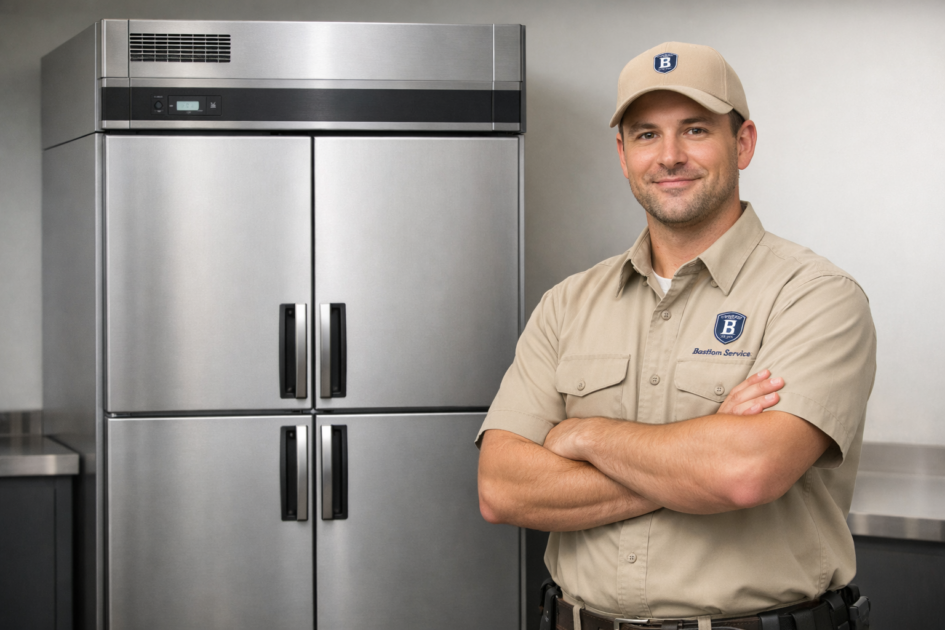
Freezer problems rarely stay minor for long when inventory, prep schedules, and daily workflow depend on stable low temperatures. For businesses in Hermosa Beach, service is most useful when the visit is centered on the exact symptom pattern, how the unit behaves during normal use, and what repair will realistically restore dependable operation. Bastion Service works on Hoshizaki freezer issues with that service-first approach so owners and managers can make informed decisions about timing, risk, and next steps.
Related commercial service paths in Hermosa Beach include Hoshizaki Commercial Repair in Hermosa Beach, Commercial Freezer Repair in Hermosa Beach, and Hoshizaki Refrigerator Repair in Hermosa Beach.
What Hoshizaki freezer problems usually look like in daily operation
A freezer does not need to stop completely to need repair. Many Hoshizaki units continue running while showing warning signs that performance is slipping. Staff may notice soft product near the door, longer pull-down times after loading, frost collecting faster than usual, or a cabinet that seems cold at one moment and marginal the next. Those patterns often point to a problem with airflow, defrost, controls, door sealing, fans, or refrigeration performance rather than a single obvious failure.
When symptoms are caught early, repair decisions are usually more straightforward. Waiting too long can turn an isolated issue into added strain on other components, especially when the unit is running longer than normal just to keep up.
Common symptoms that call for Hoshizaki freezer repair
Not staying cold enough
If the freezer is running but not holding the expected temperature, several causes may be involved. Restricted evaporator airflow, frost-covered coils, weak fan operation, sensor drift, condenser problems, or sealed-system issues can all show up as warming product or slow recovery after the door is opened. This is one of the most important symptoms to address quickly because product risk rises even when the cabinet still feels partially cold.
Heavy frost buildup inside the cabinet
Frost that keeps returning usually means warm air is getting in or the unit is not completing defrost properly. Worn door gaskets, misaligned doors, damaged hinges, or a defrost component problem can all lead to ice accumulation. As frost spreads, airflow drops, run time increases, and temperatures can become uneven from one section of the cabinet to another.
Fan noise, buzzing, or clicking sounds
New noises often help narrow the repair path. A rubbing or whirring sound may suggest fan blade or motor trouble. Clicking at startup may point to a relay, capacitor, or compressor-side electrical issue. Buzzing can come from electrical components, motors under strain, or vibration caused by mounting wear. Any change in sound that repeats should be checked before it leads to a shutdown.
Water leaks or thaw-related moisture
Leaks around a freezer can come from partial thawing, drainage restriction, door seal problems, or ice buildup melting in the wrong area. Even when the amount of water seems small, it can signal a larger cooling or defrost issue that is already affecting cabinet performance.
Runs all the time or shuts off too often
A Hoshizaki freezer that seems to run constantly may be compensating for heat gain, dirty coils, poor airflow, or declining refrigeration performance. A unit that starts and stops too frequently can indicate control issues, electrical faults, or compressor protection events. Both patterns increase wear and usually get more expensive if left unresolved.
Why the same symptom can have different causes
Freezer complaints often overlap. A warm cabinet does not automatically mean the compressor has failed. Frost buildup does not always mean a defrost heater is bad. Slow temperature recovery can come from airflow restriction, not just refrigerant loss. That is why symptom-based repair matters. The service visit should connect what staff are seeing to what the machine is actually doing under load, including fan operation, coil condition, door closure, control response, and temperature behavior over time.
This matters for businesses in Hermosa Beach because the right repair is not just the one that gets the unit running again for the moment. It is the one that addresses the root cause and lowers the chance of repeated downtime.
When continued use can make the repair bigger
Some freezers limp along in a weakened state for days or weeks, but continued operation can create extra damage. A door gasket leak can turn into chronic icing. A fan problem can reduce airflow enough to affect other components. A dirty condenser can force longer run cycles and more compressor strain. If staff are adjusting settings repeatedly, clearing frost by hand, rotating product away from warm spots, or restarting the unit to keep it going, the freezer is already signaling that service should not wait.
Issues a service visit should help confirm
A useful repair appointment should narrow down more than the visible complaint. It should help confirm:
- whether the main problem is airflow, defrost, controls, electrical, door sealing, or refrigeration related
- whether product storage conditions have likely been affected
- whether the fault appears isolated or part of broader wear across the unit
- whether the recommended repair is likely to restore stable operation
- whether maintenance conditions such as coil buildup or gasket wear contributed to the failure
That level of clarity helps owners and managers decide whether to approve repair immediately, adjust operations temporarily, or begin planning for a larger equipment decision if the unit shows signs of repeated decline.
Repair versus replacement factors
Many Hoshizaki freezer problems are repairable, especially when they involve gaskets, sensors, fan motors, defrost components, drainage issues, controls, or other replaceable parts caught before major system damage develops. Replacement becomes a more serious discussion when there is compressor-related cost concentration, recurring failures, multiple worn components at the same time, or a repair history that suggests reliability is no longer coming back.
The best choice depends on age, overall condition, downtime impact, and how critical that freezer is to the operation. For many Hermosa Beach businesses, the right move is the one that restores consistent cold storage with the least disruption to service, staffing, and inventory protection.
How to prepare before freezer repair is scheduled
Before service, it helps to note the most important details staff have observed. Useful information includes when the problem started, whether the cabinet is warming all the time or only during busy periods, whether alarms have appeared, whether frost is concentrated in one area, and whether unusual noise happens during startup, after door openings, or throughout the day. If product has already been moved or certain shelves are known to run warmer, that information can also help narrow the diagnosis faster.
Good symptom notes do not replace testing, but they often make the service process more efficient and help connect intermittent problems to real operating conditions inside the business.
Scheduling service before downtime spreads
If a Hoshizaki freezer is not freezing properly, building unusual frost, leaking, making new fan noise, or struggling to recover temperature, the safest next step is to schedule repair before the problem affects more product or interrupts more of the workday. In Hermosa Beach, timely freezer service is really about limiting downtime, protecting inventory, and getting a repair plan that matches the actual condition of the unit rather than guesswork.


