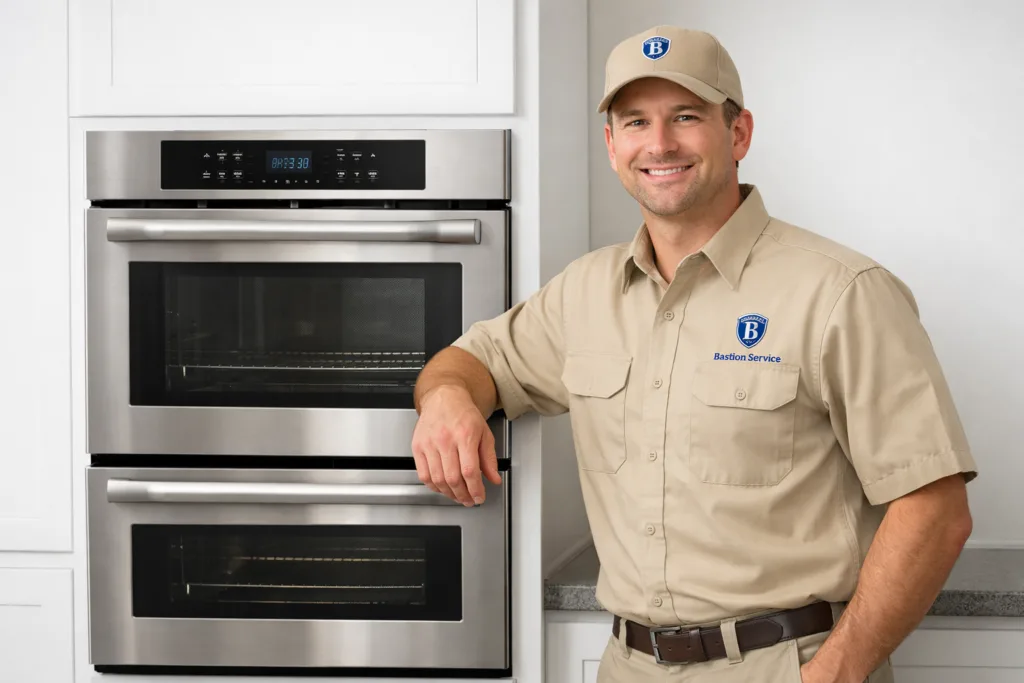
Wall oven problems often show up first in the way meals turn out. A Frigidaire unit may still power on and appear normal, yet preheat too slowly, cycle at the wrong temperature, or stop mid-cook. In Del Rey homes, those differences matter because a symptom that seems minor can point to anything from a worn heating element to a sensor, latch, control, or wiring fault.
Start with what the oven is actually doing
The most useful way to evaluate a wall oven issue is by the symptom pattern. Two ovens can both seem to have a heating problem, but one may have a failed bake circuit while the other has a temperature-reading problem. Looking at how the oven behaves during preheat, baking, broiling, and self-clean usually gives a better idea of the likely repair path.
Not heating or barely heating
If the oven does not heat at all, heats only on broil, or takes far too long to reach temperature, the fault may involve the bake element, temperature sensor, thermal protection component, electronic relay, or incoming power. On some models, partial heating can make it seem like the oven is working when it is actually unable to maintain normal cooking performance.
Homeowners often notice this as food staying pale, casseroles taking much longer than expected, or preheat running so long that cooking times become unreliable. A no-heat condition should be addressed promptly, especially if the oven has recently shut off during use.
Uneven baking and hot spots
When one rack browns faster than another or the edges of food burn while the center stays undercooked, the issue is not always the recipe. Heat distribution problems can come from a weak heating circuit, inaccurate temperature sensing, or control problems that cause the oven to cycle incorrectly.
This type of complaint is common when the oven still turns on and appears usable, which is why it is easy to delay service. But if daily cooking has become guesswork, the problem is already affecting normal use.
Slow preheat and temperature swings
Slow preheat is one of the more frustrating wall oven symptoms because it can feel inconsistent from day to day. Sometimes the oven eventually reaches the set temperature but struggles to hold it. In other cases, it overshoots, drops too low, or never stabilizes.
Possible causes include a drifting sensor, an aging element, control calibration issues, or intermittent electrical faults that show up only after the oven has been hot for a while. If cooking times have gradually changed and recipes no longer behave the way they used to, temperature regulation should be checked.
Control and display issues that affect operation
Modern Frigidaire wall ovens rely on electronic controls to manage heating cycles, timers, locks, and safety functions. When the display is blank, flashing, partly responsive, or showing recurring error codes, the problem may extend beyond the panel itself.
Blank screen or unresponsive buttons
If the control does not respond, turns off unexpectedly, or only works intermittently, likely causes can include a failed user interface, control board issue, loose connection, or power supply problem. In some cases, the oven may appear dead even though the underlying fault is isolated to the control system.
Error codes and random shutoffs
Error codes can be useful because they narrow the diagnostic direction, but they do not automatically identify a single failed part. A code related to temperature, latch operation, or communication may be caused by the named component, by the control, or by a connection issue. Random shutoffs during baking are especially important to address because they can point to overheating electronics or unstable power delivery inside the unit.
Door, latch, and self-clean problems
Wall oven doors and lock mechanisms do more than close the cavity. They affect heat retention, cooking consistency, and safe operation during high-heat cycles. If the door does not close properly, the gasket is damaged, or the lock sticks after self-clean, the oven may become difficult or unsafe to use normally.
Self-clean cycles can also bring existing weaknesses to the surface. Electronic boards, fuses, sensors, and latch components may fail shortly after exposure to that extreme heat. If the oven worked before self-clean and developed new symptoms right after, that timing is an important clue.
Signs the problem should not be ignored
Some wall oven issues are inconvenient but manageable for a short time. Others should be taken more seriously because continued use can increase damage or create a safety concern. It is wise to stop using the oven and schedule service if you notice:
- Burning or overheating smells that are not just normal first-use residue
- Recurring breaker trips during preheat or baking
- A door that locks unexpectedly or will not unlock
- Display failures that interrupt cooking cycles
- Large temperature swings that ruin food consistently
- Intermittent power loss while the oven is running
Even if the oven still works sometimes, inconsistent performance usually means the problem is progressing rather than resolving itself.
Repair or replace?
For many Del Rey homeowners, the real question is not just what failed, but whether the repair makes sense. A targeted repair is often worthwhile when the issue is limited to a bake element, sensor, latch assembly, thermal protection part, or a single identifiable control-related component. If the cabinet, door, and cooking cavity are in good condition, fixing one clear fault can extend the useful life of the appliance.
Replacement becomes more likely when the wall oven has multiple active problems, repeated electronic failures, severe wear, or a repair cost that is difficult to justify relative to the appliance’s overall condition. The exact answer depends on the symptom, model age, and whether the failure appears isolated or part of a broader decline.
What helps before a service visit
A few details from the homeowner can make troubleshooting faster and more accurate. Before service, it helps to note:
- Whether the problem happens during preheat, baking, broiling, or self-clean
- If the oven is too hot, too cool, or inconsistent
- Any error code shown on the display
- Whether the issue is constant or intermittent
- If the problem began after a power outage or self-clean cycle
That information often helps separate a heating fault from a control, sensor, or latch issue.
Frigidaire wall oven service focused on household use in Del Rey
Residential wall oven repair is most useful when it is based on real cooking symptoms, not assumptions from a part name alone. If your Frigidaire wall oven in Del Rey is no longer heating correctly, baking evenly, or responding reliably at the controls, the next step is to identify the failed system and determine whether repair is the sensible option for the appliance you have.