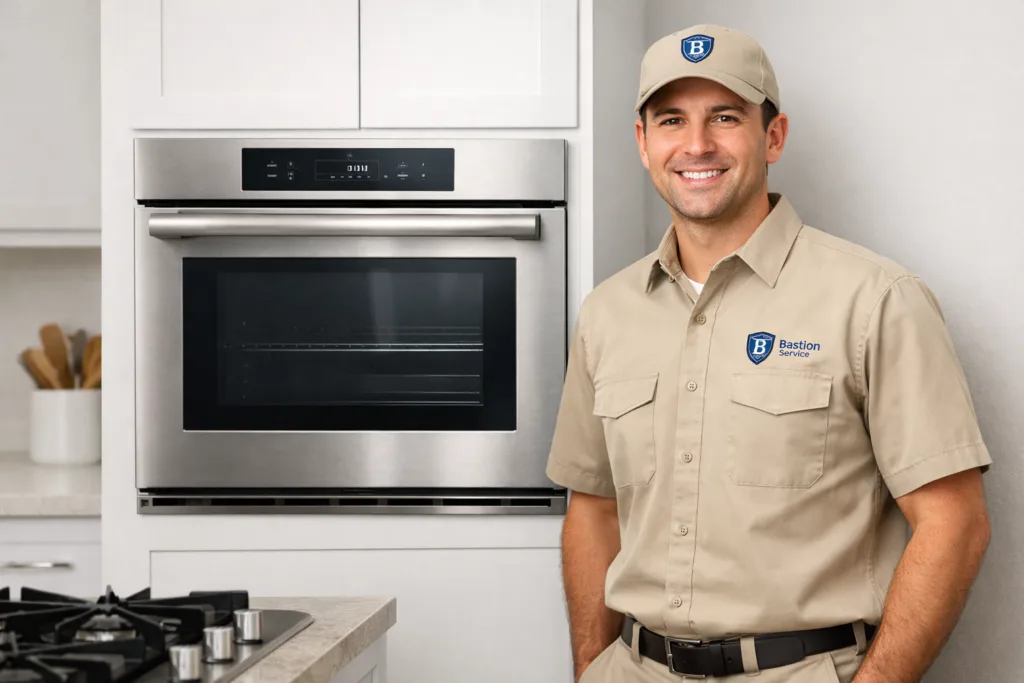
Common Summit wall oven problems in Del Rey homes

Most wall oven failures follow a recognizable pattern. The more specific the symptom, the easier it is to narrow the repair path and avoid replacing parts based on guesswork alone.
Oven not heating at all
If the display works but the oven never warms up, likely causes include a failed bake element, a broil element that is no longer assisting with preheat, a thermal cutoff issue, a defective temperature sensor, or a control fault. On some Summit models, the oven may appear to start normally while the cavity stays cool or only reaches a low temperature.
This kind of failure matters because the problem is not always visible. An element can fail outright, but wiring, relays, and sensor feedback can create the same no-heat complaint. Verifying how the oven responds electrically and thermally is usually the only reliable way to separate one fault from another.
Slow preheat and weak cooking performance
When preheat takes far longer than usual, the oven may still be producing heat but not enough of it. A weakened element, inaccurate sensor reading, or uneven cycling can leave the unit running for long periods without ever truly stabilizing at the selected temperature. Homeowners often notice this first when everyday meals suddenly need extra time.
Slow preheat is easy to ignore at first, but it often points to a component that is already deteriorating. If a Summit wall oven in Del Rey needs repeated temperature adjustments just to cook normally, service is usually more useful than continuing to compensate for it manually.
Uneven baking or temperature swings
Food that browns too quickly on one side, comes out underdone in the center, or cooks differently from rack to rack often signals temperature regulation trouble. Common causes include a drifting sensor, poor heat cycling, a damaged door gasket, or airflow issues inside the oven cavity.
These problems do not always mean the oven has completely failed. More often, the heating system is still operating but no longer holding temperature consistently. That is why baked goods, roasts, and casseroles may become less predictable even though the controls seem normal.
Oven shuts off, beeps, or shows an error code
Error codes can be useful, but they are only the starting point. A code may indicate a sensor circuit problem, keypad failure, overheating condition, latch issue, or communication fault between internal components. Resetting the oven may clear the display temporarily without fixing the underlying cause.
If the same fault returns, or the oven stops mid-cycle during regular cooking, the issue should be treated as more than a nuisance. Repeated shutdowns can interrupt heating, strain other components, and make the appliance unreliable when you need it most.
Controls respond, but the oven acts unpredictably
Sometimes the panel lights up and accepts settings, yet the oven does not behave normally. It may overshoot temperature, stop heating early, fail to maintain bake mode, or switch into unusual cycling. That pattern can point to a control board problem, relay issue, or sensor feedback error rather than a simple heating element failure.
For built-in appliances, symptoms like these are especially frustrating because the oven appears usable until cooking results prove otherwise. If operation has become inconsistent from one use to the next, it is a strong sign that the fault needs to be confirmed before continued heavy use.
Signs the oven should not keep being used
Some performance issues can wait a short time for service. Others should prompt you to stop using the oven until it is checked. Continued operation may increase repair cost or create a safety concern.
- Burning or hot insulation smells that do not fade quickly
- Repeated breaker trips during preheat or cooking
- Severe overheating or food burning unexpectedly at normal settings
- A door that does not close, seal, or latch properly
- Visible sparking, arcing, or signs of heat damage
- Fault codes that return every time the oven is used
Intermittent problems can be just as important as complete failure. An oven that works one day and not the next often points to an electrical issue, failing relay, or unstable control component. Those faults rarely improve on their own.
What usually determines whether repair makes sense
Repair decisions are easier when the problem is narrowed to a specific system. If the issue is isolated to an element, sensor, switch, latch assembly, or a confirmed electrical fault, repair is often reasonable. When the appliance has multiple ongoing issues, recurring control failures, or signs of repeated overheating, replacement may deserve consideration instead.
Age matters, but overall condition matters more. A newer Summit wall oven with a single failed component is very different from an older unit that has temperature instability, worn wiring, and repeated shutdowns. The most useful next step is a clear diagnosis and a practical repair plan based on the exact symptom pattern.
Built-in wall oven concerns homeowners often overlook
Because wall ovens are installed inside cabinetry, access and surrounding conditions can affect both diagnosis and repair. Tight installations, heat buildup, and the condition of the electrical connection can all play a role in how the unit performs. A symptom that looks like a simple no-heat complaint may also involve installation-related stress on wiring or controls.
In Del Rey homes, this matters because a built-in appliance is not just a countertop unit that can be swapped or tested in the open. Safe removal, inspection, and reinstallation are often part of the service process, especially when the problem involves power, overheating, or repeated shutoff.
When to schedule service
It is smart to schedule service once the oven begins showing a repeatable pattern rather than waiting for total failure. Early attention can help prevent added damage and reduce the chances of a mid-meal breakdown.
- Preheat is getting slower week by week
- Temperature accuracy is affecting normal cooking
- The oven intermittently loses heat during use
- The display goes blank or stops responding
- The unit trips power or shuts down unexpectedly
- You are seeing repeated error codes or hearing persistent beeping
For many Del Rey households, the wall oven is used several times a week, so small changes in performance become noticeable quickly. Once cooking results are no longer consistent, diagnosis is usually the best way to determine whether repair is practical, urgent, or no longer the best long-term choice.