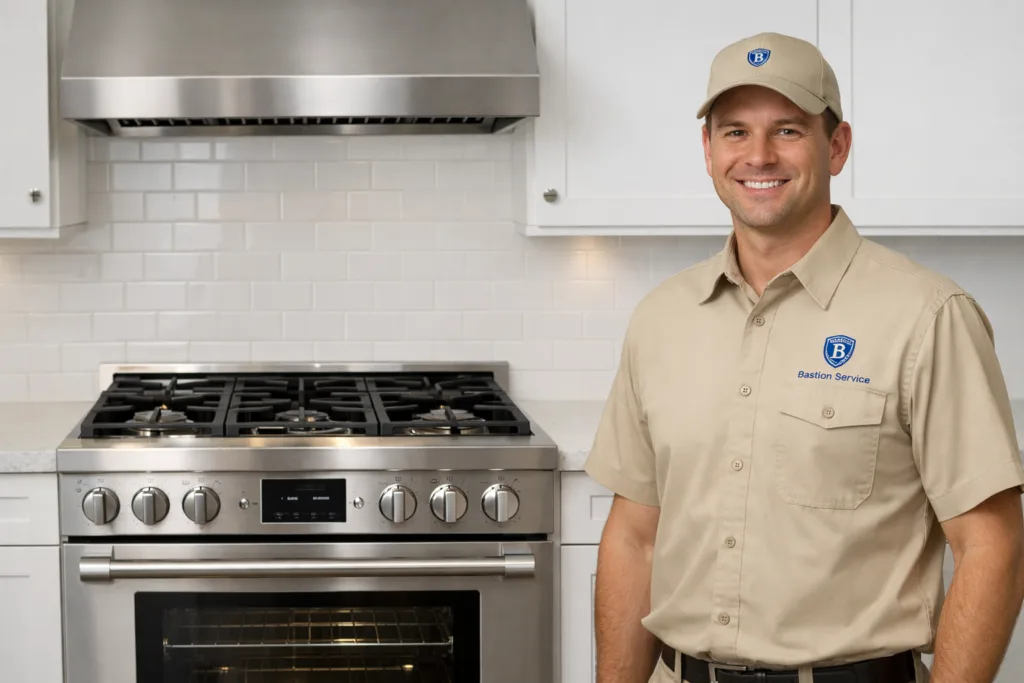
Range problems rarely announce themselves with a single obvious cause. A burner that will not light may stem from moisture, burner cap alignment, a clogged port, a worn ignition part, or a control issue. An oven that seems “off” can be dealing with temperature sensing errors, weak heating performance, or a problem in the control system that shows up only during preheat or longer bake cycles.
Start with the symptom, not the assumption
On a Thermador range, the same complaint can come from very different failures. That matters because replacing the wrong part wastes time and does not solve the cooking problem. The most useful first step is to pay attention to exactly what the range is doing: whether the issue affects one burner or several, whether the oven fails during preheat or during baking, and whether the problem is constant or intermittent.
In Rancho Park homes, small details often make diagnosis much easier. If clicking starts after cleaning, moisture or misalignment may be involved. If the oven eventually heats but takes much longer than it used to, the problem may be different from an oven that does not heat at all. If the display works but cooking performance is inconsistent, the fault may be deeper than the interface alone.
Common Thermador range symptoms and what they may mean
Burner will not ignite
When a surface burner does not light, start with the simple possibilities: the cap may be out of position, the burner ports may be dirty, or residue may be interfering with ignition. If those basics are not the cause, the issue may involve the igniter, spark switch, spark module, wiring, or gas flow to that burner.
If only one burner is affected, the problem is often localized. If several burners behave the same way, the diagnosis may shift toward shared ignition or control components.
Constant clicking
Repeated clicking is one of the most common complaints on a gas range. In some cases, the igniter is still trying to light a burner because flame is not establishing correctly. In others, moisture around the ignition area or a failing switch keeps the spark system active even after the burner is off.
If the clicking starts suddenly after routine cleaning, drying time and proper burner reassembly may help. If it returns repeatedly or continues across multiple burners, the ignition system should be evaluated more closely.
Weak flame or uneven burner performance
A burner that lights but does not heat well may have blocked ports, flame distribution problems, regulator-related issues, or component wear that affects normal gas delivery or ignition. Uneven flame can make a range frustrating to use for everyday cooking because pans heat inconsistently and simmer control becomes unreliable.
Oven not heating
If the oven does not heat at all, possible causes include an igniter problem, a failed bake or broil component, a temperature sensor issue, wiring failure, or an electronic control fault. The exact path depends on the model and on whether the oven shows signs of trying to start.
Useful observations include whether the oven light and display still function, whether preheat begins and then stops, and whether broil works when bake does not. Those symptom differences often narrow the diagnosis quickly.
Slow preheat or poor baking results
An oven that eventually reaches temperature but takes too long can be just as disruptive as one that fails completely. Slow preheat may point to a weakening igniter, partial heating failure, sensor drift, or control problems affecting normal cycling. Homeowners often notice this first through underbaked casseroles, delayed dinner timing, or recipes that no longer finish when expected.
Temperature swings
If one tray browns too fast while another stays pale, or if the oven seems hotter or cooler than the setting, the issue may involve sensor accuracy, heating consistency, airflow, or calibration. Temperature complaints are easy to misread because the display can appear normal even when actual cavity performance is not.
Control or display issues
Buttons that do not respond, settings that reset, flashing error behavior, or a display that works only part of the time can indicate interface failure, wiring problems, or trouble with the main control. On a premium range, these issues may affect more than convenience if they also interfere with oven modes, timing, or ignition functions.
Signs the range should not stay in regular use
Some symptoms are more than a nuisance and should be taken seriously. Stop using the range and arrange service if you notice:
- A persistent gas odor
- Delayed ignition or burners lighting with a sudden flare
- Electrical tripping during operation
- Oven overheating or failing to regulate temperature
- Controls behaving unpredictably during cooking
- Repeated failed ignition attempts
Continuing to use the appliance when ignition or temperature control is unstable can sometimes lead to added component damage and a more involved repair.
Why intermittent problems deserve attention
Intermittent faults are easy to postpone because the range may work normally the next day. In practice, these are often the most disruptive issues for a household because they make meal planning unreliable. A burner that fails every third attempt or an oven that sometimes preheats and sometimes does not can be harder to live with than a full failure.
If the problem comes and goes, it helps to note which burner or oven mode is affected, whether the issue appears after cleaning, and whether any error behavior shows on the control panel. Those details can make troubleshooting more efficient and reduce guesswork.
Repair or replacement: how homeowners usually evaluate it
Many Thermador range problems are still good repair candidates, especially when the fault is limited to ignition parts, a temperature sensor, burner-related components, or a specific control issue. Replacement usually enters the conversation when the range has several major problems at once, when the overall condition is poor, or when the repair path is unusually extensive for the age of the appliance.
For most Rancho Park homeowners, the decision comes down to a few practical questions:
- Is the failure isolated or part of a larger pattern?
- Does the repair restore normal daily cooking use?
- How is the appliance performing overall aside from the current issue?
- Are there signs of additional wear that could lead to repeat service soon?
A thoughtful diagnosis is what makes that decision easier. It separates a targeted repair from a broader appliance problem.
What helps speed up a service visit
Before scheduling service, it can help to gather a few details about the symptom. The model number, which function is failing, when the problem started, and whether the issue is constant all provide a more accurate picture of what the range may need. If the oven heats unevenly, noting whether the problem appears during bake, broil, or preheat can be especially useful.
It also helps not to disassemble ignition components beyond normal cleaning and reassembly. With premium ranges, symptoms can overlap, and partial troubleshooting without testing can make the original fault harder to isolate.
Focused help for Thermador range issues in Rancho Park
When a range is central to daily cooking, the goal is not just to get it running again, but to restore predictable performance. Whether the problem is clicking, burner ignition, weak heating, or oven temperature inconsistency, the most effective repair path is the one based on the actual failure rather than the most visible symptom.
For Thermador range repair in Rancho Park, that means looking carefully at how the appliance behaves in real use, identifying whether the issue is confined to one system or affecting the range more broadly, and then deciding on the right repair based on condition, function, and expected long-term results.