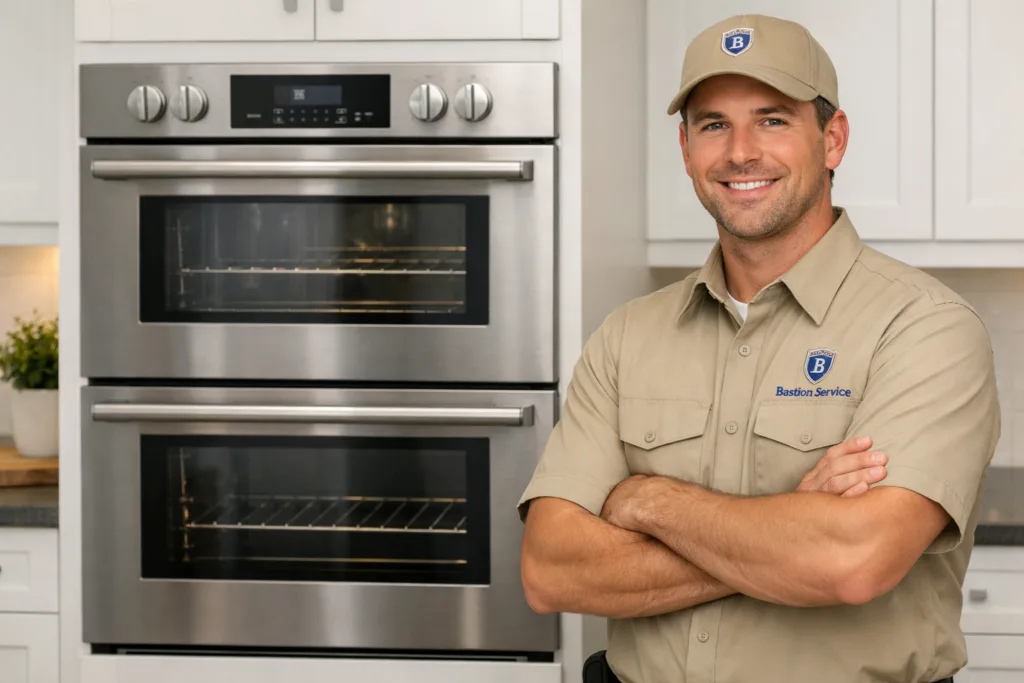
Temperature problems in a Thermador oven often start as small annoyances and turn into everyday cooking issues. Cookies brown too fast on one rack, casseroles need extra time, preheat takes longer than it used to, or the oven shuts down mid-cycle. In a premium appliance, those symptoms can come from several different components, so the most useful next step is matching the behavior to the actual fault instead of assuming one part is to blame.
Common Thermador oven symptoms and what they may indicate
Not every oven problem looks dramatic. Some failures are obvious, such as a unit that will not power on or heat at all. Others are more subtle and show up as inconsistent cooking results. Paying attention to the pattern can help narrow down whether the issue involves heating, sensing, controls, door sealing, or power supply.
Oven not heating
If the oven turns on but stays cold, the problem may involve the bake system, broil system, igniter on a gas model, temperature sensor, relay, or electronic control. In some cases, the display appears normal while the heating circuit is not actually operating. That difference matters, because an oven that looks active is not always producing usable heat.
Slow preheat
A slow preheat cycle can point to a weak igniter, a partially failed heating element, sensor drift, or a control issue that is not driving the oven correctly. Homeowners sometimes notice this first when weeknight meals take longer than expected or recipes that used to be reliable suddenly need extra oven time.
Uneven baking or hot spots
When one side of a dish cooks faster than the other, or the top browns before the center finishes, the cause may be inaccurate temperature feedback, poor convection performance, weakened heating output, or airflow problems inside the cavity. These issues are frustrating because the oven still works, just not predictably.
Temperature swings
Some cycling is normal, but large temperature swings can lead to burned edges, undercooked centers, and inconsistent results from one use to the next. A failing sensor, control board fault, or calibration problem can all produce this kind of symptom.
Display and control problems
If the screen goes blank, buttons stop responding, settings reset, or the oven shows fault codes, the issue may involve the user interface, control board, wiring, or incoming power condition. Error codes are helpful clues, but they still need to be checked against what the oven is actually doing during operation.
Door, latch, or self-clean issues
A door that will not close fully, a latch that sticks, or self-clean problems can affect more than convenience. Poor door sealing can let heat escape and make temperature regulation harder. On models with locking functions, latch or switch trouble can also trigger errors or prevent normal operation.
Why symptom-based diagnosis matters
Two ovens can show the same symptom for completely different reasons. An oven that runs cool may have a bad sensor, a weak igniter, a failing element, or a control issue. Replacing parts by guesswork can add cost without solving the problem. A better approach is to test the heating response, confirm temperature behavior, and check whether the controls and safety components are working together correctly.
This matters even more with Thermador ovens because performance complaints are often tied to how multiple systems interact. Heating, sensor input, relays, convection components, and door sealing all affect final cooking results. Looking at only one part of the system can miss the real cause.
Signs you should stop using the oven
Some problems are inconvenient but manageable for a short time. Others are reasons to stop using the appliance until it can be checked. Continued use is not a good idea when the oven shows signs of electrical stress, unsafe heating behavior, or repeated shutdowns.
- the oven will not regulate temperature and overheats or underheats badly
- preheat takes unusually long and cooking results are no longer reliable
- the display cuts out, resets, or becomes unresponsive during use
- the door will not close, lock, or unlock properly
- fault codes return after a reset
- there are burning smells, sparking, or signs of electrical damage
If a gas oven produces a strong or persistent gas smell, stop using it right away and address the gas safety issue before arranging appliance service.
Repair or replacement considerations
Many Thermador oven problems are repairable when the issue is limited to a sensor, igniter, element, latch part, fan motor, or control-related component. Repair usually makes sense when the oven is otherwise in solid condition and the problem has a defined cause.
Replacement may be worth considering when there are multiple major failures, extensive electronic damage, or long-term reliability concerns that make further repair hard to justify. The decision is usually easier after the exact fault is identified, because you can compare the repair scope with the expected life and performance of the oven afterward.
What homeowners in Marina del Rey often notice before a full failure
In many Marina del Rey homes, oven trouble starts with performance changes rather than a total breakdown. Meals that used to finish on schedule need extra bake time. Broiling becomes weaker. Convection results become less consistent. The oven may also start beeping unexpectedly or showing intermittent control errors before the problem becomes constant.
Catching those changes early can help prevent a minor issue from turning into a more expensive one. For example, continuing to run an oven with unstable temperature control can put more stress on heating components and make everyday cooking less predictable.
What a service visit should clarify
A useful service call should do more than confirm that the oven is malfunctioning. It should identify whether the problem is isolated or whether one failure has affected other components. That usually means evaluating heat output, sensor response, control behavior, door function, and any visible signs of wear or electrical stress.
For homeowners choosing Thermador oven repair in Marina del Rey, the goal is to come away with a clear explanation of the symptom, the likely cause, and whether repair is the sensible next step for the appliance in its current condition.