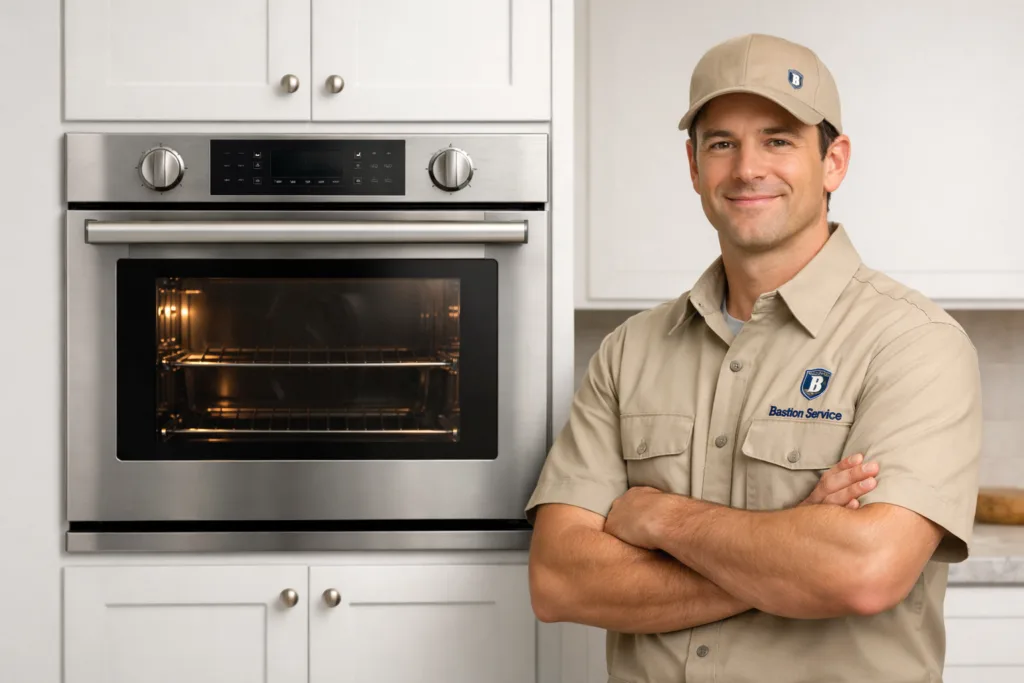
A GE oven that stops heating properly can throw off everything from weeknight meals to holiday baking. Similar symptoms can come from very different failures, so the most efficient path is to match the repair plan to what the oven is actually doing. In many Marina del Rey homes, that means checking whether the issue is with heat production, temperature sensing, power delivery, or the electronic controls that manage the cooking cycle.
Start with the symptom pattern
One of the most common repair mistakes is assuming every heating problem needs the same part. An oven that does not heat at all is different from one that eventually heats but cannot hold temperature. An oven that browns unevenly is also different from one that shuts off in the middle of a cycle. Looking at the exact pattern helps narrow down whether the likely cause is an element, igniter, sensor, relay, latch, wiring problem, or control issue.
That approach also helps homeowners decide how urgent the problem is. Some failures mainly affect cooking quality, while others can make continued use a bad idea, especially if there is sparking, repeated breaker trips, or signs of overheating.
Common GE oven problems and what they may mean
Oven not heating at all
If the display turns on but the cavity stays cold, the problem may be a failed bake element, broil element, igniter on a gas model, thermal protection issue, or a control that is no longer sending power where it should. In some cases, the oven appears to have power because the clock and lights still work, but the heating circuit itself has failed.
This is also a symptom where electrical supply matters. A unit can seem partly functional while still lacking the full power needed for normal oven operation.
Slow preheat
When preheat takes much longer than it used to, the oven may still be producing heat but not enough of it. A weak element, aging igniter, inaccurate sensor, or failing relay can all create a sluggish preheat. This often shows up before a complete loss of heat, so it is worth addressing early if cook times are starting to drift.
Uneven baking or roasting
If one side of the oven cooks faster than the other, or the top browns before the center is done, the cause may be poor heat distribution, temperature sensor drift, convection fan trouble, or a door that is not sealing correctly. Homeowners often notice this when they have to rotate pans constantly or when familiar recipes stop coming out the same way.
Uneven results do not always mean the oven is dramatically broken, but they do mean it is no longer controlling heat the way it should.
Temperature runs too hot or too cold
A GE oven that burns food at one setting and undercooks at another may have a calibration problem, a sensor that is reading incorrectly, or a control board issue that causes wider-than-normal temperature swings. These cases can be frustrating because the oven technically heats, but the cooking results are unreliable.
If you have already adjusted cooking times and rack position without improvement, the issue is likely deeper than normal recipe variation.
Oven turns off during cooking
Shutdowns during baking or roasting can point to overheating protection, unstable power delivery, loose wiring, or a failing control. If the oven cuts out and later works again, intermittent electrical faults are often involved. Problems like this tend to become more frequent over time rather than resolving on their own.
Error codes, locked doors, or self-clean problems
When the display shows an error code, the oven door will not lock or unlock, or a problem appears right after a self-clean cycle, the fault may involve the latch assembly, door switch, sensor, fuse, or electronic control. Self-clean cycles place heavy stress on components because of the sustained high heat, so weak parts often fail during or shortly after that process.
When to stop using the oven
It is best to stop using the oven if you notice sparking, a burning smell from wiring or insulation, visible damage to an element, repeated breaker trips, or overheating around the control area. If a gas model has a persistent gas smell, discontinue use and handle the safety issue first.
Even if the oven still works part of the time, intermittent faults can worsen quickly. Continued use may turn a single failed component into broader damage, especially when heat and electrical load are involved.
Repair or replacement: what usually makes sense
Repair is often worthwhile when the problem is limited to one main component and the rest of the oven is in good condition. Heating elements, igniters, temperature sensors, door latch parts, and some wiring repairs are commonly reasonable fixes when the unit is otherwise solid.
Replacement becomes more likely when the oven has multiple failures at once, repeated electronic problems, major internal wear, or damage that affects overall reliability. Age matters, but condition matters just as much. An older oven with a single correctable fault may still be a good repair candidate, while a newer one with recurring control issues may deserve a closer cost comparison.
What homeowners should pay attention to before service
If you are arranging service in Marina del Rey, it helps to note a few specifics before the visit:
- Whether the oven fails during preheat, during baking, or only on certain settings
- Whether broil works when bake does not, or vice versa
- Any recent error codes on the display
- Whether the issue started suddenly or gradually got worse
- Any unusual sounds, burning odors, or signs of a door not closing properly
Details like these can make diagnosis faster and help determine whether the issue is isolated or part of a larger control or power problem.
What a useful oven repair visit should clarify
A service appointment should do more than confirm that the oven is acting up. It should identify the failed part or circuit, explain whether the appliance can be operated safely, and outline whether repair is likely to restore normal cooking performance. That kind of practical repair guidance is what helps homeowners in Marina del Rey decide whether to move forward with a repair or start planning for replacement.
For households that rely on a GE oven regularly, acting on early warning signs such as slow preheat, inconsistent baking, or repeated shutdowns can prevent more disruptive failures later. Addressing the problem while it is still contained is often the simplest way to get cooking performance back to normal.