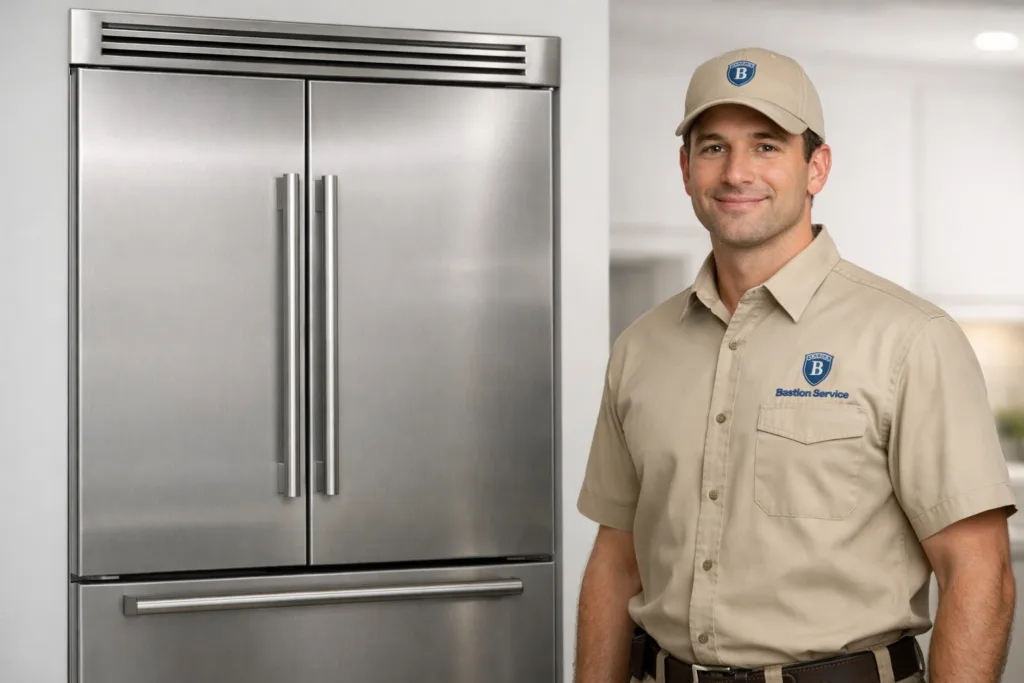
A Thermador refrigerator that turns warm, leaks onto the floor, freezes groceries in the fresh-food section, or starts making unfamiliar sounds can disrupt daily routines fast. In many Marina del Rey homes, the most useful next step is identifying which system is actually failing, because similar symptoms can come from airflow restrictions, sensor errors, defrost trouble, door seal wear, water supply faults, or more serious cooling problems.
Common Thermador refrigerator symptoms and what they often mean
Refrigerators do not fail in one simple way. A cooling complaint may begin with poor airflow, a control issue, frost blocking the evaporator, or a compressor-related problem. A leak might trace back to a clogged drain, condensation, or an ice maker connection. Looking at the symptom pattern first helps narrow down the repair path.
Refrigerator is not cooling enough
If the refrigerator section feels warm, food spoils sooner than expected, or the freezer starts softening frozen items, several parts may be involved. Common causes include evaporator fan failure, frost buildup restricting circulation, dirty condenser components, start device trouble, sensor faults, or a sealed system issue. If temperatures continue rising over a day or two, food safety becomes the immediate concern.
One clue homeowners often notice is uneven performance. The freezer may still seem somewhat cold while the refrigerator compartment struggles, or the unit may cool better at night and worse during frequent door use. That pattern can point to airflow or defrost trouble rather than a complete loss of cooling.
Food is freezing in the fresh-food compartment
When produce freezes, drinks develop ice crystals, or items near a vent become too cold while other shelves stay normal, the refrigerator may be cooling but not regulating properly. This can happen because of a faulty thermistor, damper issues, control board problems, blocked vents, or storage patterns that interfere with air movement.
Freezing in only one area usually means the issue is not simply “set too cold.” Temperature control problems often show up as inconsistent results from shelf to shelf, which is why this symptom benefits from targeted troubleshooting instead of repeated setting adjustments.
Water leaking inside the unit or onto the floor
Water under a Thermador refrigerator can come from a clogged defrost drain, an ice maker fill problem, a cracked or loose water line, or excess condensation caused by poor door sealing. Leaks inside drawers or beneath shelves may signal drainage trouble, while water outside the appliance may be tied to supply connections or overflow.
Even a small recurring leak should be addressed. Moisture can damage flooring, nearby cabinetry, and the area beneath the refrigerator, and it may continue long before the full source becomes obvious.
Frost buildup where it should not be
Heavy frost on the back interior panel, around vents, or near the freezer compartment usually points to a defrost system problem or warm air entering through a bad seal. Once frost accumulates enough to block airflow, both the freezer and refrigerator sections can start behaving unpredictably.
Frost is also one of the clearest signs that the appliance may seem to run constantly without actually maintaining normal temperatures. The cooling system is working harder, but air cannot circulate the way it should.
Ice maker or dispenser stops working properly
If the ice maker stops producing, creates very small cubes, overfills, or becomes intermittent, the issue may involve water flow, inlet valve performance, freezer temperature, fill tube icing, or a larger cooling problem. A dispenser issue can also be linked to ice clumping, motor trouble, or door-related electrical faults.
Because ice production depends on both water delivery and stable freezer temperatures, these complaints are not always isolated to the ice maker assembly itself.
New or unusual noises
Clicking, buzzing, rattling, humming, fan scraping, or repeated attempts to start can all point to different causes. Some sounds come from simple vibration or panels shifting slightly; others suggest fan blade interference, frost contact, failing motors, or compressor start trouble.
Noise matters more when it appears alongside warm temperatures, longer run times, water leaks, or intermittent operation. A refrigerator that is both louder and less stable usually needs attention sooner rather than later.
Signs the problem is becoming more urgent
Some refrigerator issues can wait a short time for observation, but others should be treated as active failures. Service becomes more urgent when you notice:
- Food temperatures rising or milk spoiling early
- The freezer no longer keeping items solid
- Water pooling under or inside the appliance
- Heavy frost blocking vents or covering interior panels
- The refrigerator running almost constantly
- Repeated clicking with weak or inconsistent cooling
- Resets that help briefly, then the same symptom returns
These patterns usually indicate more than a one-time fluctuation. Continued use in that condition can put extra strain on fans, controls, and compressor-related components.
Why symptom patterns matter with Thermador refrigeration
High-end refrigeration often shows layered symptoms rather than one obvious failure. A homeowner may notice poor ice production first, then warmer shelves, then extra noise, and later a frost pattern. Those are not separate random events; they can all stem from one underlying airflow, defrost, or cooling-system problem.
That is why symptom timing matters. Whether the issue appears after a door is opened often, during humid weather, after a power interruption, or only in certain compartments can help distinguish between a control fault, airflow restriction, or a more substantial refrigeration issue.
Repair versus replacement: what usually makes sense
Many Thermador refrigerator problems are reasonable to repair when the failure is limited to parts such as fans, thermistors, dampers, valves, drains, gaskets, control components, or ice maker-related parts. In those cases, restoring normal operation is often straightforward once the actual source of the problem is confirmed.
Replacement becomes a more serious consideration when the refrigerator has multiple major failures, has an extensive sealed system problem, or can no longer return to stable everyday performance without significant cost. The real question is not only whether the appliance can run again, but whether it can do its job consistently for the household afterward.
What homeowners in Marina del Rey often notice before calling
The unit seems to work, but not consistently
Intermittent problems are common with refrigerator controls, sensors, fans, and defrost systems. The appliance may cool properly for hours, then drift warm, then recover. That does not usually mean the issue solved itself; it often means a component is failing gradually.
Only one section is affected
A fresh-food section that turns warm while the freezer still looks normal often points to airflow or defrost trouble. A freezer that struggles while the refrigerator remains usable can indicate a different cooling distribution issue. Partial performance is still a sign that the system is not functioning correctly.
The problem returned after basic cleaning or resetting
Cleaning visible dust, adjusting settings, or performing a reset can sometimes improve airflow or control behavior briefly. But if symptoms return, there is usually a mechanical or electrical cause that still needs to be addressed.
Simple checks homeowners can make first
Before scheduling service, a few basic observations can help clarify the problem:
- Check whether vents inside the refrigerator are blocked by large containers or tightly packed food
- Look for frost on rear interior panels or around freezer vents
- Inspect door gaskets for gaps, tears, or debris preventing a good seal
- Confirm the unit is level and not rocking, which can contribute to vibration and door-closing issues
- Note whether the problem affects cooling, ice production, noise, leaks, or all of them together
These checks do not replace repair work, but they can make the symptom pattern clearer and help explain what changed first.
Focused refrigerator repair for Marina del Rey households
In Marina del Rey, refrigerator service is most useful when it stays centered on the actual household problem: unstable temperatures, airflow loss, frost accumulation, leaking, poor ice production, or unusual sounds. A symptom-based approach helps determine whether the issue involves circulation, defrost components, controls, door sealing, water delivery, or a more serious cooling fault, so the repair decision is based on the appliance’s real condition rather than guesswork.