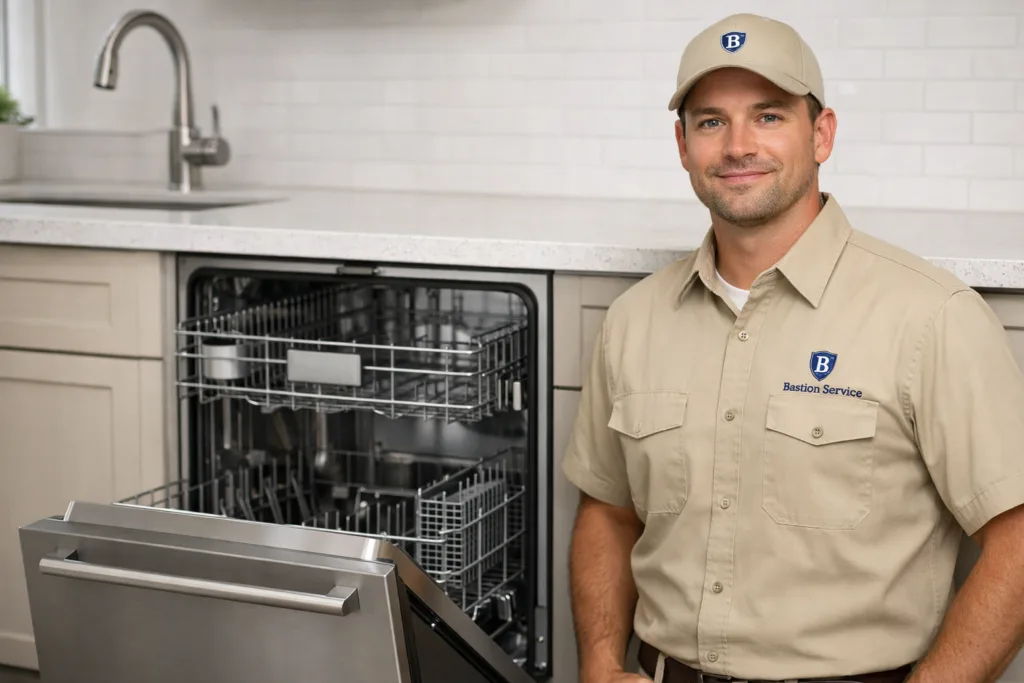
A dishwasher problem is easier to solve when the symptoms are looked at as a pattern instead of as a single complaint. Standing water, weak cleaning, leaking, or a cycle that never seems to finish can each point to more than one failed component. On Thermador models, the difference between a drain issue, wash system problem, heating fault, or control-related interruption matters because the repair path can be very different.
Common Thermador dishwasher problems and what they can mean
Most residential dishwasher calls come down to a handful of recurring issues. The useful part is separating a simple maintenance-related restriction from a true part failure.
Standing water after the cycle
If water is left in the bottom of the tub at the end of a cycle, the problem may be in the filter area, drain pump, drain hose path, or an internal blockage that slows water movement. Some homeowners notice the dishwasher sounds like it is draining but the tub still holds water. Others find the cycle stops early or leaves a sour odor behind after repeated use.
When this happens more than once, it is usually a sign that the machine is not moving water out efficiently. Continued use can put extra strain on the pump and can make the dishwasher less sanitary between loads.
Dishes come out dirty, gritty, or cloudy
Poor wash results are not always caused by detergent. A Thermador dishwasher may leave food behind because of weak circulation, clogged spray arms, low water temperature, a dispenser issue, or a sensor problem that affects how the cycle runs. If the top rack cleans differently from the bottom rack, or glassware looks filmy while plates still have residue, those details help narrow down where the wash process is breaking down.
Cloudiness can also be confused with hard-water spotting, but when cleaning quality changes suddenly, the dishwasher itself is often part of the problem.
Leaking around the door or under the unit
Any leak deserves attention quickly. Water at the front of the dishwasher can come from a worn door gasket, damaged lower spray arm, loading that redirects water toward the door, or oversudsing inside the tub. Water under the appliance may point to a hose connection, pump housing, internal seal, or other hidden source.
Even a slow leak can affect flooring, toe-kick areas, and nearby cabinetry over time. If the same damp spot keeps returning, it is best to stop treating it as a one-time spill and have the source identified.
Unit runs but does not heat or dry well
Low rinse temperature, poor drying, or dishes that come out unusually cool can indicate a heating problem, temperature-sensing issue, or a control fault that is not advancing the cycle correctly. When heat is missing, cleaning performance can also drop because the dishwasher is no longer washing and rinsing under the expected conditions.
This kind of issue can be easy to miss at first because the unit still appears to complete a cycle. The clues are usually found in the final results: wet dishes, greasy residue, or inconsistent performance from one load to the next.
Humming, grinding, beeping, or repeated cycle interruptions
Unusual noise often points to something mechanical. A humming sound can mean a pump is struggling, while grinding may suggest debris in the pump area or wear in a moving component. Repeated beeping, failure to start, or cycles that pause and never recover may involve the latch, user interface, sensors, or main control system.
If resets do not solve the issue and the same interruption returns, the dishwasher usually needs more than a quick restart.
Signs the problem is getting worse
Some dishwasher issues start small and become more expensive when ignored. It is smart to schedule service when you notice any of the following:
- Water remains in the tub after multiple cycles
- Cleaning results keep declining
- The dishwasher leaks even occasionally
- The cycle stops mid-program or will not complete
- The unit makes loud or unusual mechanical noise
- Dishes are no longer drying as expected
- The dishwasher trips power or shows recurring error behavior
One inconsistent load does not always mean a failed part, but repeat symptoms usually do. Waiting too long can turn a contained repair into pump damage, electrical stress, or water damage around the appliance.
What to check before assuming a major repair
There are a few simple conditions that can mimic a larger failure. Heavily blocked filters, overloaded racks, spray arms that cannot turn freely, or detergent problems can all affect performance. If your Thermador dishwasher suddenly starts cleaning poorly, it helps to look at the obvious first.
That said, when the same symptom returns after normal cleaning and proper loading, the issue is more likely tied to an internal component. Repeated standing water, persistent leaking, and ongoing cycle failures rarely correct themselves.
Repair or replace?
For many homeowners in Marina del Rey, repair is still the sensible option when the problem is limited to a drain component, circulation issue, inlet valve, latch assembly, sensor, seal, or pump-related failure. A replacement discussion becomes more realistic when the dishwasher has multiple active problems, repeated control failures, or wear that suggests the current issue is only one part of a larger decline.
Because Thermador dishwashers are premium household appliances, it is worth diagnosing the actual failure before assuming replacement is the better move. Problems that feel severe in daily use often turn out to be isolated and repairable once the failed system is confirmed.
What a service visit should accomplish
A productive appointment should do more than match a symptom to a guessed part. It should confirm how the dishwasher is failing, inspect the wash and drain systems, check for leak sources, evaluate heating and control behavior, and determine whether the repair is likely to restore reliable operation. That gives the homeowner a practical repair plan based on the exact symptom pattern, appliance condition, and repair path.
Why symptom details matter in Marina del Rey homes
In a busy household, dishwasher issues are often described in broad terms like “not working right” or “not cleaning.” The more specific details are usually what lead to the right answer. Whether the dishwasher stops at the same point in every cycle, only leaks during wash, leaves residue mostly on one rack, or drains slowly only after heavy loads can all help isolate the source of the problem.
For homeowners in Marina del Rey, sharing those details can make the service process more efficient and make the repair decision easier to understand.
When to stop using the dishwasher
It is best to pause use of the machine if you notice active leaking, burning smells, repeated tripping of power, loud grinding, failure to drain, or water appearing outside the tub. These are the kinds of symptoms that can worsen quickly or create avoidable damage around the appliance.
If the issue is limited to weak cleaning or poor drying, the dishwasher may still run, but that does not mean the underlying problem is harmless. A failing pump, heating issue, or sensor fault can continue to stress other components when left unresolved.