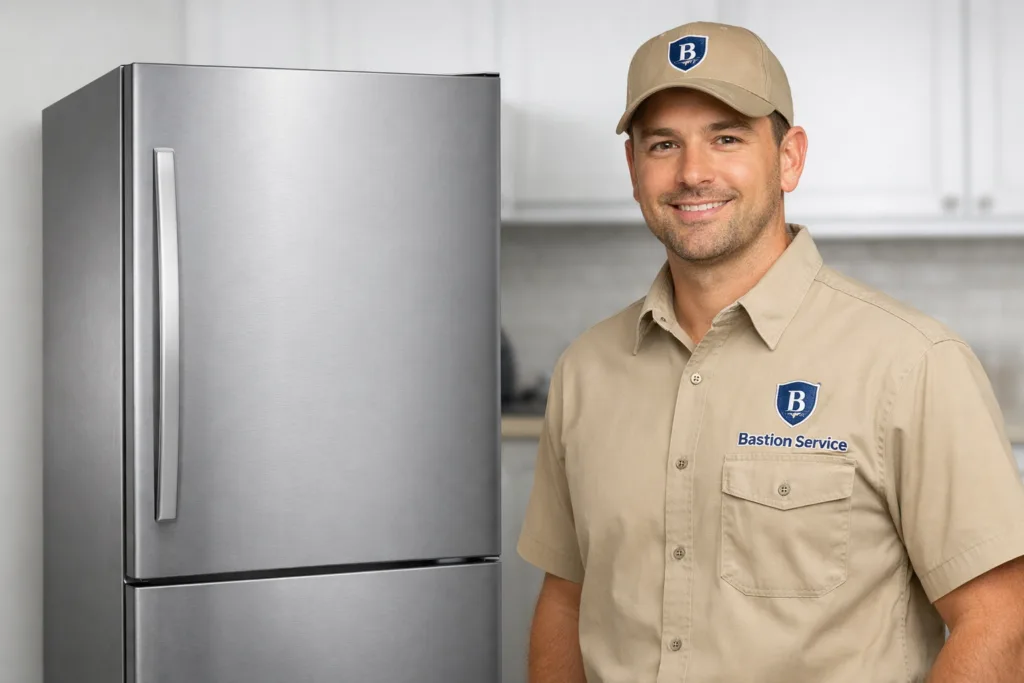
A GE freezer that stops holding temperature, starts frosting over, or runs nonstop can quickly lead to spoiled food and frustration. In many Redondo Beach homes, the visible symptom is only part of the story. Poor airflow, a failing evaporator fan, a defrost fault, a worn door gasket, or a control issue can all create similar cooling problems, so the repair path depends on what the freezer is actually doing.
Start with the symptom pattern
Freezer problems are usually easy to notice but not always easy to identify. A unit that is only partly cold may have an airflow restriction rather than a total cooling failure. Frost on the back panel may point to a defrost problem, while soft food near the door can suggest warm-air leaks. Looking at the full symptom pattern helps narrow down whether the issue involves temperature control, circulation, moisture intrusion, or a mechanical part beginning to fail.
Food is soft or not staying fully frozen
If frozen food is softening, ice cream is no longer firm, or new items take too long to freeze, the problem may be related to weak airflow, dirty coils, a fan motor issue, a thermostat or sensor fault, or a door that is not sealing well. Some GE freezers also show this symptom when frost buildup blocks circulation behind the interior panel.
Early warning signs often include uneven freezing, thawing at the front of shelves, or a freezer that sounds normal but never quite reaches the right temperature. When that happens, it is best to stop loading the unit heavily until the cause is identified.
Frost keeps coming back
Heavy frost on shelves, drawers, food packaging, or the rear panel usually means moisture is getting in or the defrost system is not doing its job. A damaged gasket, a door left slightly open, or a control issue can all contribute. Thick ice buildup does more than reduce space. It can block airflow, strain the fan, and force the freezer to run longer than normal.
If frost returns soon after manual defrosting, that is a strong sign the underlying issue is still active. Repeatedly clearing ice without addressing the cause usually leads to the same problem again.
The freezer runs all the time
A GE freezer that rarely shuts off may be trying to compensate for lost cold air, restricted airflow, dirty condenser coils, frost-covered evaporator components, or a temperature sensing problem. Constant operation is not just a nuisance. It can increase wear on the compressor and related parts over time.
If the cabinet feels warmer than usual while the freezer runs nonstop, or if cooling seems to come and go, service is worth scheduling before the unit slips into a full no-cool condition.
It is getting louder than usual
Buzzing, clicking, rattling, scraping, or grinding sounds can point to several different issues. Fan blades may be hitting ice, a motor may be wearing out, or a component may be loose. Sometimes a stressed compressor becomes louder because the freezer is struggling to maintain temperature.
New noises matter most when they appear together with frost, poor freezing, or long run times. Those combinations often indicate a problem that is progressing rather than a harmless sound change.
Water leaks or excess moisture are showing up
Water on the floor, droplets inside the compartment, or unexplained moisture around the door can indicate a clogged defrost drain, sealing issue, or temperature fluctuation that is causing condensation to collect and refreeze. Even if the freezer still seems cold enough, moisture problems can lead to hidden ice buildup and secondary damage if left alone.
Common GE freezer issues seen in homes
While each model is different, many household freezer repairs come back to a handful of systems that affect temperature stability and airflow:
- Evaporator fan problems that reduce air circulation
- Defrost heater, thermostat, or control failures that allow ice to build up
- Door gasket wear that lets humid air enter the compartment
- Thermistors or temperature controls giving inaccurate readings
- Drain blockages that cause water or ice accumulation
- Condenser issues that make the freezer run too long or cool poorly
The key is matching the repair to the actual cause instead of replacing parts based only on a broad symptom like “not freezing” or “making noise.”
When to stop using the freezer
Some problems can wait a short time for service, but others should be treated more urgently. If food is thawing, the freezer is no longer staying below a safe freezing temperature, the fan sounds strained, or ice buildup is spreading quickly, continued use can make the problem worse. Sensitive food should be moved elsewhere if there is any doubt about temperature reliability.
You should also stop normal use if the unit trips a breaker, shows irregular control behavior, or has a burning smell along with cooling trouble. Those signs suggest the issue is no longer limited to basic frost or airflow loss.
Repair or replace?
That decision usually depends on the age of the GE freezer, the overall condition of the cabinet and door seal, and whether the failure involves a routine component or a major cooling-system problem. Many issues involving fans, drains, switches, sensors, gaskets, and defrost parts are often repairable, especially when caught early.
Replacement becomes more likely when the appliance has recurring cooling problems, multiple failing systems, or a major sealed-system issue in an older unit. For most homeowners, the best approach is to compare the needed repair with the condition and expected remaining life of the freezer rather than reacting only to the immediate symptom.
What helps before service
Before an appointment, it helps to note exactly what the freezer has been doing. Useful details include whether frost is forming on the back panel, whether the compressor seems to run constantly, whether the door closes tightly, and whether the problem affects the whole compartment or only certain shelves. If there is a display or control panel, any unusual flashing or temperature behavior is also worth noting.
These details can make diagnosis more efficient and help determine whether the issue is likely related to airflow, defrosting, sealing, or control response.
GE freezer repair for Redondo Beach households
Freezer problems are easiest to solve when the symptoms are addressed early instead of after repeated thawing, refreezing, and heavy ice buildup. For homeowners in Redondo Beach, a practical repair plan starts with identifying whether the problem is affecting cooling, airflow, moisture control, or electrical operation, then deciding whether the fix makes sense for the appliance’s condition.
When the freezer is no longer performing the way it should, timely service can help prevent food loss, reduce stress on major components, and restore more stable day-to-day operation.