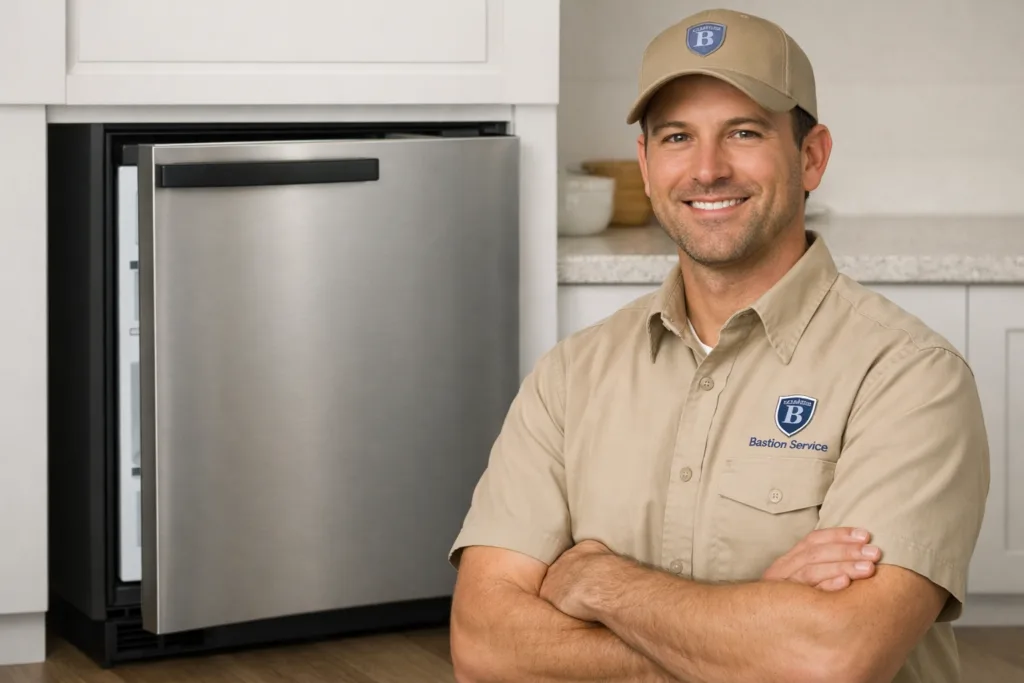
A U-Line freezer problem can move from minor inconvenience to food loss quickly, especially when the symptom seems to come and go. One of the most important things to understand is that similar symptoms often come from different failures. Frost, warming, leaks, and noise can each trace back to airflow restrictions, defrost trouble, door sealing problems, fan issues, or control faults, so the repair path should match what the appliance is actually doing.
What common U-Line freezer symptoms usually point to
Not freezing hard enough
If items are softening or the cabinet feels cold but not truly freezing, the problem may involve weak internal airflow, an evaporator fan issue, a sensor problem, dirty coils, or a more serious refrigeration failure. Some units still sound normal while temperature performance steadily declines, which can make the issue easy to overlook until food quality is affected.
Warning signs include ice cream turning soft, frost melting and refreezing, or one section of the freezer feeling much warmer than another. When those symptoms appear, continued operation can put extra strain on the system.
Frost buildup on shelves, walls, or the back panel
Heavy frost often means moisture is entering where it should not, or the freezer is no longer defrosting correctly. A worn gasket, a door that does not close squarely, or a defrost component failure can all create the same visible result. As frost grows, airflow drops, and the freezer may start warming even though it seems to be running constantly.
If drawers become hard to open or the back interior panel develops thick ice, that usually means the problem is no longer minor. In many cases, the frost itself begins causing secondary issues such as fan interference or uneven temperature control.
Water leaking onto the floor
Leaks can come from a blocked or frozen drain, condensation caused by warm air entering the cabinet, or excess frost melting in the wrong area. In a home kitchen, garage, or bar area, even a small recurring leak can lead to flooring damage, cabinet swelling, or moisture problems nearby.
When water appears along with frost or temperature swings, those symptoms are often connected rather than separate problems.
Buzzing, clicking, rattling, or fan noise
Unusual sound does not always mean major failure, but new noise should not be ignored. A fan blade may be hitting ice, a motor may be wearing out, or the compressor may be struggling because of another cooling problem. Rattling can also come from loose panels or vibration, but if the noise is paired with warming or nonstop running, a mechanical issue is more likely.
Running all the time or cycling strangely
A freezer that rarely shuts off is often trying to overcome lost cold air, blocked airflow, frost buildup, or control-related errors. Odd cycling, short runs, or repeated restarting can point to sensor or electronic problems. Even when the cabinet still feels cold, this pattern usually means efficiency and temperature stability are slipping.
Why symptom patterns matter
With U-Line freezer repair, the combination of symptoms is often more helpful than any single complaint by itself. For example, frost plus loud fan noise suggests a different repair path than frost plus floor leakage. A unit that runs constantly while warming points in a different direction than one that cools well but clicks repeatedly.
That is why homeowners in Redondo Beach usually benefit more from a full symptom-based inspection than from guessing which part to replace first. The right repair depends on how the freezer cools, how air moves inside the cabinet, whether moisture is getting in, and whether the controls are responding properly.
Signs the issue should be addressed soon
- Frozen food is softening or thawing at the edges
- Frost returns shortly after being cleared
- The freezer is leaking more than once
- The door no longer seals tightly
- Fan or compressor noise is new and getting louder
- The unit runs continuously without recovering temperature
These symptoms usually mean the problem is active rather than cosmetic. Waiting too long can turn a smaller repair into a larger one, especially if airflow is blocked or a fan is working against ice buildup.
When continued use can make the repair worse
Some freezer problems allow limited short-term use, but others tend to escalate. A drain issue can lead to repeated pooling. Frost can choke airflow and force longer run times. A weak fan motor may fail fully if it keeps striking ice. Repeatedly unplugging and restarting a struggling freezer may also mask the real issue without correcting it.
If temperature is unstable or the appliance is no longer preserving food safely, limiting use until the problem is checked is often the better choice.
Repair or replace?
Many U-Line freezer issues are repairable when the fault is tied to a gasket, fan, drain, defrost component, sensor, or control-related part. Repair is often more sensible when the cabinet is in good shape and the problem is clearly isolated.
Replacement becomes a more serious consideration when the freezer has major sealed-system trouble, repeated breakdowns, or overall wear that makes future reliability uncertain. The decision usually comes down to the confirmed cause, the condition of the appliance, and whether a repair is likely to restore normal operation without ongoing compromise.
What a service visit should help clarify
A useful appointment should narrow the problem down to cause, not just symptom. That means checking temperature behavior, frost pattern, door sealing, drainage, fan operation, and control response. For built-in or compact household refrigeration, installation conditions can also affect access, airflow, and repair planning.
For homeowners in Redondo Beach, that process helps answer the questions that matter most: why the freezer is failing, whether the issue is likely to spread, and whether repair is a sound investment.
Practical next step
If your U-Line freezer is warming, frosting over, leaking, or making new noises, the smartest next move is to have the exact fault identified before approving parts or assuming replacement is necessary. That keeps the decision grounded in the appliance’s real condition and improves the odds of a repair that solves the problem rather than temporarily hiding it.