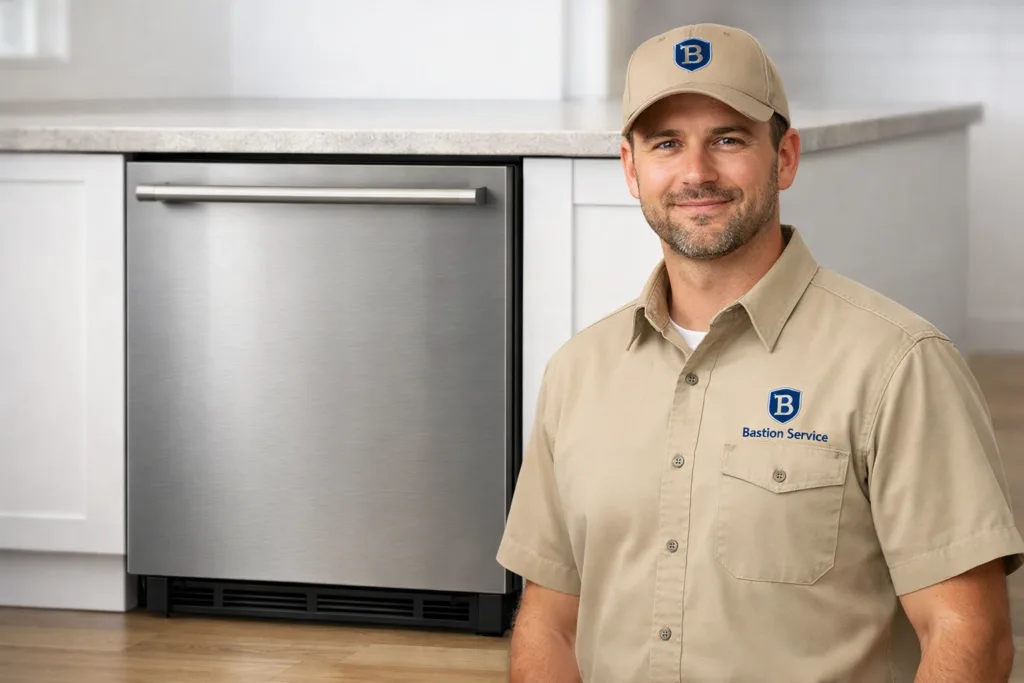
Small changes in freezer performance often show up before a complete failure. Food that softens at the edges, new frost around the liner, a puddle near the toe kick, or a fan sound that was not there before can all point to a developing problem. On many U-Line freezer units, the same visible symptom can come from more than one cause, so the most useful next step is to match the symptom pattern to the likely system involved.
Common U-Line freezer symptoms and what they may indicate
Freezer not keeping food fully frozen
If frozen food is soft, ice cream is no longer firm, or the cabinet feels cool without reaching true freezer temperature, the issue may involve weak airflow, a sensor or control problem, restricted condenser performance, or a compressor-related fault. In some cases, the unit still runs and sounds normal, which can make the problem easy to underestimate. Temperature loss that starts gradually usually does not correct itself.
Frost buildup on walls, bins, or around the door
Heavy frost is commonly tied to warm air entering the compartment, a worn or misaligned door gasket, or a defrost issue that allows ice to accumulate over time. Once frost begins to block airflow, cooling can become uneven and the freezer may run longer than usual. What starts as a sealing issue can quickly turn into a temperature problem.
Water leaking or moisture collecting under the unit
Water near the freezer may be caused by a blocked drain path, excess condensation from warm-air intrusion, or ice melting in the wrong place inside the cabinet. Even a small leak should be taken seriously, because repeated moisture can affect flooring, surrounding cabinetry, and the unit’s overall performance.
Clicking, buzzing, rattling, or fan noise
Not every new sound means a major repair, but sound changes are important when they appear with weak cooling or longer run times. Clicking can point to start or relay trouble. Buzzing may be related to a compressor or vibration issue. Scraping or fan noise sometimes happens when ice interferes with moving parts. A sound that repeats in a pattern usually tells more than a one-time noise.
Freezer runs too long or cycles irregularly
A unit that rarely shuts off, short cycles, or behaves differently from one day to the next may have trouble sensing temperature correctly or moving heat out of the system efficiently. Dirty condenser areas, airflow restrictions, control faults, and failing components can all create this pattern. Long run times also tend to increase wear on other parts of the freezer.
How symptom patterns help narrow the problem
U-Line freezer issues are often easiest to understand in groups rather than as single symptoms. For example, frost plus weak cooling often suggests an airflow, gasket, or defrost-related problem. Leaking plus frost can indicate drain trouble or repeated warm-air entry. Noise plus rising temperature can point toward fan trouble or a more serious cooling-system issue.
Looking at the full pattern helps separate smaller part failures from larger concerns. It also helps homeowners decide how urgent the repair is and whether food should be moved elsewhere right away.
Problems that commonly affect built-in and undercounter freezers
Many U-Line freezers are installed in tight residential cabinetry, which makes airflow and heat removal especially important. If condenser areas become dirty or ventilation is restricted, the freezer may struggle to hold temperature even though the sealed system is still operating. Built-in placement can also make leaks, vibration, and door-closing issues harder to notice until performance drops.
Undercounter units are also opened frequently in busy kitchens, which increases the effect of worn gaskets or slight alignment problems. A door that does not seal cleanly can allow a steady stream of humid air into the cabinet, creating frost, longer run times, and inconsistent temperatures.
When a U-Line freezer repair should be scheduled quickly
Prompt service is a good idea when:
- food is no longer staying solidly frozen
- frost is spreading fast or returning soon after being cleared
- water is appearing under or inside the freezer
- the unit is making repeated clicking, buzzing, or fan noises
- the freezer is running almost constantly
- temperature swings are becoming more noticeable from day to day
Waiting can turn a manageable repair into a larger one. Ice buildup can strain fans, long run times can add stress to compressor-related parts, and a small leak can become a cabinet or flooring problem.
Repair or replacement: what homeowners should weigh
Many freezer problems are repairable, especially when they involve fans, controls, drains, gaskets, or defrost components. Replacement becomes a more realistic discussion when the diagnosis points to a major sealed-system failure, the freezer has a history of repeat breakdowns, or the overall condition no longer supports a worthwhile repair.
For homeowners in Mar Vista, the better question is usually not just whether the freezer can be fixed, but whether the repair is likely to restore stable, everyday performance. That decision depends on the actual fault, the age and condition of the unit, and how much disruption the current problem is causing in the home.
What useful service should cover
A worthwhile visit should connect the symptom you are seeing to the system that is actually failing. That may include checking cabinet temperature, inspecting frost patterns, evaluating door sealing, listening to operating sounds, and confirming how the freezer starts, runs, and cycles. The goal is to identify whether the issue is a straightforward component repair, a condition that should not be ignored, or a larger failure that changes the cost-benefit decision.
If your U-Line freezer in Mar Vista is showing warning signs, acting early usually protects food, limits secondary damage, and makes the repair path easier to understand.