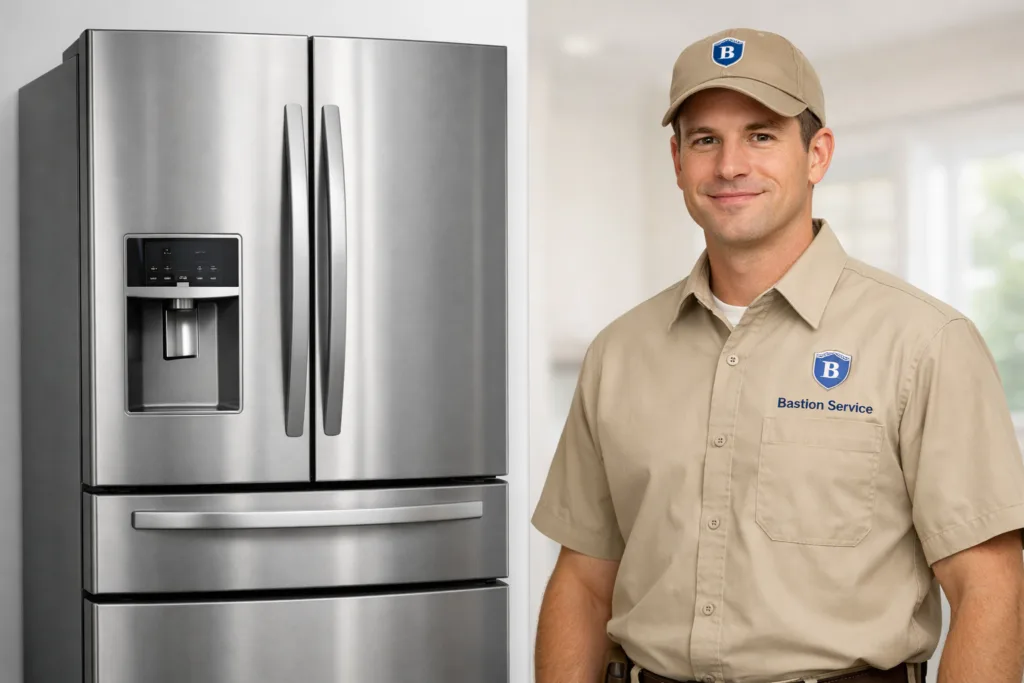
Refrigerator problems rarely stay minor for long. A small temperature swing can turn into spoiled groceries, frost can block airflow, and a slow leak can damage flooring around the appliance. With Electrolux refrigerators, the most useful first step is to match the symptom pattern to the likely system involved instead of assuming every cooling issue means the same repair.
Signs your Electrolux refrigerator needs attention
Some failures are obvious, such as a refrigerator that is fully warm or a freezer that stops freezing. Others build gradually and are easier to miss at first. If you notice any of the following, the unit should be evaluated before the problem spreads:
- Fresh food section feels warmer than the setting suggests
- Freezer items soften or refreeze unevenly
- Frost collects on the back wall or around vents
- Water appears under crisper drawers or on the floor
- Motor, fan, buzzing, or clicking sounds become louder or more frequent
- The refrigerator runs almost nonstop
- Ice production slows or stops
- Doors no longer seal tightly
These symptoms can overlap. A unit that seems to have an ice maker problem may actually be struggling with temperature control, and a refrigerator that appears to be leaking may have a drain issue caused by frost buildup deeper inside the cabinet.
Common Electrolux refrigerator symptom patterns
Refrigerator section is warm but freezer still works
This is one of the most common complaint patterns. In many cases, the freezer is still producing cold air, but that air is not moving correctly into the fresh food section. Possible causes include an evaporator fan issue, blocked vents, a damper problem, or frost accumulation interfering with circulation. Homeowners in Inglewood often first notice this when produce spoils quickly while frozen food still seems normal.
Both sections are not cooling well
When both the refrigerator and freezer lose performance, the problem may be broader. Condenser airflow problems, compressor start issues, control faults, or sealed system trouble may all cause weak cooling across the appliance. If the refrigerator is running but temperatures continue to rise, it is best not to wait for a complete shutdown.
Frost keeps coming back
Recurring frost usually points to a defrost system issue, airflow restriction, or warm air entering through a poor door seal. Thick frost behind interior panels can reduce fan movement and cause uneven temperatures throughout the refrigerator. Even when the appliance still cools, heavy frost often signals a repair issue that will return until the underlying cause is corrected.
Water is leaking inside or under the unit
Leaks may come from a blocked defrost drain, excess condensation, water line problems, or ice maker-related faults. A small amount of water can quickly become a larger problem if it reaches flooring or cabinet surfaces. If you keep seeing water after wiping it up, the issue is usually not random and should be diagnosed.
The refrigerator is noisy
Different noises can point to different systems. A clicking sound may relate to startup trouble. A rattling or vibrating sound may come from loose panels or components near the compressor area. A scraping or humming noise can indicate fan trouble, especially if it changes when the door opens or closes. Not every sound means a major failure, but a new sound is often one of the earliest warnings that something is changing inside the appliance.
What specific symptoms can mean
Soft freezer food
If frozen items become soft, the appliance may be losing temperature consistency even if it has not fully stopped cooling. This can happen with airflow restrictions, weak compressor performance, or frequent defrost-related interruptions. It is a useful early warning sign because it often appears before a total no-cool condition.
Condensation on shelves or drawers
Moisture inside the refrigerator can indicate warm air entering through a gasket problem, poor airflow, or temperatures that are not being maintained evenly. Left alone, this can lead to odor, food packaging damage, and more frost formation in hidden areas.
Constant running
An Electrolux refrigerator that rarely cycles off may be trying to compensate for heat buildup, poor air movement, dirty condenser areas, or a sensor and control problem. Constant operation increases wear and may push a stressed component closer to failure.
Clicks but does not start properly
If the unit clicks repeatedly and does not cool, the issue may involve startup components, electrical controls, or compressor-related stress. This symptom should be checked quickly because repeated failed starts can place added strain on the refrigeration system.
Why diagnosis matters before replacing parts
Refrigerators are full of symptoms that look similar from the outside. A warm fresh food section might come from a fan motor, a control issue, frost blockage, or a larger cooling system problem. Replacing one visible part without confirming the real cause can lead to more delay, more expense, and no real improvement.
That is especially true when the appliance still partly works. Many homeowners assume a refrigerator that is “a little warm” can wait, but partial cooling often means the unit is compensating for an internal problem that may worsen under continued use.
When repair is usually worth considering
Repair is often the practical choice when the issue is tied to a defined, serviceable component and the refrigerator is otherwise in solid condition. Examples can include:
- Fan motor failures
- Defrost-related problems
- Drain blockages
- Door gasket wear
- Control or sensor faults
- Ice maker and water supply issues
In these cases, restoring normal airflow, drainage, or control operation can return the appliance to stable use without the cost of replacement.
When replacement may make more sense
Replacement enters the conversation when the refrigerator has major sealed system trouble, repeated high-cost failures, or multiple age-related issues at the same time. If cooling performance has declined after more than one significant repair, or if the repair scope is large compared with the condition of the appliance, replacement may be the better long-term value.
The decision is usually easiest after the fault is confirmed. That prevents homeowners from replacing an appliance over a limited problem or investing in a major repair when the overall condition does not support it.
What homeowners in Inglewood can do before service
Before scheduling service, it helps to note a few details:
- Which section is warming up first
- Whether frost is visible anywhere inside
- If the noise happens constantly or only during certain cycles
- Whether the leak appears near the front, back, or inside compartments
- If the doors feel loose or fail to close cleanly
- How long the temperature issue has been happening
This information helps narrow down whether the issue is related to airflow, defrost, drainage, controls, or cooling performance. It also makes it easier to judge how urgent the repair is for your household.
Scheduling service at the right time
It is best to schedule Electrolux refrigerator repair when the appliance shows repeated warming, returning frost, active leaks, or unusual sounds that were not there before. Prompt service is especially important if food is spoiling early, the refrigerator is running constantly, or the unit clicks without cooling.
For households in Inglewood, quick action can help prevent food loss, reduce the chance of water damage, and keep a smaller problem from becoming a major refrigeration failure. The goal is not just to get the refrigerator running again, but to identify what is actually causing the symptom and choose the repair path that makes sense for the appliance and the home.