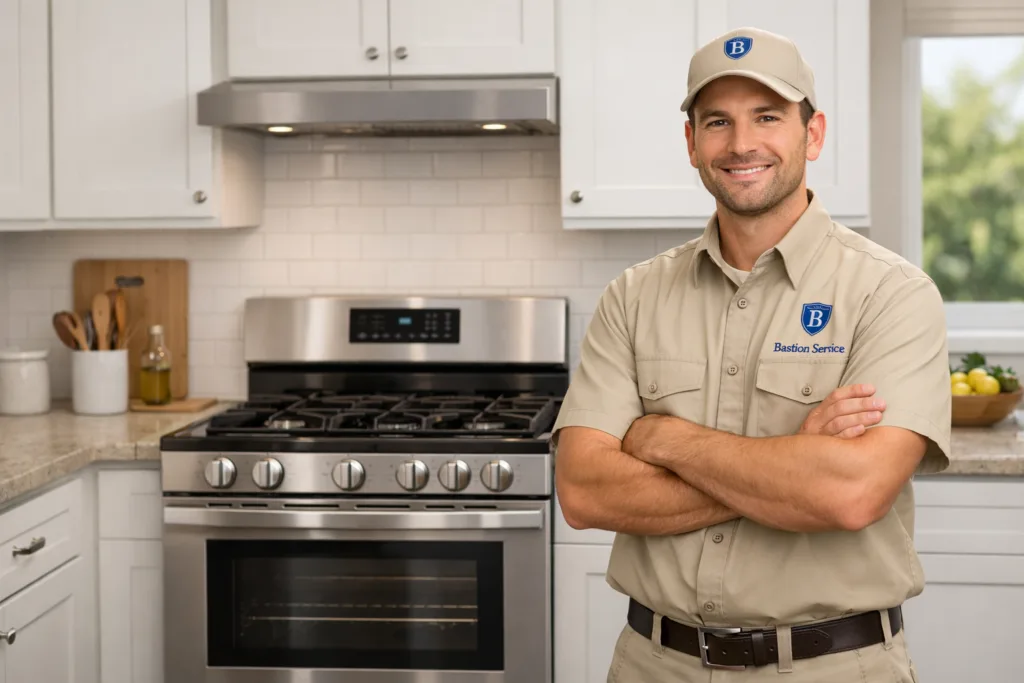
Stove problems usually show up in everyday cooking before they become complete failures. A burner may stay lukewarm, a gas flame may click too long before lighting, or the controls may stop responding consistently. Those symptoms may look similar on the surface, but the underlying cause can range from a worn switch or igniter to damaged wiring or a failing control.
Common stove problems homeowners notice first
One of the most frequent complaints is a surface burner that will not turn on or will not regulate heat correctly. On electric stoves, that can point to a failed element, a bad receptacle, a switch problem, or a connection issue beneath the cooktop. On gas models, weak flame, delayed ignition, or repeated clicking often suggests a burner head blockage, moisture around the igniter, or a spark ignition fault. When the surface cooking area is the main issue rather than the full appliance, Cooktop Repair in Fairfax may be the better match.
Another common pattern is intermittent operation. The stove may work normally for several meals and then suddenly lose power, trip a breaker, or stop heating one section while another section still works. Intermittent faults matter because they often point to components failing under heat load, loose electrical connections, or controls that are starting to break down.
What different symptom groups can indicate
Burners not heating or heating unevenly
If a burner stays cold, heats only partway, or runs hotter than the selected setting, the problem may be isolated to the element, switch, igniter, or wiring connection. Uneven heat can also be mistaken for a cookware issue, so a good diagnosis separates appliance failure from pan-related cooking problems. On combined cooking units where the surface and oven are part of one appliance, Range Repair in Fairfax can apply more directly.
Controls not responding
Unresponsive knobs, flashing displays, settings that reset, or temperatures that drift can indicate a failing switch, sensor issue, electronic control problem, or unstable power supply. These are more than convenience issues. If the appliance cannot regulate heat correctly, cooking results become unreliable and the risk of overheating increases.
Gas odor, clicking, or ignition delay
If a gas stove clicks continuously, lights slowly, or gives off an unusual odor, it should be checked promptly. Sometimes the cause is limited to a dirty burner head or worn igniter, but gas delivery and ignition issues should never be guessed at. If you notice a strong gas smell or suspect an active leak, stop using the appliance and follow household gas safety steps immediately.
Oven-related performance problems on a stove
Many household stoves include an oven compartment, so some calls begin with complaints about slow preheating, inaccurate baking temperatures, or food cooking unevenly. Those symptoms may involve a bake element, igniter, sensor, relay, or control issue rather than the surface burners. If the problem is centered on baking performance or preheat failure, Oven Repair in Fairfax may be the more relevant service page.
Wall-oven style symptoms versus full stove issues
Some homeowners are unsure whether they need service for a freestanding stove or for a separate built-in unit. If the problem is limited to a dedicated built-in cooking cavity with temperature, heating, or preheat trouble, Wall Oven Repair in Fairfax is the closer fit. If both surface burners and the lower oven section are involved on one household appliance, stove service is usually the right starting point.
When to stop using the stove and schedule service
It makes sense to stop using the appliance if it trips the breaker, sparks, gives off a burning smell, shows scorch marks, or cannot control heat safely. Gas odor, delayed ignition, and repeated clicking also deserve prompt attention. Continued use in these situations can turn a targeted repair into a larger electrical, ignition, or control failure.
For less severe symptoms, such as one weak burner or temperatures that seem slightly off, the stove may still operate for limited use, but that depends on the exact fault. If the symptom is getting worse, affecting multiple functions, or returning after temporary improvement, it is time to have it inspected rather than keep working around it.
Repair versus replacement considerations
Whether repair makes sense depends on the age of the stove, the condition of the wiring and controls, the availability of parts, and whether the failure is isolated or spread across multiple systems. A single failed element, igniter, or switch is often a practical repair. Larger decisions come into play when there is extensive wiring damage, repeated control failures, or several cooking functions breaking down at once on an older unit.
A diagnosis is most helpful when it does more than identify one bad part. It should explain what failed, why the symptom appeared, whether nearby components were affected, and whether continued use is reasonable before repair is completed. That gives Fairfax homeowners a realistic way to weigh safety, reliability, and cost without guessing.
What a useful service visit should clarify
A good stove repair appointment should narrow the problem to the specific heating, ignition, electrical, or control system involved. It should also determine whether the issue is isolated to one burner, the oven section, the full appliance, or the household power or gas connection feeding it. That matters because the right fix for a stove that will not heat is very different from the right fix for one that overheats, clicks constantly, or loses power intermittently.
For households in Fairfax, the most valuable outcome is not just getting the unit working again, but understanding how dependable it will be afterward. Knowing whether the problem is a straightforward component replacement or a sign of wider wear helps you make a more informed decision about repair timing and next steps.