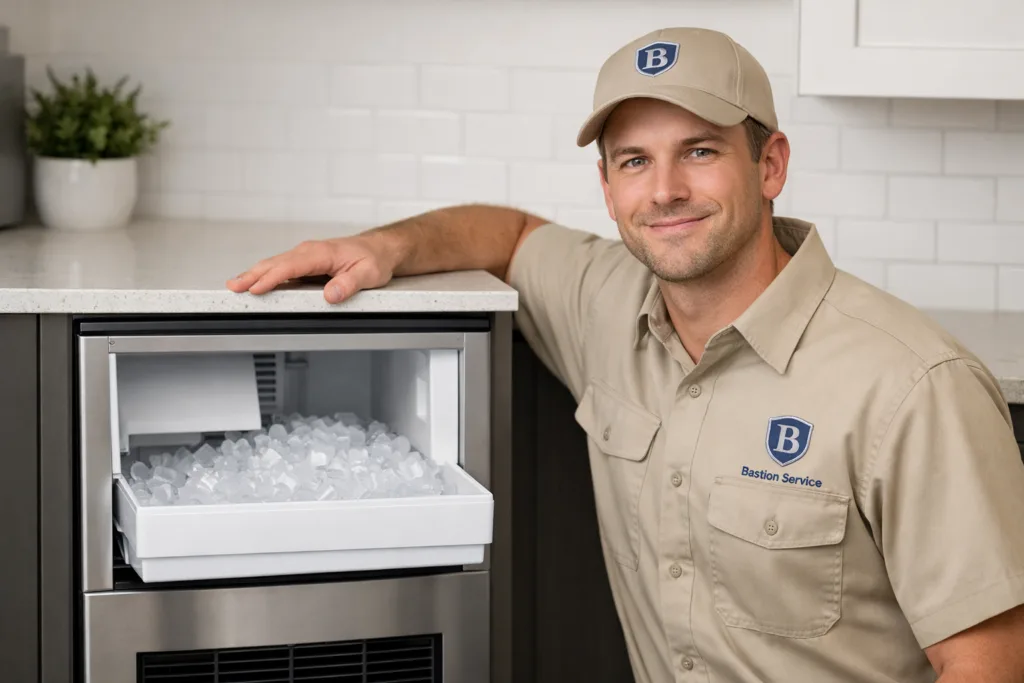





Temperature drift, leaking, frost buildup, and new noises are the kinds of problems that usually tell you more than “it stopped working.” With EdgeStar appliances, the symptom pattern often points toward a specific system: airflow, defrost, drainage, controls, door sealing, or cooling components. For Fairfax homeowners, noticing how the problem behaves from day to day can make the next step much easier.
For specific EdgeStar appliance paths in Fairfax, review EdgeStar Refrigerator Repair in Fairfax, EdgeStar Freezer Repair in Fairfax, and EdgeStar Ice Maker Repair in Fairfax.
Start with the symptom, not the assumption
Two appliances can show the same basic complaint and need very different repairs. A refrigerator that feels warm may have a blocked air path, a weak fan, a control issue, or a more serious cooling failure. A wine cooler that runs constantly may be dealing with a bad door seal, poor ventilation around the unit, sensor trouble, or a sealed-system problem. Looking at the exact behavior of the appliance helps avoid guessing.
That is especially important with compact refrigerators, freezers, ice makers, and wine coolers, where performance can decline gradually. Many homeowners first notice slower cooling, moisture inside the cabinet, thin ice production, or longer run times before the appliance stops doing its job completely.
Common EdgeStar refrigerator issues
An EdgeStar refrigerator may begin showing trouble through warm shelves, inconsistent temperatures, food spoiling sooner than expected, water under crisper drawers, or unusual noises from the back or inside the cabinet. These signs often relate to one of a few common problem areas.
- Warm or uneven cooling: can point to evaporator fan problems, blocked airflow, sensor faults, or compressor-related issues.
- Water pooling inside or underneath: often suggests a clogged defrost drain or excess condensation from sealing problems.
- Clicking, buzzing, or rattling: may indicate a struggling fan motor, compressor start issue, loose component, or ice interfering with moving parts.
- Heavy condensation: can come from warm air entering through worn gaskets or from temperature control problems.
If the refrigerator is no longer holding a safe food temperature, it should be treated as time-sensitive. Intermittent cooling is also worth taking seriously, since repeated warming and cooling cycles can be an early sign of a larger failure.
What freezer symptoms usually mean
Freezers tend to make problems obvious quickly. Soft food, frost on interior panels, ice around the door opening, or a unit that seems to run nonstop usually means something in the cooling or defrost process is no longer working correctly.
Common EdgeStar freezer symptoms include:
- Food softening even though the appliance still sounds like it is running
- Thick frost on shelves, walls, or vents
- A door that no longer seals tightly
- Short cycling or constant running
These problems can be linked to gasket wear, fan failure, defrost faults, thermostat or sensor issues, or restricted airflow from ice buildup. If frost is increasing and temperatures are rising at the same time, continued operation can put more strain on the cooling system.
Ice maker problems that should not be ignored
When an EdgeStar ice maker starts underperforming, it often gives several clues before it stops altogether. Low ice output, tiny or hollow cubes, leaking, or a sheet of ice forming in the wrong place can each point to different causes.
Homeowners in Fairfax often notice:
- No ice production: possible water supply, fill valve, sensor, or control issue
- Slow production: can be related to water flow restrictions, temperature problems, or scaling
- Leaking: may come from a valve problem, blocked drain path, internal freeze-up, or connection issue
- Odd taste or appearance: can suggest stale ice, water quality concerns, or maintenance-related buildup
Leaks deserve prompt attention. Even a small amount of recurring water can affect nearby flooring or cabinetry, and internal freeze-ups can turn a minor issue into a more involved repair.
Wine cooler performance problems
Wine coolers are often judged by consistency more than raw cooling power. If an EdgeStar wine cooler is drifting warm, cooling unevenly, vibrating more than usual, or collecting moisture on the glass or inside walls, it is no longer maintaining stable storage conditions.
Typical causes include:
- Temperature sensor or thermostat problems
- Circulation fan issues
- Restricted airflow around stored bottles or vents
- Door gasket wear
- Developing cooling-system faults
A wine cooler that runs almost constantly or cycles on and off too often should be checked sooner rather than later. Those patterns can mean the appliance is working harder than normal just to stay near the set temperature.
Signs the repair may be straightforward
Some symptoms suggest a more contained repair, especially when the appliance is otherwise in good condition. Issues like a clogged drain, a worn gasket, a failed fan motor, or a control component fault may be repairable without the larger expense associated with sealed-system work. When the problem is isolated and the cabinet, insulation, and overall condition still look solid, repair is often easier to justify.
Signs the appliance may be nearing replacement
Other patterns make the decision harder. Repeated cooling loss, multiple symptoms appearing at once, visible corrosion, recurring leaks, or a history of prior breakdowns can all point to a unit that is wearing out overall rather than suffering from one simple defect.
Replacement becomes more likely when:
- The appliance no longer maintains temperature reliably after previous repairs
- Cooling-system problems are suspected
- Several parts appear to be failing from age at the same time
- The cost of repair is high compared with the role the appliance serves in the home
For some households, an extra freezer or wine cooler can tolerate downtime more easily than a primary refrigerator. That difference matters when deciding whether to invest in repair.
When to stop using the appliance
Some situations should not be monitored for several more days. A refrigerator or freezer that cannot hold temperature, an ice maker that is actively leaking, or a wine cooler showing sharp temperature swings should be evaluated before continued use leads to food loss, water damage, or a larger component failure.
New sounds also matter. Repeated clicking, hard buzzing, fan scraping, or a compressor that seems to struggle to start are all signs that the appliance is not operating normally. If the sound is getting worse, the condition usually is too.
What to note before scheduling service
A few simple observations can make diagnosis more efficient:
- Whether the unit is not cooling at all or just cooling poorly
- Whether the issue is constant or intermittent
- Whether frost, condensation, or leaking is present
- What kind of noise is occurring and when it happens
- Whether the appliance has recently been moved, cleaned, defrosted, or reset
- How long the symptom has been developing
That information helps separate a ventilation or maintenance issue from a mechanical or electrical fault. It also helps determine whether the appliance should remain in use while the problem is being assessed.
Choosing the right next step in Fairfax
EdgeStar appliances fill specific household roles, and the right decision depends on more than whether the unit still powers on. A compact refrigerator that cools unevenly, a freezer with growing frost, an ice maker that leaks, or a wine cooler that no longer holds a stable range each needs to be judged by the actual symptom pattern and the overall condition of the appliance.
For homeowners in Fairfax, the most useful approach is to look at what the appliance is doing consistently, how fast the issue is progressing, and whether the problem points to an isolated repair or broader wear. That is what turns a frustrating appliance problem into a sensible repair plan.