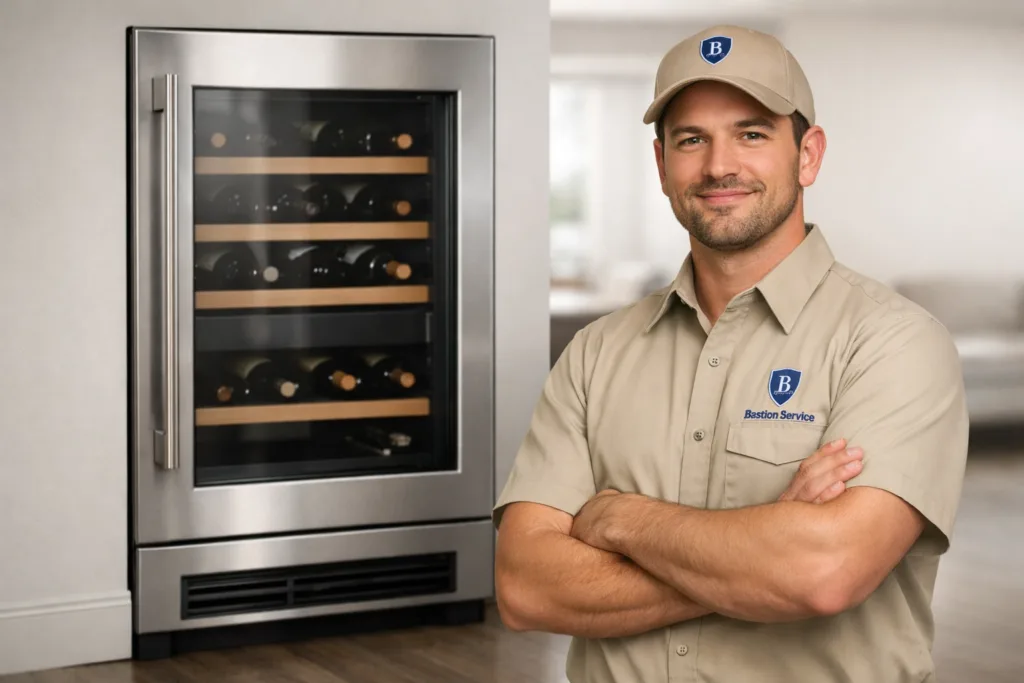
Temperature instability in a wine cooler usually starts as a small change: bottles no longer feel quite right, the cabinet takes longer to recover after the door opens, or the unit seems to run more than it used to. On a Perlick model, those symptoms can come from airflow restrictions, fan trouble, sensor errors, door sealing problems, or a more serious cooling-system issue. Sorting out which pattern fits the appliance is the first step toward a repair that actually solves the problem.
Common Perlick wine cooler problems in Sawtelle homes
Wine storage depends on consistency, so even a modest shift in performance can matter. In Sawtelle homes, the most frequent service concerns involve weak cooling, temperature swings, condensation, frost, unusual sound, and controls that stop responding as expected.
Not cooling enough
If the cabinet is warmer than the selected setting, the problem may be as simple as blocked airflow or as involved as a failing fan, faulty temperature sensor, control issue, or compressor-related defect. A Perlick wine cooler may also appear to cool only part of the time when the control is receiving an inaccurate temperature reading.
Homeowners often notice this problem first when bottles near one shelf feel different from bottles stored elsewhere. Uneven cooling is a strong clue that air circulation inside the cabinet is no longer working the way it should.
Temperature swings during normal use
Some units still cool, but no longer hold a stable range. When that happens, the cause may involve a thermostat or sensor fault, frost interfering with airflow, a fan motor losing speed, or warm air leaking in around the door. Temperature fluctuation can also show up after the unit has been restocked if recovery becomes unusually slow and never fully returns to normal.
Running constantly or cycling oddly
A Perlick wine cooler that seems to run all day without much rest is working harder than it should. Common reasons include dirty condenser areas, poor ventilation, a weak door seal, control faults, or a sealed-system problem that prevents efficient cooling. In other cases, the unit may short-cycle, turning on and off more often than normal, which can point to sensor or electrical control trouble.
Condensation, water, or frost buildup
Moisture inside the cabinet or around the door usually means warm air is getting where it should not, or drainage is not working properly. Frost can form when humidity repeatedly enters the compartment, especially if the gasket is worn or the door is not closing squarely. Once frost builds up, airflow becomes less effective and cooling performance often drops further.
Fan noise, buzzing, or rattling
Sound changes matter because they often show up before complete cooling failure. A rattling shelf or bottle can be harmless, but repeated buzzing, clicking, or louder fan noise may point to a fan blade obstruction, motor wear, vibration, or compressor strain. If the sound is new and persistent, it is usually worth addressing before the unit starts losing temperature control.
Display and control problems
When the display goes blank, settings change unexpectedly, buttons stop responding, or the cooler ignores the selected temperature, the problem may be in the interface, control board, sensor circuit, or incoming power path. These faults can look like cooling failures even when the refrigeration components themselves are still functional.
Why symptom patterns matter
Two coolers can show the same basic complaint and need very different repairs. For example, a warm cabinet might be caused by restricted airflow and a fan issue, or by a sealed cooling-system defect with a very different repair outlook. Moisture around the door might come from a gasket leak, but it can also be part of a broader temperature-control problem. Looking at the full pattern instead of one isolated symptom helps avoid replacing good parts and gives homeowners a more realistic repair decision.
What homeowners can check before scheduling service
There are a few practical checks that can help rule out simpler causes before a visit:
- Confirm the wine cooler has power and the outlet is working normally.
- Check that the temperature setting was not changed accidentally.
- Make sure the door closes evenly and does not spring back open.
- Look for obvious items blocking interior airflow.
- Verify the exterior ventilation area is not crowded by household storage.
- Note whether the issue began after cleaning, moving, restocking, or a power interruption.
These checks can be useful, but if the unit still runs warm, develops frost, collects water, or behaves unpredictably, the next step is usually diagnosis rather than more guesswork.
Signs the problem may be getting worse
Some symptoms suggest the cooler should be checked sooner rather than later. These include a cabinet that is steadily warming, a compressor that never seems to shut off, repeated clicking without proper cooling, returning frost after it has already been cleared, or moisture that spreads beyond a small amount near the door opening.
Another warning sign is a unit that used to recover quickly after the door was opened but now takes hours to settle back down. That kind of change often means the appliance is losing efficiency or struggling with airflow, controls, or refrigeration performance.
Repair or replacement: how to evaluate the decision
Whether repair makes sense depends on the failed part, the overall condition of the cabinet, and how broad the problem is. Many fan, control, gasket, drainage, and sensor issues are more manageable when the rest of the appliance is in solid shape. By contrast, compressor or sealed-system repairs may require a different cost-benefit discussion, especially if the unit has had inconsistent cooling for a long time.
A reasonable way to think about it is:
- Repair is often worth considering when the fault is specific and the cooler is otherwise in good condition.
- Replacement may make more sense when multiple systems are failing or the repair scope is unusually high for the appliance’s condition.
- Waiting usually does not help if the unit is running constantly or losing temperature more often, because additional strain can lead to more damage.
What a service visit should clarify
Most homeowners want straightforward answers: what is actually failing, whether continued use risks more damage, and whether the repair is worthwhile. A useful visit should narrow the cause of the temperature or control issue, explain which component or system is involved, and outline the likely repair path without treating every symptom as a separate problem.
Perlick wine cooler repair in Sawtelle with a household-focused approach
For Sawtelle homeowners, the goal is usually to restore stable wine storage without unnecessary parts replacement or drawn-out trial and error. When a Perlick wine cooler starts showing temperature swings, moisture, noise, or control trouble, symptom-based testing helps determine whether the issue is relatively contained or part of a larger cooling failure. That makes it easier to decide on the next step with confidence and a practical repair plan.