
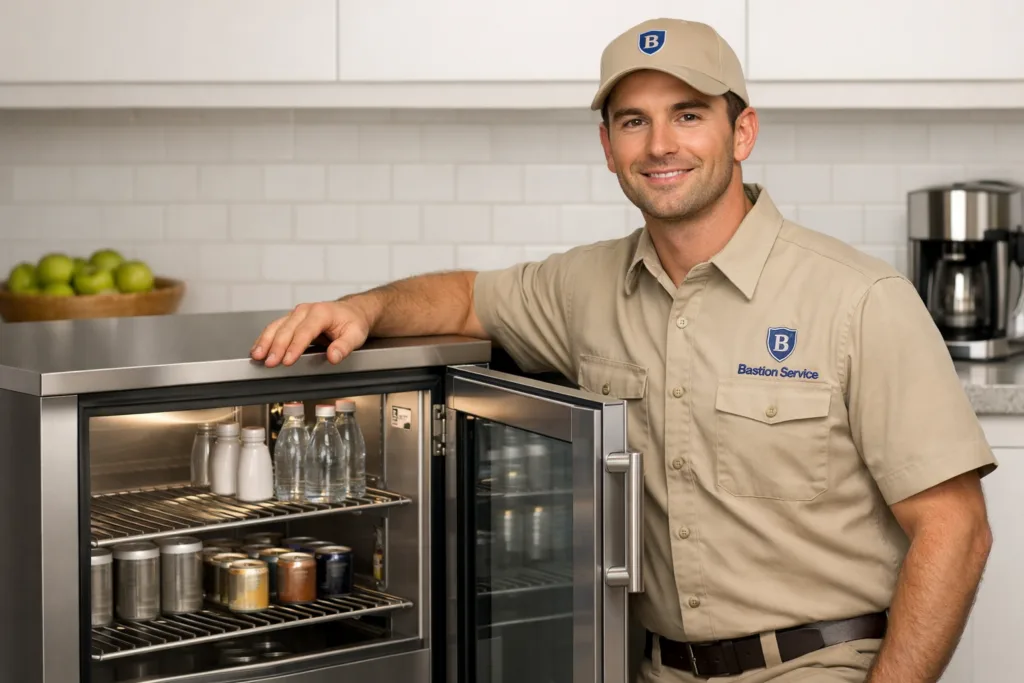





Cooling problems rarely announce themselves all at once. A Perlick unit may begin with a slightly warmer shelf, slower ice production, a patch of frost, or a new sound that seems minor at first. Those early signs often reveal more than a complete shutdown because they help narrow the issue to airflow, controls, sealing, drainage, or a more serious cooling-system fault.
What homeowners usually notice first
Most residential Perlick problems start with a performance change rather than total failure. In Sawtelle homes, that often means groceries do not stay cold as long, frozen food texture changes, the ice bin no longer refills normally, or a wine cooler drifts away from the selected temperature. Even when the appliance still powers on, its operating pattern may already be telling you what system needs attention.
Useful clues include whether the symptom is constant or intermittent, whether it appeared suddenly or developed over time, and whether it affects the whole unit or only one area. A refrigerator that is warm everywhere points to a different direction than one with a cold lower shelf but a warm upper section. A freezer with heavy frost around vents suggests something different than a freezer that is simply not getting cold enough.
Common symptom patterns and what they can mean
Warm temperatures or uneven cooling
If a Perlick refrigerator, freezer, or wine cooler is running warm, the cause is not always the same. Possible issues include restricted condenser airflow, failing evaporator or condenser fans, sensor or thermostat problems, weak door sealing, control board faults, or sealed-system trouble. Uneven cooling can also point to blocked circulation, frost buildup behind panels, or a damper problem that prevents air from moving where it should.
One reason this symptom matters is that people often respond by lowering the temperature setting repeatedly. That can mask the pattern for a short time without correcting the underlying fault. If settings keep being adjusted but performance does not stabilize, the appliance usually needs inspection rather than another reset.
Frost buildup, condensation, or water leaks
Frost in a freezer is often blamed on the door being opened too often, but recurring frost usually means more than normal use. A worn gasket, misaligned door, defrost problem, or air leak can allow moisture in and gradually interfere with circulation. In refrigerators, water under crispers or on the floor may come from a blocked drain, condensation-management issue, leveling problem, or an ice-maker-related leak.
Wine coolers can also show moisture problems. Condensation on glass, damp shelving, or a musty interior may indicate a sealing or temperature-regulation issue. These symptoms are worth addressing early because moisture problems can damage cabinetry, flooring, labels, and stored items if left unchecked.
New noises during normal operation
Perlick appliances are not silent, but a change in sound is often meaningful. Louder humming, repeated clicking, rattling, scraping, or a fan noise that comes and goes can all point to specific mechanical trouble. Scraping may suggest ice interfering with a fan. Repeated clicking near startup can indicate trouble with compressor start components or controls. A vibration sound may be simple panel contact, though it can also reflect a mounting or fan issue.
Noise is most useful when paired with another symptom. A unit that is both noisy and warm is a stronger sign of active failure than a unit that simply sounds different for a few seconds during a normal cycle.
Ice maker slowdown or poor ice quality
When a Perlick ice maker starts producing less ice, no ice, hollow cubes, wet clumps, or irregular shapes, the fault may be in the water supply, inlet valve, fill timing, temperature performance, scale buildup, or the harvest cycle itself. Slow output can be misleading because the visible problem appears to be the ice maker, while the root cause may actually be insufficient cooling in the cabinet.
If the bin empties during normal household use and does not recover by the next cycle window, that usually means the problem has moved beyond basic maintenance. Consistent underproduction is a sign that the machine is not completing one part of its process correctly.
How these issues show up by appliance type
Refrigerators
Perlick refrigerator problems tend to show up as warm sections, temperature swings, water under drawers, long run times, or unexplained food spoilage. If milk or leftovers are warmer than expected while the display still appears normal, the issue may involve airflow, sensor feedback, or an evaporator-side problem rather than a total loss of cooling. A refrigerator that runs nearly nonstop is also worth attention, especially if the kitchen feels normal but the cabinet struggles to recover after the door is opened.
Freezers
Freezers usually make trouble obvious through soft food, frost around packages, ice buildup on interior panels, or a door that no longer closes with a tight seal. One important warning sign is partial thawing followed by refreezing. Even if everything looks frozen again later, that pattern can indicate unstable temperature control, weak airflow, or a developing defrost issue.
Another common clue is frost concentrated near vents or drawer tracks. That often means moisture is entering or circulation is being disrupted, both of which can get worse with continued use.
Ice makers
Standalone and built-in ice makers often show failure through slow recovery, low bin volume, unusual cube formation, or water where it should not be. If cleaning and filter-related checks do not restore normal output, the next step is usually to test whether the issue is tied to fill, freeze, harvest, or drainage. These systems can seem simple from the outside, but several different faults create the same symptom of “not making enough ice.”
Wine coolers
Wine cooler issues are often more subtle because the appliance may still feel cool even when it is no longer stable. Temperature drift, uneven cooling from top to bottom, excess vibration, moisture inside the cabinet, or controls that do not respond properly can all affect storage conditions. For households using a wine cooler regularly, steadiness matters more than whether the unit merely turns on and blows cool air.
Signs the problem is becoming more urgent
Some appliance problems stay relatively contained for a while. Others tend to spread stress to additional components. Scheduling service sooner makes sense when any of the following are happening repeatedly:
- Food or beverages are no longer held at a dependable temperature
- Frost returns soon after being cleared
- Water is leaking into cabinetry or onto flooring
- The appliance runs almost constantly
- Controls behave unpredictably or do not respond correctly
- The sound of the fan or compressor has changed noticeably
- Ice production remains low after basic cleaning and routine checks
These are the kinds of patterns that usually indicate more than a temporary fluctuation. Continued use may still be possible for a short time, but the risk is that the appliance starts overworking while performance keeps slipping.
Why waiting can increase repair scope
A cooling appliance can keep operating in a weakened condition longer than many homeowners expect. That is why delays sometimes lead to a broader repair than the original symptom would suggest. A fan problem can lead to poor circulation and frost. A gasket issue can increase run time and moisture intrusion. A drain problem can become cabinet water damage. An ice maker with an unresolved fill or freeze issue can continue cycling poorly until another component is affected.
Acting early does not always mean the repair will be major. In many cases, it simply prevents the appliance from compensating for one fault until additional wear develops elsewhere.
Repair or replace?
The right choice depends on the actual failure, not just the visible symptom. Repairs often make sense when the issue is tied to components such as fans, sensors, valves, controls, drains, door gaskets, or ice-maker assemblies and the overall appliance remains in good condition. Replacement becomes more relevant when the unit has extensive internal deterioration, repeat breakdown history, or a major cooling-system problem that no longer offers reasonable value.
For homeowners in Sawtelle, the most sensible approach is to base that decision on diagnosis rather than guesswork. A unit that looks severe from the outside may have a manageable repair, while one that still seems to be working may be closer to a larger failure than expected.
What a good service visit should clarify
A worthwhile appointment should do more than confirm that the appliance is not working properly. It should identify which system is responsible for the symptom, whether the issue is isolated or cascading, and whether repair is likely to restore reliable performance. That distinction matters with Perlick refrigerators, freezers, ice makers, and wine coolers because similar symptoms can come from very different causes.
If your unit is running warm, building frost, leaking, producing less ice, or making a new sound that does not fit its normal cycle, the next step is usually to have the symptom pattern tested before the problem grows harder to correct.


