
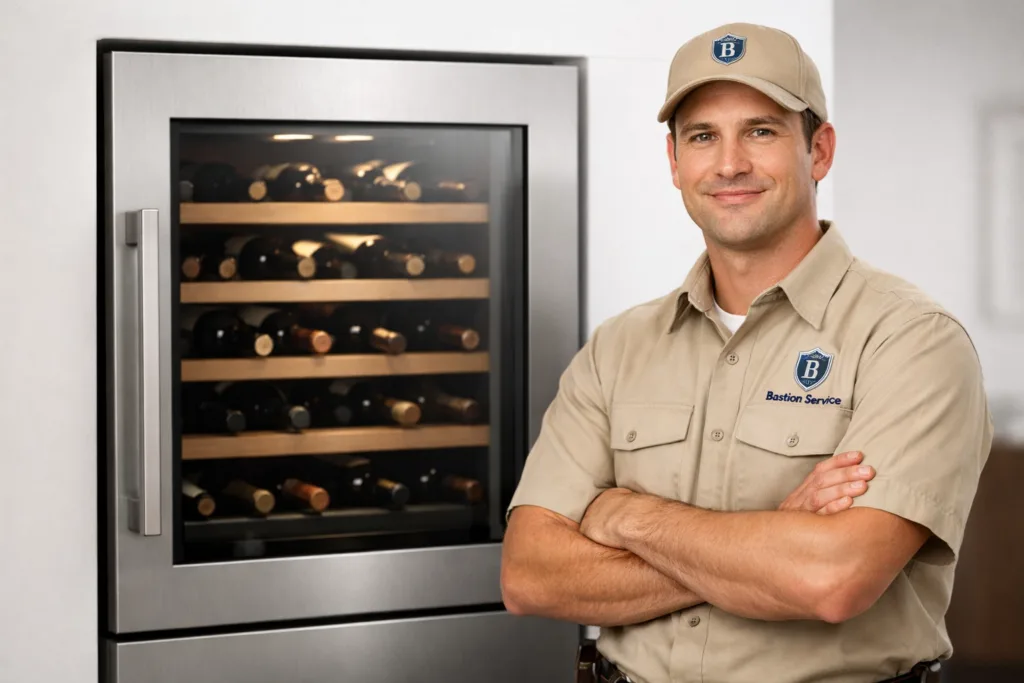




A Fisher & Paykel wine cooler protects more than just temperature. It helps preserve flavor, aging stability, and the condition of labels and corks. When that environment becomes inconsistent, even small changes in cooling performance can become noticeable quickly in a household setting.
Many wine cooler problems start subtly. You may first notice bottles feeling a little warmer than expected, a fan sound that was not there before, or condensation collecting along the door edge. Those early signs often point to issues that are easier to address before cooling performance drops further.
How wine cooler problems usually show up
Wine coolers are designed to hold a narrower and steadier temperature range than a standard kitchen refrigerator. Because of that, faults involving airflow, controls, sensors, or door sealing tend to show up in day-to-day use sooner than homeowners expect.
Common signs that a Fisher & Paykel wine cooler needs attention include:
- Interior temperature that drifts above the setting
- Bottles that feel colder than expected or begin to freeze
- Condensation on shelves, glass, or around the door
- Fan noise, rattling, buzzing, or repeated clicking
- A unit that runs constantly or cycles too often
- Display, lighting, or control response problems
- Water appearing inside the cabinet or near the base
These symptoms can overlap, which is why the same “not cooling” complaint may come from very different underlying causes.
Temperature swings and weak cooling
If your wine cooler is no longer holding a stable temperature, the issue may be as simple as restricted airflow or as involved as a failing cooling component. A weak door seal, dust buildup on condenser areas, fan trouble, or inaccurate temperature sensing can all cause the cabinet to warm gradually.
In other cases, the unit may cool for a while and then lose ground later in the day. That pattern often suggests an intermittent electrical or control issue, a fan that is slowing down under load, or a compressor-related problem that has not fully failed yet.
Warning signs worth watching include:
- The display setting looks normal, but the cabinet feels warm
- The cooler takes much longer than usual to recover after the door opens
- The compressor seems to run for long stretches without reaching the target temperature
- Upper and lower shelves feel unevenly cooled
When the cabinet gets too cold
Overcooling is less common than weak cooling, but it is just as important. If bottles are becoming unusually cold, or if you see signs of partial freezing, the problem may involve a sensor reading incorrectly, a control board not cycling cooling off properly, or a thermostat-related fault.
This is not something to ignore. Wine is sensitive to temperature extremes, and prolonged overcooling can also put added stress on internal components by forcing the system to run outside normal patterns.
Condensation, moisture, and water leaks
Moisture issues in a Fisher & Paykel wine cooler are often tied to warm air entering the cabinet, humidity management problems, or drainage restrictions. A gasket that is no longer sealing evenly can allow repeated air exchange, which leads to condensation on glass, shelving, or bottle surfaces.
Water inside the cabinet or around the installation area may point to:
- A blocked or slow drain path
- Excess moisture from repeated door opening
- A door that does not close squarely
- Ventilation conditions that affect normal operation
If water keeps returning, it is best to have the cause checked rather than simply wiping it up. Ongoing moisture can create odor, staining, and damage around the surrounding cabinet area.
Fan noise, buzzing, and other unusual sounds
Some operating sound is normal, but a new noise pattern usually means something has changed. A rattle may come from vibration or a loose panel. A persistent fan sound can indicate obstruction, blade wear, or motor trouble. Repeated clicking may involve relays, controls, or a compressor struggling to start normally.
Homeowners in Sawtelle often describe these sounds by when they happen:
- Only when the cooling cycle begins
- Constantly while the unit is running
- At random intervals throughout the day
- More loudly after the door has been opened
That timing matters because it helps separate a simple vibration issue from a more significant mechanical or electrical fault.
Display and control issues
If the display flashes, stops responding, changes settings on its own, or does not match actual cabinet conditions, the problem may go beyond the user interface. Many control-related faults affect how the wine cooler senses temperature and manages the cooling cycle.
Seemingly minor issues such as a dim display, erratic buttons, or an interior light problem can sometimes appear alongside broader wiring or board trouble. When controls are inconsistent, temperature performance often becomes inconsistent as well.
When to stop using the wine cooler
Some symptoms allow time for scheduling service, while others suggest the unit should be turned off until it is inspected. Continued use may worsen damage if you notice:
- Repeated breaker trips or power loss tied to the appliance
- A burning smell or signs of overheating
- Loud clicking with little or no cooling
- Rapid temperature rise that puts stored bottles at risk
- Recurring leaks near electrical areas or flooring
If the cooler is still running but cannot hold temperature, it may be overworking the compressor and fans. Acting early can help prevent a smaller fault from turning into a larger repair.
Repair or replacement: what usually makes sense
For many households, repair is worthwhile when the issue is limited to a fan motor, sensor, control component, switch, gasket, drain problem, or another serviceable part and the rest of the unit is in solid condition. A well-kept wine cooler with a single identifiable fault is often a reasonable candidate for repair.
Replacement becomes more likely when the appliance has multiple failing systems, severe cooling system trouble, or overall wear that makes additional repairs hard to justify. Age matters, but so do symptom history, cabinet condition, and how reliably the unit can be restored for everyday use.
What the repair process should focus on
The most helpful appointment is one that follows the actual symptom pattern instead of guessing based on one complaint alone. A proper evaluation usually includes temperature behavior, airflow, door sealing, fan operation, control response, and visible signs of moisture or electrical stress.
From there, homeowners should expect a straightforward explanation of:
- What is likely failing
- Whether the cooler can still be used safely for the moment
- What repair path fits the condition of the unit
- Whether the issue appears isolated or part of a broader decline
That makes it easier to decide on Fisher & Paykel Wine Cooler Repair in Sawtelle with less trial and error and a better sense of whether the fix is likely to hold up in normal household use.
Why prompt service helps protect the collection
Wine coolers are often overlooked until they stop cooling completely, but earlier service can make a real difference. A fan beginning to fail, a gasket losing its seal, or a sensor drifting out of range can all affect storage conditions before a complete shutdown happens.
If your Fisher & Paykel wine cooler in Sawtelle is showing unstable temperature, moisture, unusual sound, or control problems, addressing the symptom early gives you the best chance of protecting both the appliance and the bottles stored inside.


